Can You Mix Oxiclean and Bleach? Safety Guide for Home Cleaning
Discover why you should never mix Oxiclean and bleach, the hazards involved, and safer alternatives. A practical, step-by-step guide for homeowners seeking safe cleaning practices in 2026.


Short answer: No, can you mix oxiclean and bleach? Do not mix them. Oxiclean contains sodium percarbonate that decomposes to hydrogen peroxide, while bleach releases chlorine gas when combined with certain cleaners. Mixing can create toxic chlorinated compounds and irritants. Always use cleaners separately, rinse surfaces between products, and ventilate well.
What happens when you mix can you mix oxiclean and bleach
The direct question, can you mix oxiclean and bleach, is answered by chemical reality: mixing these two products can produce hazardous gases and irritants. Oxiclean is a sodium percarbonate-based cleaner that releases oxygen and hydrogen when dissolved; bleach releases chlorine when combined with acids or organics. The interaction can create chloramines and chlorine dioxide in some conditions, which irritate the eyes, nose, and lungs. For safety, do not combine these products in any cleaning scenario, including laundry, bathrooms, and kitchens. If you’re unsure, treat each product separately and prioritize ventilation, minimal exposure time, and surface testing on inconspicuous areas.
Why you should avoid mixing oxiclean and bleach
Understanding the risk helps explain why the simple question can you mix oxiclean and bleach should yield a firm no. The reactive chemistry can release chlorine gas, a respiratory irritant that can worsen asthma or trigger coughing fits. Decomposition byproducts can also create irritating vapors that linger in poorly ventilated spaces. The best practice is to store cleaning products separately and never combine them during a cleaning task. Implementing this discipline reduces the chance of accidental mixing and exposure, protecting household members and pets.
Safer alternatives and best practices
If you need stain removal or whitening, choose products designed to be compatible with your surface and test a small area first. For example, use a dedicated oxygen-based cleaner on fabrics or a chlorine-based cleaner only in a separate routine with thorough rinsing and ample ventilation. When cleaning, plan a sequence: wipe with one product, rinse, dry, then move to the next product. Keeping surfaces wet with plain water between applications minimizes chemical interactions.
Common scenarios: laundry, surfaces, and bathrooms
Laundry: Oxygen-based cleaners (like Oxiclean) can be helpful, but never add bleach to the same wash. Instead, wash with the Oxygen-based product first, then run a separate rinse using water. Surfaces: For bathroom tiles and countertops, use a single cleaner per surface and rinse thoroughly before moving to the next. Blot and rinse any residue with plain water, and never mix products in buckets. Bathrooms often require frequent cleaning; keep a schedule and avoid combining products that have different active ingredients.
How to clean up a spill safely
If a spill occurs, do not panic—safely manage it by leaving the area to ventilate, wearing gloves, and using water to dilute the chemical. Absorb with paper towels, place them in a sealed bag, and clean the area with a compatible cleaner according to its label. If you accidentally mix oxiclean and bleach, evacuate the room, increase ventilation, and seek medical guidance if irritation or breathing difficulties occur.
Label literacy: reading safety data and product labels
The can you mix oxiclean and bleach question is answered by reading labels and SDS sheets. Look for warnings about chlorinated compounds, gas evolution, and recommendations to avoid mixing with acids or ammonia. Adhering to label directions reduces risk and helps you choose safer cleaning sequences. Always store products out of reach of children and pets, and keep the exact product you’re using for that task in a clearly labeled container.
Quick checks before you start cleaning
Before you begin, confirm you have: dried hands, gloves, goggles, and good ventilation. Check labels for any cautions about mixing with other cleaners. Keep a single-task workflow: one cleaner at a time, a rinse with plain water between products, and a final wipe-down with a clean, dry cloth. If you feel dizzy or experience coughing, leave the area and seek help.
What to do if you smell chlorine or experience symptoms
If you notice a strong chlorine odor, immediately leave the area and vent the space. Return only after fresh air has circulated. If symptoms persist, contact a healthcare professional or poison control. In households, having a small plan for emergencies—like a phone number for local poison control—can make a difference in speeding up appropriate care.
Tools & Materials
- Nitrile gloves(Chemical-resistant; avoid latex if you have sensitivities)
- Safety goggles(Splash protection for eyes)
- Ventilation setup(Open windows; use a fan if available)
- Two separate clean cloths or sponges(Maintain separation between cleaners)
- Plain water for rinsing(Use for between products)
- Buckets or spray bottles (for single product use)(Do not mix in the same container)
- Paper towels or rags(For quick cleanup and disposal)
- Waste bag for contaminated materials(Seal before disposal)
Steps
Estimated time: 25-40 minutes
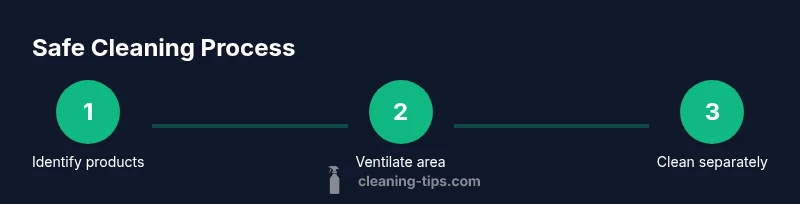
- 1
Identify products and prepare area
Review labels on Oxiclean and any bleach-containing products. Decide to use them separately, and clear the area of people and pets. Prepare a clean workspace with two clearly labeled containers and a plan for rinsing between steps.
Tip: Write down the cleaning order to avoid confusion during the task. - 2
Ventilate and protect yourself
Open windows and start a fan if possible. Put on nitrile gloves and safety goggles. Ensure you have a safe exit path in case you need to leave quickly.
Tip: Ventilation reduces inhalation exposure to any vapors that may arise. - 3
Use one product at a time
Apply Oxiclean only in its own area or item, using a dedicated cloth. Do not mix with bleach anywhere in the workspace. Rinse thoroughly with plain water after completing this step, and remove the cleansing cloth before moving to the next product.
Tip: Keep the Oxiclean container separate from any bleach containers to prevent cross-contact. - 4
Rinse surfaces between products
After finishing with one product, rinse the surface with plain water and wipe dry. This minimizes residue that could react with a second product later. Perform a second rinse if the surface feels slippery or unusual after the first rinse.
Tip: Rinsing helps keep subsequent steps safe and effective. - 5
Assess the stain or cleaning goal
If you’re addressing stains, choose a product compatible with the fabric or surface. For stubborn stains, consider alternatives that don’t require mixing, like enzyme-based cleaners or specialized stain removers.
Tip: Always test a hidden area first to prevent damage. - 6
Dispose of waste safely
Seal contaminated wipes, rags, and rinse water in a bag before discarding. Do not pour mixed solutions down the drain. Follow local guidelines for household chemical disposal.
Tip: Close the bag securely to prevent leaks and odors. - 7
Store products properly
Return unused products to their original containers and store them separately. Keep cleaners out of reach of children and pets, in a cool, dry place away from direct sunlight.
Tip: Always re-check the labels before any future cleaning task. - 8
Review safety and adjust routines
If you noticed irritation or unusual fumes, adjust your cleaning routine to ensure separation of cleaners and better ventilation. Consider alternatives that minimize risk in future tasks.
Tip: Document changes in your cleaning routines for ongoing safety.
Questions & Answers
Can mixing Oxiclean and bleach create harmful gases?
Yes. Combining oxygen-based cleaners like Oxiclean with chlorine-based bleach can release hazardous gases. It is unsafe and should be avoided. Always use products separately and ventilate the area.
Yes. Mixing can release harmful gases, so use Oxiclean and bleach separately and keep the area well-ventilated.
What should I do if I accidentally mix them?
Move to fresh air, leave the room, and increase ventilation. If exposure symptoms occur, seek medical advice promptly. Do not re-enter until the area is well-ventilated.
Move to fresh air and seek medical advice if you have symptoms after a mix.
Are there safe substitutes for stain removal that don’t involve mixing?
Yes. Use stain removers that are compatible with fabrics or surfaces, or test enzymatic cleaners on a small area. Use bleach separately only when the label explicitly permits it.
Yes, choose compatible stain removers and use bleach separately only if the label allows it.
Can I use Oxiclean with other non-bleach cleaners safely?
Oxiclean is generally safe with many non-bleach products when used as directed, but avoid mixing with acids or ammonia. Always follow label instructions and rinse between products.
Oxiclean can be safe with some cleaners if used separately and rinsed, but never mix with acids or ammonia.
How should I store these cleaners to prevent accidents?
Store each product in its original container, away from children and pets. Keep them in a dry, cool place with separate shelving to prevent mixing.
Store cleaners in their original containers, away from kids and pets, with separate shelving.
Watch Video
The Essentials
- Never mix Oxiclean and bleach; avoid chlorine gas formation.
- Always clean with one product at a time and rinse between products.
- Ventilate the area and wear protective gear during cleaning.
- Read product labels and SDS for specific safety instructions.
- Have a plan for spills or accidental exposure and seek help if symptoms occur.