Car Clean Home: A Practical How-To for Busy Households
Learn a practical, step-by-step routine to keep car interiors and home surfaces clean, fresh, and organized. This educational guide covers habits, tools, and schedules for a healthier, more comfortable living space.


You will learn how to build a practical 'car clean home' routine that keeps car interiors fresh and your living spaces tidy. This guide covers quick daily habits, targeted deep-clean methods, and simple checklists you can fit into any schedule. By following these steps, you’ll reduce odors, dirt transfer, and clutter from car to home.
Why car clean home matters
A consistent approach to cleaning the car and the living space matters because it reduces dust, prevents stains from setting, and keeps odors at bay. When you practice a car clean home routine, you minimize cross-space dirt transfer—for example, muddy car floors that spread dirt onto entryways or car seats that shed hair onto couches. According to Cleaning Tips, aligning vehicle care with home hygiene creates a healthier environment and a simpler maintenance schedule. You’ll save time in the long run because small daily actions compound into substantial cleanliness gains across both spaces. This habit also supports air quality by controlling allergens and mold-prone dampness in fabrics and carpeted areas. The goal is a practical system you can sustain, not a one-off blitz session.
Assessing your current state and goals
Start by surveying both contexts: the car and the home. Note the dirtiest areas (car floor mats, cup holders, entryway rugs, kitchen counters) and the most challenging messes (pet hair, coffee stains, greasy fingerprints). Set clear goals: is odor control the priority? Are you aiming for weekly quick cleans or a deeper monthly refresh? Document your baseline with quick photos and a 1-week trial to measure progress. A simple scoring system—1 to 5 on cleanliness and odor—helps you track improvement. The garage can be treated as a spill-free zone with a separate kit; the home can share a central kit. When you set explicit targets, you reduce decision fatigue and stay motivated.
Daily habits that keep car and home aligned
Small, repeatable routines prevent overwhelming cleaning days. Schedule a 5-minute end-of-day routine: empty trash from the car, wipe down the steering wheel and armrests, and sweep the entryway mat. In the house, do a quick wipe of kitchen counters, a desk platform, and a bathroom sink. Use color-coded microfiber cloths to avoid cross-contamination between car and home surfaces. Keep a small caddy in each space with a spray bottle, a roll of paper towels, and a lint roller for quick touch-ups. Regular habits reduce the need for intense scrubbing later, making a car clean home approach sustainable.
Cleaning toolkit: products that work for both spaces
A unified toolkit saves money and time. Keep a mild detergent, a neutral all-surface cleaner, baking soda, white vinegar, microfiber cloths, a vacuum with attachments, and a soft brush. For fabrics in cars and furniture, choose a fabric-safe cleaner and a stain remover suitable for upholstery. Use a spray bottle for dilution and a separate bottle for spray-downs to avoid cross-contamination. Invest in a quality car vacuum with foot-end attachments and a small portable steamer if you regularly deep-clean upholstery. Label containers to simplify your routine and reduce confusion.
Deep-cleaning method: car interiors and home surfaces
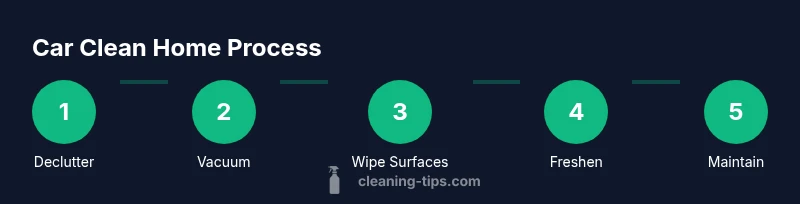
Deep-clean sessions should be planned but executed with precision. Begin with a full declutter, then vacuum seats, carpets, and mats, followed by brushing away hair and debris from vents. Wipe plastic and vinyl surfaces with a damp microfiber cloth and mild cleaner. For home surfaces, wipe high-touch areas first, then proceed to wood, glass, and metal surfaces with appropriate cleaners. Always test a new cleaner on an inconspicuous area, then apply in thin coats. Allow surfaces to dry completely before using.
Odor removal and stain handling
Odors are often trapped in fabrics, carpets, and vents. Sprinkle baking soda on upholstery and carpets, leave for 15-30 minutes, and vacuum thoroughly. For persistent smells, use a targeted odor eliminator after airing out for 10-15 minutes with ventilation. Treat stains with a gentle dab, not aggressive scrubbing, to avoid setting the stain. When odors cycle between car and home, consider a portable air purifier or an odor-absorbing gel or charcoal.
Storage, organization, and clutter control
An organized system reduces the time needed to start a cleaning session. Create a dedicated cleaning caddy for the car and another for the home; use clip-on organizers for car mats and trunk storage. Store cleaning tools in a way that minimizes risk of leaks or spills; keep liquids upright and capped. Use small baskets or bins to separate supplies by space (car, kitchen, entry). Refill and restock on a fixed schedule so you’re never out of something essential.
Maintenance schedules and checklists
Consistency matters more than intensity. Create a weekly 15-minute wipe-down routine, a monthly deep-clean, and a quarterly upholstery refresh. Track tasks with a simple checklist (trash empties, vacuum, wipe, deodorize, restock). Rotate products to keep the routine fresh and avoid product fatigue. Build in reminders on your phone or calendar to keep your plan active.
Authority sources and further reading
For further guidance, consult trusted sources:
- EPA.gov: Cleaning recommendations for homes and vehicles.
- CDC.gov: Cleaning and disinfection guidance for general environments.
- Extension.illinois.edu: Household cleaning practices and product safety.
Tools & Materials
- Multi-surface cleaner(Safe for vinyl, plastic, and fabric; use a dedicated spray bottle)
- Microfiber cloths(Lint-free; at least 12x12 inches; multiple colors if possible)
- Vacuum with attachments(Crevice tool and upholstery nozzle included)
- Bucket & spray bottle(For dilution and rinsing; keep separate from home supplies)
- Mild detergent(Dish soap or car-specific shampoo; test for colorfast fabrics)
- Odor neutralizer(Enzymatic spray or baking soda in open bowls optional for deep refresh)
- Baking soda(Odor absorption; sprinkle on fabrics and carpets before vacuuming)
- White vinegar(Deodorizing and stain treatment (dilute for fabrics))
- Lint roller(Pet hair removal on fabrics; useful for car seats and upholstery)
- Trash bags(For decluttering sessions and organizing waste)
Steps
Estimated time: Total time: 2-3 hours
- 1
Declutter car and home
Start by removing trash and obvious clutter from both spaces. Toss recyclables separately. This reduces dirt transfer and makes the cleaning process faster.
Tip: Use a dedicated bin in your car and a small basket at your front door to catch daily clutter. - 2
Vacuum and dust
Vacuum car mats, seats (with appropriate attachments), and home surfaces. Dust from top to bottom so debris doesn't resettle.
Tip: Use microfiber cloths moistened lightly for sticky dust; avoid over-wetting. - 3
Spot-clean car interiors
Tackle stains on seats and dashboards with a mild detergent solution. Test on a hidden area first.
Tip: Blot spills rather than rubbing to prevent fabric damage. - 4
Wipe home surfaces
Wipe high-traffic surfaces with a clean microfiber cloth. Use circular motions and let dry fully to avoid streaks.
Tip: Focus on door handles, light switches, and common touchpoints. - 5
Freshen with odor control
Sprinkle baking soda on carpets and fabric, then vacuum. Lightly spray odor neutralizer on air vents and fabrics.
Tip: Ventilation helps; open windows or run a fan for 10-15 minutes after cleaning. - 6
Deep-clean upholstery
For stubborn stains, use a fabric-safe cleaner or steam clean where appropriate. Always test first and follow manufacturer guidance.
Tip: Avoid saturating fabric; use minimal moisture. - 7
Contain and store products
Organize cleaning supplies in labeled bins; keep car and home supplies separate but accessible.
Tip: Ask: can items be stored in a car kit and a home kit? - 8
Maintain daily habits
Short, five-minute routines keep spaces consistently clean. Quick wipe-downs after use prevent buildup.
Tip: Integrate a 3-step cooldown: trash, wipe, freshen.
Questions & Answers
What is the best starting point for a car clean home routine?
Begin with decluttering both spaces, then vacuum and wipe surfaces. Establish a simple weekly rhythm to prevent buildup.
Start by decluttering, then vacuum and wipe surfaces. Keep a simple weekly rhythm to prevent buildup.
What tools do I need for car interior cleaning?
Essential tools include a vacuum with attachments, microfiber cloths, a soft brush, and appropriate cleaners for fabric and plastic.
You need a vacuum with attachments and microfiber cloths, plus fabric and plastic cleaners.
How often should I deep-clean car and home?
Aim for a quarterly deep clean of upholstery and carpets, with weekly surface cleanups to stay ahead of grime.
Do a deep clean every season, plus weekly touch-ups.
Are household cleaners safe for car fabrics?
Most mild household cleaners are safe when diluted and tested first. Use fabric-safe products for seats.
Dilute cleaners and test first on fabric; choose fabric-safe products.
How can I remove odors from car and home effectively?
Baking soda on fabrics plus proper ventilation and occasional odor-neutralizing sprays can help reduce smells.
Sprinkle baking soda and ventilate; use odor-neutralizers as needed.
Can I use vinegar for both car and home cleaning?
Yes, white vinegar is versatile for surfaces and odor control when diluted; avoid using it on natural stone.
Yes, diluted vinegar works on many surfaces; avoid stone and certain fabrics.
Watch Video
The Essentials
- Set a consistent car clean home routine.
- Tackle clutter first to speed up cleaning.
- Use eco-friendly cleaners when possible.
- Regular odors management keeps spaces fresh.
- Schedule quarterly deep-cleaning sessions.