Clean Air Duct Services: Practical How-To Guide 2026
Learn how clean air duct services improve indoor air quality, reduce dust, and boost efficiency. Find scheduling expectations, and how to choose a provider.


Discover how clean air duct services can improve indoor air quality, reduce dust, and boost HVAC efficiency. This quick answer outlines when to schedule service, what to expect during cleaning, key questions to ask providers, and simple maintenance steps to keep ducts clear. By following these steps, homeowners and renters can confidently improve home health with trusted professionals.
Why clean air duct services matter
Healthy indoor air starts with clean air ducts. Over time, dust, pollen, pet dander, mold spores, and debris accumulate inside supply and return lines. When the HVAC blower runs, contaminants can circulate through living spaces, aggravating allergies, asthma, and respiratory sensitivity. Regular professional clean air duct services can reduce particle load, improve airflow, and help HVAC systems run more efficiently by removing obstructions and preventing energy waste. According to Cleaning Tips, a thorough duct cleaning with proper containment and filtration can contribute to noticeable improvement in air quality, especially in homes with pets, renovations, or moisture issues. Beyond health, clean ducts also minimize musty odors and can extend the life of your furnace or air handler by reducing strain on the blower. The Cleaning Tips team emphasizes that success depends on a well-defined scope, proper equipment, and evidence of cleanliness after service.
What clean air duct services cover
Professional clean air duct services typically start with a diagnostic inspection, including a visual check and may include camera inspection of accessible ducts to spot mold, pests, or damage. The core service involves agitation and vacuuming of supply and return ducts using HEPA-filtered equipment, bonneted tools to reach tight bends, and containment to minimize dust dispersion. Optional add-ons can include mold remediation, sanitizing with EPA-registered products, cleaning of the HVAC blower wheel, coil cleaning, and dryer vent cleaning. Note that not all providers include every service; always confirm the exact scope in writing and ensure the work includes post-cleaning verification. Cleaning Tips emphasizes asking for a written scope, before/after photos, and a clear warranty or guarantee on workmanship.
How to evaluate reputable providers
Choosing the right company matters for both safety and results. Look for NADCA certification or equivalent credentials, current licensing and insurance, and verifiable local references. Ask for a written estimate with a breakdown of labor, equipment, and containment practices. Inquire about containment measures to protect you and your home during cleaning, the type of filtration used, and whether the service includes post-cleanup verification. Read reviews across multiple platforms and request proof of ongoing training or certifications. A thoughtful provider will describe the process in plain language, outline the expected outcomes, and provide a realistic timeline. According to Cleaning Tips analysis, the strongest proposals include a thorough pre-cleaning inspection, a transparent scope, and a documented post-cleaning check.
The cleaning process in depth
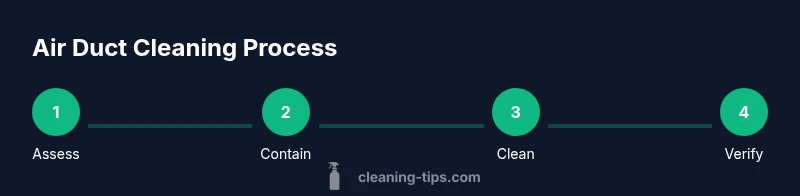
A thorough duct cleaning follows a structured sequence to maximize effectiveness while maintaining safety. First, technicians perform a pre-inspection to identify ductwork access points and potential moisture or mold concerns. They set up containment barriers (plastic sheeting) and seal off the work zone to prevent dust migration. Using professional-grade HEPA vacuums, they attach agitation tools to dislodge debris from the interior surfaces, then extract dust through the vacuum system. Ducts are cleaned from the furthest point toward the furnace or air handler, including registers, diffusers, and plenums. If mold or oil residue is found, remediation steps are taken per industry standards. After cleaning, technicians seal minor leaks and recheck airflow to ensure improvements in circulation. The end result should be cleaner air, less dust in living areas, and a more efficient HVAC cycle.
DIY maintenance that supports professional work
While most of the heavy lifting should be left to pros, you can support outcomes with simple maintenance. Regularly replace or clean your HVAC filter according to the manufacturer’s recommendations, ideally every 1-3 months depending on use and household conditions. Keep supply and return vents clear of obstructions, and wipe vent covers with a damp cloth to reduce surface dust. Consider scheduling professional duct cleaning after major renovations or if you notice persistent musty odors, increased dust, or allergy symptoms. Finally, ensure your home’s humidity stays in an appropriate range to prevent moisture buildup in ductwork, which can complicate future cleaning.
Cost considerations and scheduling
Costs for clean air duct services vary based on home size, duct complexity, accessibility, and regional pricing. Always obtain multiple written quotes, and compare the scope of work rather than just the price. Ask about containment, disposal of debris, and any follow-up inspections included in the package. Some providers offer bundled services (such as dryer vent cleaning or coil cleaning) at a discount when booked together. While price matters, prioritize value: certified technicians, clear warranties, and transparent communication. Cleaning Tips recommends prioritizing providers who offer a detailed scope of work and straightforward service timelines.
Post-cleanup checks and long-term upkeep
After cleaning, test your system by turning the HVAC back on and listening for abnormal noises or vibration. Run fans to ensure airflow improves at multiple registers. Check for a noticeable reduction in dust accumulation on surfaces and a fresh odor rather than a stale, musty scent. Schedule a maintenance plan that includes regular filter changes and periodic inspections. Keep the area around returns and diffusers clean to prevent recontamination from nearby surfaces. A proactive approach—paired with professional service—helps sustain indoor air quality and HVAC efficiency for years.
Quick maintenance reminders for ongoing air quality
- Change filters on schedule and choose a MERV rating suitable for your system. - Vacuum around vents regularly to reduce surface dust that can migrate into ducts. - Keep humidity in check with dehumidifiers during humid seasons. - Avoid sealing off or blocking vents with furniture. - Announce any remodeling or moisture problems to your service provider before the next cleaning.
Tools & Materials
- HEPA vacuum cleaner(HEPA-rated, portable unit)
- Camera or inspection mirror(To inspect hard-to-see ducts)
- Soft-bristle brushes and agitation tools(For inside ducts)
- Duct access tools (screwdrivers, keys)(Remove/register covers safely)
- Plastic sheeting, tarps, tape(Contain dust and protect floors)
- Personal protective equipment (gloves, mask, goggles)(Maintain safety during cleaning)
- Duct sealant or mastic(Seal leaks after cleaning if needed)
- Drop cloths and floor protection(Protects surfaces during work)
Steps
Estimated time: Total time: 4-6 hours
- 1
Schedule and prep
Coordinate a suitable date and time with the provider. Clear access to ductwork, move furniture, and protect floors. Confirm the full scope of work in writing and keep pets away during the appointment.
Tip: Ask for a written scope and a photo of the proposed work areas beforehand. - 2
Shut down HVAC and secure system
Power down the thermostat and switch off the furnace or air handler to prevent dust recirculation. Note system settings and any zones that require special attention.
Tip: Record current thermostat settings to discuss post-cleanup airflow changes. - 3
Set up containment
Install plastic barriers to isolate the work area, seal doors, and cover floors. This minimizes dust spread and protects adjacent rooms.
Tip: Keep doors closed throughout the cleaning process to maximize containment. - 4
Access and remove registers
Remove vent covers and access panels, label each register for easy reinstallation, and check for visible damage or moisture indicators.
Tip: Take before photos of each access point for reference. - 5
Clean ducts and components
Use HEPA vacuums and agitation tools to dislodge debris, then extract dust through the system. Clean related components like plenums and diffusers as needed.
Tip: Request before-and-after photos to verify work quality. - 6
Inspect, seal leaks, and verify airflow
Inspect for remaining contamination, seal any obvious leaks with duct sealant, reassemble registers, and run the blower to verify improved airflow.
Tip: Ask for a post-cleanup airflow check and a written report.
Questions & Answers
What exactly is included in a typical clean air duct service?
A typical service includes inspection, access, cleaning of ducts, and a verification step. Add-ons may include mold remediation, dryer vent cleaning, and coil cleaning depending on the provider. Always confirm the full scope in writing.
Most services include inspection, access, cleaning, and a post-cleanup check. Ask about any add-ons before the work begins.
Do I need to shut off my HVAC system during service?
Yes. Technicians usually shut off the system to prevent dust recirculation and to safely access ducts. They will restart and verify performance after completion.
Yes—shut off your HVAC during cleaning and have the technician confirm system reset after.
Can air duct cleaning improve allergy symptoms?
Cleaning can reduce irritants in ducts and improve perceived air quality, but it isn’t a guaranteed cure for allergies. Individual results vary based on home environment and existing conditions.
It can help by reducing irritants, but it’s not a cure for allergies.
How often should air ducts be cleaned?
Frequency depends on use, renovations, moisture, and pets. Many homes consider cleaning every few years or after major projects, but a professional assessment is best.
It depends on your home; a pro can advise based on usage and conditions.
Are there safety concerns or myths about duct cleaning?
Professional cleaning is generally safe when performed by licensed technicians. Be cautious of scams or overuse of harsh chemicals; always verify credentials and products used.
Generally safe when done by licensed pros; beware of scams and excessive chemical use.
Watch Video
The Essentials
- Choose a certified professional with written scope.
- Expect thorough inspection, containment, cleaning, and verification.
- Ask for before/after photos and a post-cleanup report.
- Maintain ducts with regular filter changes and mindful renovations.