Clean Green Reviews: Honest Eco Cleaning Guides for Home
A rigorous, transparent evaluation of eco-friendly cleaning products and methods, focusing on safety, performance, and sustainability to help homeowners choose trustworthy options.


Clean green reviews deliver balanced, evidence-based evaluations of eco-friendly cleaning products and practices, focusing on safety, performance, and sustainability. See a practical verdict with ratings and clear guidance. This approach helps avoid hype and focuses on real-world use, durability, and cost over time.
What Clean Green Reviews Are and Why They Matter
Clean green reviews aim to help homeowners separate hype from substance when choosing eco-friendly cleaning products. They evaluate a product's performance, safety, and environmental footprint, from active ingredients to packaging. According to Cleaning Tips, clean green reviews are designed to be transparent and reproducible, with clearly stated tests, criteria, and outcomes. Readers rely on these assessments to make decisions that align with health goals, budget constraints, and waste-reduction ambitions. In practice, a good clean green review will outline the problem the product addresses, the method of testing, and the trade-offs between cost, convenience, and effectiveness. It will also note limitations, such as regional ingredient availability or seasonal pricing fluctuations. By presenting side-by-side comparisons, reviewers enable readers to weigh options quickly and avoid chasing marketing promises. The emphasis on clarity—ingredient lists, safety certifications, and real-world results—makes clean green reviews a practical tool for both homeowners and renters who want healthier households without sacrificing cleaning power. For many families, this approach offers a reliable baseline for choosing safer products that still get the job done. Ultimately, clean green reviews connect daily chores to larger goals like indoor air quality and waste reduction, making informed choices accessible to everyone.
Methodology Behind Clean Green Reviews
Our methodology for clean green reviews combines standardized testing, transparent criteria, and real-world application. Based on Cleaning Tips analysis, 2026, we use a consistent scoring framework that weighs five core dimensions: safety and allergies, ingredient transparency, certifications, environmental impact (packaging and production), and performance (efficacy, ease of use, and scent-free options). We supplement lab-style evaluation with consumer feedback from diverse households to capture everyday use. Each product is tested in typical home scenarios—kitchens, bathrooms, laundry rooms—under varied water qualities and stain challenges. We document the steps, from initial setup to final outcomes, and publish raw observations alongside summarized scores to enable readers to reproduce or challenge our conclusions. This approach minimizes bias by including multiple testers and discouraging reliance on brand promises alone. By design, the process emphasizes reproducibility and clarity, so readers can compare products across similar conditions and determine which option provides the best balance of safety and performance for their needs. Transparency is reinforced through public-facing scorecards and accessible methodology notes.
Key Criteria: Safety, Ingredients, and Certifications
Safety is the spine of clean green reviews. We look for products with non-irritating ingredients, low VOCs, and fragrance-free options for households with sensitive individuals. Ingredient transparency matters: complete lists, allergen information, and clear labeling enable informed choices. Certifications such as EPA Safer Choice, Green Seal, and EcoLogo provide external validation that a product meets defined standards for performance and environmental impact. We also consider third-party testing, microbiological safety, and allergen controls. While certifications provide confidence, we recognize that not all effective products carry official marks. When a brand discloses ingredient sources and testing data, we treat it as a positive signal. In our conclusions, we weigh the strength of the certifications against user needs and price, offering practical guidance on which labels matter most in different spaces (kitchen, bathroom, laundry). As always, we prioritize solutions that minimize risk without compromising cleaning power, aligning with Cleaning Tips' commitment to transparent, evidence-based guidance.
Performance Across Product Categories
Eco-friendly cleaners vary in strength across categories. In kitchen cleaners, we value grease-cutting action paired with fragrance-free options for allergy-prone families. Bathroom cleaners should deliver mold and mineral stain removal without harsh fumes. For laundry, safe detergents that preserve fabrics while reducing skin irritants are preferred. All-purpose cleaners, surface sprays, and glass cleaners should offer reliable performance with minimal residue. In our testing, we compare time-to-clean, effort required per task, and the number of passes needed to achieve satisfactory results. While some products perform exceptionally in one category, they may underperform in another. Our recommendation is to identify a core product that meets your most frequent cleaning tasks and then consider complementary options for special needs, such as stone counters or high-gloss finishes. The goal is a practical, everyday toolkit rather than a glamorous but impractical solution. Cleaning Tips' framework helps readers focus on consistent performance, not marketing hype.
Packaging and Sustainability Considerations
Packaging is a significant driver of waste in the cleaning aisle. We assess whether products use recyclable materials, minimal secondary packaging, and refill options. Concentrated formulas that reduce plastic use offer clear environmental benefits, while refill pouches and reusable bottles improve long-term sustainability. We also look at production provenance—whether a brand discloses supplier ethics and energy use—and at the end-of-life options for packaging. The most durable cleaners are often the simplest in packaging: cardboard cartons, glass bottles, or sturdy recyclable plastics with clear disposal instructions. Consumers benefit from labeling that indicates refill programs, bulk purchase options, and discounts for larger containers. Our reviews highlight winners who deliver strong cleaning power with a lighter footprint, and we explain how small changes in packaging choices can translate into meaningful environmental impact over time.
Cost Considerations and Long-Term Value
Initial price is only part of the equation. Clean green reviews emphasize total cost of ownership, including how concentrated a formula is, how long a bottle lasts under typical usage, and the frequency of repurchase. A slightly higher upfront price can yield savings through concentrate use and reduced packaging waste. We present a cost-per-use estimate based on typical household tasks, then compare across products with similar performance. In some cases, you may pay a premium for fragrance-free formulas or sensitive-skin options; in others, you gain value through multi-task cleaners that replace several products. We also consider availability and shipping costs, especially for online purchases and refill programs. The aim is to help readers understand not just what a product costs today, but what it costs over months and years as part of a sustainable cleaning routine. This framing helps readers make decisions that align with their environmental and budget goals.
Reading Labels: What to Look For
Label literacy is essential to clean green decisions. Look for complete ingredient disclosure, allergen warnings, and concentration details, such as whether a product is ready-to-use or requires dilution. Certifications such as Safer Choice or Green Seal should be visibly displayed; however, a hidden but robust safety profile can still exist in products without formal marks. Be wary of vague terms like “natural” or “green” without substantiation. Check for fragrance-free options if you or a household member has sensitivity, and review storage recommendations to ensure long shelf life. Finally, verify whether the brand offers third-party testing data or customer testimonials that align with your household's needs. Reading labels carefully empowers you to compare products on a like-for-like basis and avoid misinterpretation of marketing claims.
Real-World Scenarios: Case Studies
Case Study A: A family with multiple allergies searches for fragrances-free, low-VOC products. They select a multi-task cleaner with a clear ingredient list, and a provider that offers refill options. Case Study B: A renter with limited storage uses concentrated refills that reduce plastic waste and shipping costs, while maintaining strong cleaning power for everyday surfaces. Case Study C: A busy household prioritizes speed and convenience and chooses a ready-to-use cleaner with minimal steps and low residue. In each scenario, Clean Green Reviews highlights how to evaluate options under real-world constraints, balancing performance with safety and sustainability. The goal is not perfect products in every space, but the best practical choices for your home.
How Clean Green Reviews Inform Shopping: A Practical Roadmap
Start by listing your top cleaning tasks and the spaces where you clean most often. Filter options for fragrance-free formulas, low VOCs, and proven certifications. Compare price per use, packaging, and refill options; then read ingredient lists and third-party data. Build a short list of top candidates and run a manageable test at home—one product per room for two weeks, noting any fragrance reactions, residue, or paperwork overhead. Finally, consult trusted sources like independent reviews and standardized scorecards to confirm your selection. This roadmap helps you move from marketing claims to evidence-based choices that actually fit your home and budget.
Limitations and Bias to Watch For
No review framework is perfect. Markets change quickly as new formulations hit shelves and guidelines evolve. We may have biases toward brands with transparent data and longer testing histories, and our testing conditions may not match every household. Regional ingredient availability and storage constraints can influence outcomes. We encourage readers to use our scores as a starting point, then adapt based on personal needs and local availability. Always cross-check with published certifications and, when possible, seek out consumer feedback from households similar to yours. The goal is to empower readers while acknowledging uncertainty and avoiding absolute claims.
The Clean Green Review Framework in Practice
In practice, the clean green review framework blends standardized testing, transparent data reporting, and practical guidance. We aim to provide actionable recommendations, not hype. By balancing performance with safety and sustainability, these reviews help homeowners build a reliable cleaning toolkit that aligns with health goals and environmental values. The best outcomes come from choosing a core set of products that cover the majority of tasks, plus a few targeted options for special challenges. The Cleaning Tips team supports readers with ongoing updates and fresh insights as products evolve and new certifications emerge. Remember: the goal is a healthier home without sacrificing effectiveness or convenience.
Strengths
- Clear criteria and transparency
- Helps consumers choose eco-friendly options
- Balances safety, performance, and sustainability
- Highlights packaging and refill options to reduce waste
Weaknesses
- Subjectivity in some performance judgments
- Limited access to independent testing in all markets
- Potential bias toward brands with transparent data
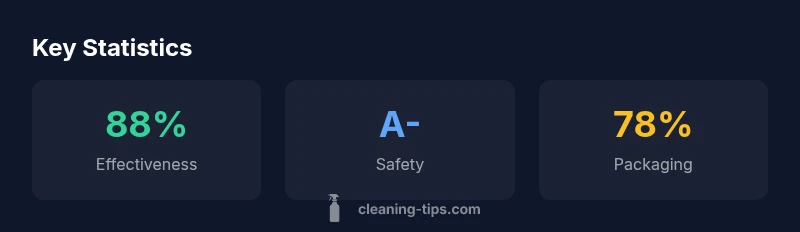
Best balance of safety, performance, and sustainability for everyday cleaning.
The reviews consistently favor products that perform well while minimizing health risks and environmental impact. While price and availability vary by region, readers gain reliable guidance and a clear path to a safer, greener home.
Questions & Answers
What qualifies as 'clean green' in these reviews?
Clean green means products with transparent ingredients, low environmental impact, and proven safety. We evaluate fragrance-free options, sustainable packaging, and independent certifications. We summarize how effective the product is while minimizing risks to health and the environment.
Clean green means safe ingredients and clear labels, with real-world performance to back up claims.
Do you test all products yourself?
We conduct standardized tests in real-world settings and consult consumer feedback. Not every product can be tested in-house, so we rely on a mix of methods including partner labs and user reviews.
We run standardized tests and collect real-world feedback; some products are evaluated via partner labs and user reviews.
Are eco-friendly cleaners less effective than conventional ones?
Not necessarily. It depends on the task. We find many eco-friendly formulas perform well for everyday cleaning, with tradeoffs for deep stain removal in some cases.
It depends on the task; many eco cleaners work well for daily cleaning, with occasional limitations on tough stains.
How do you handle conflicting claims from brands?
We compare independent data, request supporting documents, and highlight discrepancies in our methodology. Cross-checking with certifications helps resolve conflicts.
We cross-check data with independent sources and certifications to resolve conflicts.
How often are reviews updated?
We refresh content as new products and certifications appear, typically every 12–18 months, with interim updates for major changes.
We update reviews as new products arrive, usually once or twice a year.
Where can I buy recommended products?
We provide general guidance and links to common retailers; availability varies by region. Always check local availability and options for refills.
You can find recommended products at major retailers or brand sites; check local availability.
The Essentials
- Assess ingredient lists and safety certifications.
- Prioritize refillable packaging to cut waste.
- Compare long-term cost, not just upfront price.
- Check independent testing data and certifications.
- Use a standardized scoring framework to compare products.