Clean Reviews: An Analytical Evaluation of Cleaning Guidance
In-depth analysis of clean reviews, exploring transparent, data-driven testing to help homeowners pick effective, safe cleaning products while avoiding hype and hidden claims.


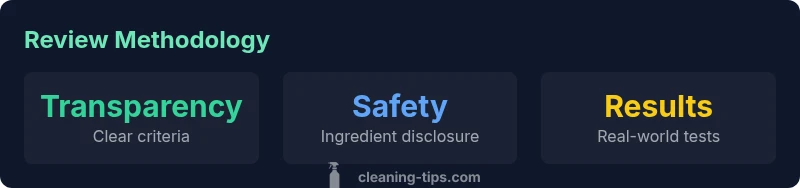
Definition: Clean reviews are transparent, data-driven assessments of cleaning products and methods, emphasizing safety, efficacy, and real-world results. According to Cleaning Tips, these reviews separate marketing hype from measurable outcomes, offering readers clear criteria, practical recommendations, and verifiable sources to help homeowners choose products that perform as advertised without compromising health or the environment.
Why Clean Reviews Matter
In the crowded world of household cleaning, readers deserve assessments that cut through marketing noise and focus on real-world performance. Clean reviews, as practiced by the Cleaning Tips team, prioritize transparency, reproducible testing, and practical outcomes. By foregrounding safety, ingredient disclosures, and measurable results, these reviews empower homeowners to select products that deliver on promises without compromising health or the environment. When you see a review labeled as a 'clean review,' you should expect a clear methodology, disclosure of sources, and actionable guidance you can apply in your own home. This approach supports better decision-making for busy homeowners and renters who want effective results with minimal guesswork.
Top Criteria in Cleaning Product Reviews
Effective cleaning product reviews hinge on a balanced set of criteria. First, performance: how well does the product handle common messes like grease, soap scum, and everyday grime? Second, safety: are ingredients clearly disclosed, and are there warnings for vulnerable household members? Third, environmental impact: does the product use sustainable packaging or eco-friendly formulations? Fourth, value: what is the cost per use, and how does the product hold up over time? Fifth, durability and maintenance: does it leave residue, require special tools, or affect surfaces? Sixth, testing methods: are there both lab-based and real-world tests, with data you can verify? A robust clean review should address all these areas with concrete, testable statements.
How We Test: Methods for Cleaning Tips
At Cleaning Tips, testing combines controlled lab-like procedures with real-home trials to capture both reproducible data and practical outcomes. Tests include standardized grime simulations, safety checks (e.g., eye irritation potential, skin contact advisories), and surface compatibility assessments to prevent damage. We also compare eco-friendly formulations against conventional cleaners for stain removal and odor control, while noting any trade-offs in scent or residue. Each product's scorecard traces sources, test conditions, and raw results so readers can reproduce or critique the methodology. This transparency is essential to maintaining trust in clean reviews and ensuring recommendations withstand scrutiny.
Comparing Categories: All-Purpose Cleaners, Bathrooms, and Laundry
Different cleaning tasks call for different toolkits. All-purpose cleaners are evaluated on versatility and streak-free results across typical kitchen and living space messes. Bathroom cleaners face stronger mineral deposits, soap scum, and mildew; we prioritize fast-acting formulas with surface-safety assurances. Laundry cleaners are judged on fabric care, scent retention, and compatibility with common washing machines. Across these categories, we highlight key differentiators: speed of action, residue levels, surface compatibility, and scent strength. Readers can then map their own needs—whether they want a single bottle for multiple tasks or category-specific powerhouses—to the right choice with confidence.
Real-World Scenarios and Recommendations
Consider a busy household with kids and pets. A clean review in this context would favor products with clear safety disclosures, low toxicity, and minimal lingering odors. For kitchens with tough grease, look for formulations that combine grease-cutting agents with material-safe surfactants. In bathrooms, prioritize rapid mildew control and reliable stain removal on porcelain and tile. For laundry, emphasize fabric care and allergen-friendly formulas. Our recommendations aim to minimize guesswork by presenting scenario-based guidance alongside scorecards, so readers can pair products with their actual needs and routines.
Reading a Cleaning Review Scorecard
Scorecards distill a review into digestible metrics: performance, safety, eco-friendliness, cost-per-use, and user experience. Look for explicit test conditions and sample sizes, not just glossy ratings. Check ingredient disclosures and any cited third-party certifications. A trustworthy scorecard should also note limitations or data gaps, so you understand what the rating does and does not cover. When comparing products, align the scores with your priorities—safety first, then efficiency or value.
Common Pitfalls in Cleaning Reviews
Beware reviews that rely on marketing fluff rather than data, or that cherry-pick scenarios to fit a narrative. Some reviews conflate scent with effectiveness, exaggerate performance for a particular surface, or omit potential safety concerns. Another pitfall is incongruent testing conditions, such as using a product outside its recommended surfaces. Clean reviews strive to avoid these pitfalls by documenting every assumption, providing raw data, and inviting reader critique to keep the conversation honest.
Practical Takeaways for Your Home
- Seek reviews that outline testing methods and data sources. - Compare products using the same tasks you perform at home. - Prioritize safety disclosures and eco-friendly considerations. - Use scorecards to identify strengths that matter to your routine. - Remember that no product is perfect for every scenario; pick the best overall fit for your household.
Strengths
- Transparent criteria that reduce hype
- Explicit testing methods with real-world relevance
- Clear safety and environmental considerations
- Actionable guidance for homeowners
- Cites sources and test conditions for verification
Weaknesses
- Requires time to digest full reports
- Not all products are tested equally across regions
- Some data may be limited for niche surfaces
Clean reviews provide a reliable framework for choosing cleaning products
Overall, clean reviews balance rigorous testing with practical home-use guidance. They help you select safe, effective products while clearly stating data sources and limitations. The approach is well-suited for homeowners who want measurable results without marketing spin.
Questions & Answers
What makes a review 'clean'?
A clean review uses transparent methods, cites data sources, and provides real-world results. It avoids marketing hype and clearly labels any limitations or data gaps. Cleaning Tips ensures that conclusions are grounded in test procedures readers can evaluate.
A clean review uses clear methods, shows data sources, and focuses on real-world results with no hype.
How are cleaners tested safely?
Testing safety involves ingredient disclosures, toxicity checks, and surface compatibility assessments. We also review user instructions to ensure safe usage and provide warnings when necessary. All tests are designed to reflect typical home environments.
We check ingredients, safety warnings, and how the product performs on common surfaces in real homes.
Eco cleaners effective?
Eco-friendly cleaners can be highly effective, though performance may vary by task. Clean Reviews compares efficacy, scent, and residue, while highlighting any compromises and the environmental benefits of each formula.
Eco cleaners can work very well; we compare their performance and environmental impact side by side.
Reviews show durability?
Durability is assessed through sustained performance across multiple uses and over time. We note any fading or surface wear and report on long-term reliability where data is available.
We look at how well a product lasts over repeated uses and note any issues that crop up.
How to read a scorecard?
Start with the top-line performance scores and then inspect safety and eco metrics. Check test conditions and data sources to understand the context. Compare products that share the same use-case.
Read the scores, check the test conditions, and compare products that fit your scenario.
Ingredient disclosures matter?
Disclosures help assess safety for households with allergies or pets. Clean Reviews prioritizes full ingredient lists and explains any sensitive components or warnings.
Yes—ingredient lists matter for safety and allergy considerations.
The Essentials
- Prioritize transparent testing methods
- Assess safety and environmental impact
- Compare products using identical tasks
- Read the scorecard data and limitations
- Apply findings to your household needs