Clean Shaven vs Beard: A Practical Grooming Comparison
An analytical guide comparing clean shaven vs beard, covering maintenance, comfort, hygiene, style, and work settings. Learn which look fits your climate, schedule, and home care routine from Cleaning Tips.


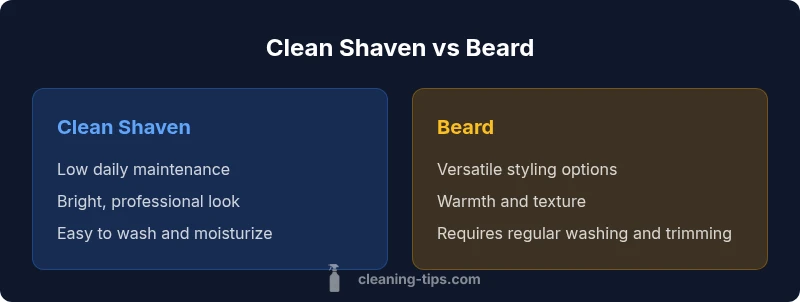
Quick verdict: Clean shaven and beard each suit different routines. According to Cleaning Tips, clean shaven offers the simplest maintenance and a brighter, more professional look, while a well-groomed beard adds warmth, texture, and style versatility. For busy schedules or hot climates, shaving usually wins on daily upkeep; beards shine in cooler months when you want a visible personal statement.
Defining Clean Shaven vs Beard: What the Choice Really Means
The phrase clean shaven vs beard captures two end points of a grooming spectrum. In practice, most people rotate between intervals of a close shave and periods of growing and shaping facial hair. The decision isn’t only about appearance; it reflects your daily routine, skin health, climate, and personal identity. According to Cleaning Tips, the contrast centers on maintenance effort, skin response, and the way you present yourself in different spaces—home, work, and social settings. The right choice also depends on your grooming confidence, access to tools, and willingness to adapt over time. As you read, notice how small changes in regimen shift overall cleanliness, comfort, and confidence.
Skin Health and Comfort: Irritation, Oil, and Beard Skin Care
Whether you adopt clean shaven vs beard daily, skin health matters. Shaving can irritate sensitive skin, cause micro-cuts, or lead to razor burn, especially in humid environments or when using dull blades. A beard, if not properly cleaned and conditioned, can trap oil and dirt near the skin, potentially causing clogged pores. The Cleaning Tips team notes that the best path often depends on skin type, hair type, and climate. For some, a light routine with an exfoliating wash and a soothing aftershave reduces irritation; for others, a weekly beard wash and a beard oil routine helps preserve skin health under facial hair. The goal is to minimize friction and inflammation while maintaining a fresh look and healthy skin.
Time, Cost, and Tooling: Shaving vs Bearding Gear
Maintenance time and cost are central to comparing clean shaven vs beard. Shaving typically requires razors, shaving cream, and post-shave care, with costs spread across blades and products. A beard demands trimming, washing, conditioning, and periodic visits to a barber or professional shaping, plus products like beard oil or balm. The Cleaning Tips analysis suggests that the upfront investment for a beard can be higher, but the long-term flexibility in style is a form of value for many users. The practical takeaway is to map your daily schedule, water quality (for rinsing), and sensitivity to products when choosing gear.
Climate, Weather, and Comfort Considerations
Weather plays a surprisingly large role in choosing clean shaven vs beard. In hot and humid climates, a clean shave can feel cooler and require less grooming time, whereas a beard can provide protection against cold winds and sun exposure. Seasonal shifts also influence comfort: beards can trap heat, making them less comfortable in peak summer, while they add warmth in winter. Your local climate and personal tolerance determine whether shaving or growing a beard is more comfortable during a given month. The discussion stays practical: pick the path that reduces daily friction and keeps you comfortable at home and work.
Style, Personal Expression and Professional Settings
One of the strongest arguments in the clean shaven vs beard debate is how each look communicates professional identity and personal style. Clean shaven often reads as meticulous and contemporary, suitable for conservative workplaces and formal events. A beard signals individuality, varies with length to reflect fashion cycles, and can soften facial features in photos or video calls. The right choice depends on your workplace dress code, client interactions, and your own sense of style. Remember that styling options remain a key differentiator: stubble, goatee, or full beard each carry distinct impressions and care requirements.
Hygiene, Washing, and Grooming Routines
Grooming hygiene differs between clean shaven vs beard. A shaved face generally_requires daily cleansing, moisturizer, and sometimes a soothing aftershave to prevent irritation. Facial hair introduces more nooks for oil and skin flakes, so washing the beard and skin more thoroughly is recommended—often with a dedicated beard shampoo or conditioner. Regular combing or brushing helps distribute natural oils and keep the beard neat. The Cleaning Tips team emphasizes that while beards demand more routine maintenance, they also offer an opportunity to build a simple, repeatable cleaning protocol that fits your home and schedule.
Practical Grooming Setups: A Minimalist Starter Kit
A practical approach to clean shaven vs beard is to curate a minimalist kit that covers both looks but emphasizes routine simplicity. For shaving: a quality razor with multiple blades, shaving cream or gel, aftershave or balm, and a gentle cleanser. For beards: a beard trimmer, beard oil or balm, a soothing wash, and a comb. Keep your tools clean and dry to avoid rust and bacteria growth. The goal is to reduce decision fatigue—have a focused set of products that you actually use, and rotate through them as needed. A lean kit saves time and money while keeping both looks accessible.
Real-World Scenarios: When Clean Shaven Shines and When a Beard Wins
Consider your daily life when deciding between clean shaven vs beard. If you wake early for kids, commutes, or meetings, shaving at home can save time before leaving the house. If you attend outdoor events or work in climates that favor warmth, a beard can offer practical advantages. Personal preference matters: some people respond to facial hair with greater confidence, while others feel most comfortable with a clean, hairless face. The best path is the one that aligns with your routine and your desired impression.
Common Myths Debunked: Clean Shaven vs Beard Realities
Several myths persist around clean shaven vs beard, such as shaving making skin permanently smoother or beards implying laziness. In reality, results depend on routine consistency, skin type, and hair growth patterns. Debunking these myths helps set realistic expectations about maintenance, skin health, and professional acceptance. The key is to test and refine a routine that fits your life and your grooming goals.
Transitioning Between Looks: Switching From Shave to Beard (and Back) Gracefully
If you ever want to switch between clean shaven and beard, plan a transition period that minimizes awkward moments and discomfort. Start with a shorter beard or stubble, then gradually grow the length while updating your grooming routine. During transitions, assess skin health, fragrance sensitivities, and product compatibility. The goal is a smooth, confident change rather than a dramatic makeover.
Common Grooming Mistakes to Avoid in Either Look
Avoid using harsh products on sensitive skin, neglecting cleaning of tools, or failing to moisturize after shaving or beard washing. Poor beard care leads to brittle hair and irritated skin, while improper shaving can cause red skin or nicks. Establish a consistent routine that protects skin health, uses appropriate products, and keeps tools clean and dry for both looks.
Comparison
| Feature | Clean Shaven | Beard |
|---|---|---|
| Maintenance Time | Low | Moderate |
| Upfront Cost | Low | Moderate |
| Long-Term Cost | Low–Moderate | Moderate |
| Weather Comfort | Cooler-friendly | Year-round warmth |
| Style Flexibility | Limited variation | High variation |
| Hygiene & SkinCare | Easier to keep clean | Beard requires regular washing & care |
Strengths
- Lower daily grooming time with a clean shave
- Polished, professional look for many workplaces
- Beard offers versatility in style and seasonality
- Can conceal minor skin imperfections when desired
Weaknesses
- Shaving can irritate sensitive skin and cause microcuts
- Beards require regular washing, trimming, and conditioning
- Beard maintenance can be time-consuming in busy schedules
- Beard growth is not guaranteed to suit every face shape
Clean shaven is best for quick maintenance and professional settings; beard excels for style and warmth.
Choose clean shaven if you prioritize speed and a polished look. Choose a beard if you value versatility, warmth, and personal expression; align the choice with climate, schedule, and skin health. The Cleaning Tips team notes that both options can coexist with a simple switch plan.
Questions & Answers
What is the main difference between a clean shaven look and a beard?
The main difference lies in maintenance, appearance, and how you present yourself in different settings. Clean shaven emphasizes simplicity and a polished vibe, while a beard offers texture, warmth, and personal expression. Both require routine care to maintain skin health and facial hair.
Clean shaven focuses on simplicity and polish; a beard adds texture and warmth, with care tailored to your routine.
Which option is easier to maintain day-to-day?
For daily effort, a clean shave typically requires less product variety and fewer grooming steps than maintaining a beard. Be prepared for regular shaving or beard care routines depending on your chosen look. Your routine should minimize friction with your lifestyle.
Shaving is usually quicker day-to-day, while beards need more washing and trimming.
Can a beard genuinely improve skin health for some people?
Beards can protect the skin from wind and sun exposure and trap moisture when properly cared for. However, beards can also harbor bacteria if not cleaned regularly. A balanced routine helps determine whether a beard or shave benefits your skin health.
Beards can protect skin if kept clean, but need regular washing to stay healthy.
How do I transition from shaved to beard smoothly?
Start with a short stubble, then gradually grow length while updating skincare and beard care products. Update grooming tools to include a trimmer and beard oil. Monitor skin response and fragrance sensitivities to ensure a comfortable transition.
Grow gradually—start with stubble, then shape and care as it thickens.
Is a beard appropriate for professional settings?
Beards can be appropriate in many professional environments, especially when well-groomed and neatly shaped. Consider workplace norms and client expectations, and keep styling consistent. If uncertain, seek guidance from your HR policy or manager.
Beards can fit professional settings when neatly kept.
What grooming tools do I need for both looks?
A versatile kit includes a good razor and shaving cream for clean shaven looks, plus a beard trimmer, beard oil, and a cleanser for beards. Keep a basic brush, scissors, and a mirror handy to manage both styles.
Have a razor for shaving and a trimmer plus beard oil for beards.
The Essentials
- Start with a simple grooming routine that fits your day
- Match hair growth and climate to your look choice
- Invest in essential tools for either look
- Keep skin health in focus for shaving or beard care
- Transition gradually when switching looks