How to Achieve Clean Solar Energy at Home
Learn practical steps to maximize clean solar energy at home with safe cleaning, efficient panels, and eco-friendly maintenance from the Cleaning Tips team.


Steps to achieve clean solar energy at home: 1) size the system to your energy needs, 2) install efficient panels and a reliable inverter, 3) implement a safe cleaning routine, 4) perform periodic inspections and maintenance. Keep roof clear of shade, use gentle cleaners, and schedule professional checks to sustain steady, low-emission power.
What clean solar energy means and why it matters
Clean solar energy means electricity produced by solar panels operating at peak efficiency with minimal environmental impact. When panels are clean and well maintained, they harvest more sunlight, reducing the need for fossil-fuel backup. According to Cleaning Tips, clean solar energy isn't just about the panels—it's about a holistic approach: proper siting, safe cleaning, and routine maintenance that keeps inverters and wiring healthy. This approach aligns with eco-friendly living and lower household emissions, helping homeowners reduce their carbon footprint while maintaining reliable power during sunny days.
In this guide we’ll walk you through safe cleaning practices, the science behind PV efficiency, and practical steps you can implement today to ensure your system delivers clean, dependable energy for years to come.
How solar panels generate electricity and factors affecting efficiency
Photovoltaic (PV) cells absorb photons from sunlight and release electrons, creating a flow of direct current. An inverter then converts this DC into alternating current for home use. The efficiency of this process depends on panel quality, cleanliness, angle, shading, and temperature. Dirt, salt spray, pollen, or bird droppings can reduce light transmission and lower output. Regular cleaning and inspection help maintain peak performance, especially in dry, dusty or coastal environments. Monitoring performance data and considering modern inverters or optimizers can compensate for partial shading, improving overall system reliability.
Key factors that influence performance include panel orientation, tilt, and roof spacing, as well as system maintenance schedules. Integrating microinverters or optimizers can improve performance on partially shaded roofs by maximizing each panel’s voltage independently.
Building a home setup for clean solar energy
A home solar setup starts with a realistic assessment of energy needs, roof access, and local codes. Grid-tied systems with net metering are common, offering energy credits when solar production exceeds consumption. Choose reliable components: high-efficiency panels, durable mounting, and an appropriately sized inverter. For roofs with mixed shading, microinverters or power optimizers can help each panel perform independently, boosting overall output. A good layout also considers temperature management and airflow to minimize performance losses.
Safe, eco-friendly maintenance practices to keep performance high
Maintenance doesn't demand harsh chemicals. Use water with a small amount of mild soap, a soft brush or microfiber cloth, and a gentle rinse from a low-pressure source. Avoid abrasive cleaners, high-pressure hoses, or solvents that could damage coatings. Schedule inspections at least annually and after severe weather. Keep safety in mind: never climb a wet ladder, turn off DC isolators according to local codes, and wear protective gear.
Costs, savings, and long-term benefits
Costs for solar energy systems vary widely based on system size, roof configuration, location, and available incentives. While upfront investments differ, the long-term benefits include reduced utility dependence, a smaller carbon footprint, and potential incentives that improve total value over time. The exact payback period depends on usage patterns, local energy prices, and maintenance practices. A well-maintained system with periodic inspections and cleanings tends to deliver steadier performance and longer life, reinforcing the environmental and financial appeal of clean solar energy.
Authority sources and further reading
- https://www.energy.gov/eere/solar
- https://www.nrel.gov/solar.html
- https://www.epa.gov/greenpower/solar
For more context, you can also review related topics on energy efficiency and rooftop solar system maintenance. Clean Solar Energy involves ongoing care and smart design choices to ensure durable, low-emission power generation.
Tools & Materials
- Safety gloves(Non-slip, insulated for electrical work)
- Ladder or stable platform(Must be secure and rated for your height needs)
- Soft brush with non-abrasive bristles(Gentle brushes prevent panel scratches)
- Microfiber cloths(For drying and polishing without streaks)
- Bucket with warm water(Male mild soap optional; avoid hot water)
- Mild soap or cleaning solution(Use gentle, non-ammonia cleaners only)
- Non-abrasive sponge(Optional for stubborn grime; avoid abrasives)
Steps
Estimated time: 2-4 hours
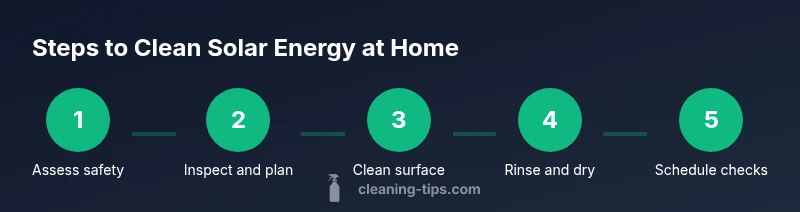
- 1
Assess safety
Survey the work area for hazards. Turn off any applicable DC isolators per local electrical codes and ensure hands and footing are dry before beginning. This reduces the risk of electrical shock or falls during cleaning.
Tip: Wear non-slip shoes and never stand on wet surfaces. - 2
Inspect for shading and damage
Check the roof line and panels for chronic shading, loose mounting, or cracked glass. Note any areas that receive less sunlight, as shading reduces energy output more than cleaning does.
Tip: Document issues with photos to share with a technician if needed. - 3
Prepare cleaning supplies
Mix a small amount of mild soap in warm water, gather microfiber cloths, and set up a low-pressure rinse option. Avoid aggressive solutions that could degrade panel coatings.
Tip: Test a small area first to confirm no streaks or damage. - 4
Clean panels safely
Gently wipe the surface with a damp microfiber cloth, working from the top down. Use circular motions only if needed to cover stubborn spots; avoid hard scrubbing that can scratch coatings.
Tip: Keep the sun off the surface—clean on cool, overcast days if possible. - 5
Rinse and dry
Rinse with a low-pressure stream to remove soap residue, then dry with a clean microfiber cloth or squeegee to prevent water spots. Ensure a thorough dry to reduce mineral deposits.
Tip: Avoid high-pressure hoses that can loosen seals. - 6
Schedule professional checks
Arrange an annual professional inspection of panels, wiring, and inverters. A pro can verify connections, check for microcracks, and ensure the system remains within safety standards.
Tip: Keep a maintenance log with dates and findings.
Questions & Answers
Do I need a professional to clean solar panels?
Not always; basic cleaning can be done safely with the right precautions, but rooftop cleaning or heavy grime benefits from a professional.
You can do basic cleaning safely, but for rooftops or heavy grime, a professional is best.
Will cleaning panels improve energy output?
Yes, especially in dusty or coastal environments where grime reduces light capture.
Yes, cleaning can boost output in dusty or coastal areas.
What cleaning solutions are safe for solar panels?
Use plain water or mild soap with water; avoid harsh chemicals.
Use water or mild soap and water; avoid harsh chemicals.
How often should I inspect panels?
Inspect annually or after severe weather; check for shading and damage.
Inspect yearly or after storms to catch issues early.
Are there safety hazards to cleaning solar panels?
Yes—careful use of ladders, electrical safety, and weather conditions are essential.
Yes—watch for falls, electrical risks, and weather conditions.
Can rain replace manual cleaning?
Rain helps but may not remove stubborn grime; manual cleaning may still be needed.
Rain helps but might not remove tough grime.
Watch Video
The Essentials
- Schedule regular inspections
- Keep panels clean for optimal output
- Prioritize safety during cleaning
- Choose eco-friendly cleaning methods