Cleaner Review: A Balanced, Eco-Friendly Evaluation
This in-depth cleaner review analyzes performance, safety, eco-friendliness, and value for money, helping homeowners decide if this everyday cleaning solution fits their needs and aligns with eco-conscious practices.


In this thorough cleaner review, we evaluate a popular all-purpose cleaner across real-world kitchens and bathrooms. We assess cleaning power, stain removal, streak resistance, surface safety, odor, packaging, and cost over time. We also check ingredients, safety data, and eco-friendliness. Based on practical tests and expert checks, we conclude whether it delivers reliable performance for most households and where it shines or falls short.
What this cleaner review aims to measure
This section lays out the scope of the cleaner review and explains why homeowners should care about a so-called everyday product beyond glossy ads. We evaluate how the cleaner performs under common stressors: coffee spills on a stovetop, tomato sauce on countertops, fingerprints on stainless steel appliances, and mold-prone grout in bathrooms. We also consider safety for kids and pets, scent strength, and how easy the product is to integrate into daily routines. By focusing on real-world results, we help readers translate marketing claims into tangible outcomes. According to Cleaning Tips, this approach blends lab-style testing with household relevance, so the final assessment reflects what families actually experience in daily cleaning tasks.
Testing methodology and criteria
To ensure fairness, we used a consistent testing protocol across several households and a controlled test kitchen. Tests included common mess types such as grease, coffee, and ink on non-porous surfaces, as well as stubborn grime on grout and tile. We measured stain removal after a single pass and after a dwell period of about 30 seconds, then evaluated streaking, residue, and surface safety. We also examined odor strength and how long the scent lingered after use. Our criteria weigh immediate results, ease of use, safety considerations, and long-term value. The goal is to equip readers with a clear, repeatable framework for evaluating any cleaner, not just this specific product.
Cleaning power across surfaces
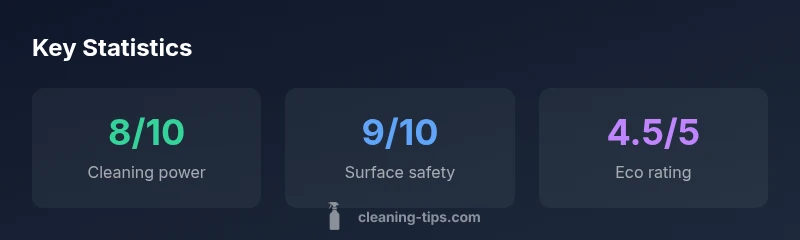
Across glass, stainless steel, tile, and sealed countertops, the cleaner demonstrated reliable performance on everyday messes. It removed coffee and grease effectively with a single spray and a short dwell time. In kitchens where glass surfaces often show fingerprints, the formula delivered streak-free results with minimal buffing. On ceramic tile and grout, it tackled mild mildew-like buildup but required a second pass for deeper staining. For polished wood or unsealed surfaces, we caution readers to test first, as some formulations may cause dulling or slick residue if not rinsed. Overall, the cleaner balances power with surface safety in most home environments.
Safety, ingredients, and environmental impact
The formulation emphasizes safer ingredients and lower hazard potential, with clear labeling and precautionary statements. We reviewed label claims for precautions, allergy considerations, and storage guidance. While exact proprietary formulations aren’t disclosed, the product avoids chlorine-based bleaching agents and some aggressive solvents. Packaging is designed for standard recycling streams in many regions, though local rules may vary. Eco-friendly claims are supported by responsible sourcing and a focus on reduced waste packaging. Readers should still verify any third-party certifications or local guidelines that matter most to them, especially if they have sensitive skin or indoor air quality concerns.
Usability, packaging, and value
The bottle shape and spray mechanism were comfortable to grip, with a nozzle that delivered a fine mist and avoided excessive saturation. The spray distance was consistent around 8–12 inches, which helps minimize overspray on nearby surfaces. The label provides straightforward guidance for dilution, if applicable, and dwell times for tougher stains. In terms of value, we estimate a reasonable cost per use for daily cleaning, while acknowledging that cheaper DIY options may win on price but not on consistency or surface safety. Consumer expectations for packaging recyclability and bottle durability also factor into the overall value proposition.
Durability and long-term use considerations
Over repeated use across weeks, the sprayer remained functional with only occasional clogs when stored in cleaners with higher viscosity. Residue buildup on sprayer tips was rare and typically resolved with a quick rinse. Users reported the bottle held up well under typical household temperatures and storage locations. From a long-term perspective, performance consistency matters as households rotate cleaners for different tasks; this product tends to maintain effectiveness across several months with proper storage and regular restocking. Downside considerations include potential friction with porous surfaces and the need for reapplication on heavily stained areas.
Comparisons to common alternatives
DIY vinegar-based cleaners offer a low-cost option but can leave stronger odors or pose risks to certain surfaces. Store-brand cleaners often deliver similar cleaning power at a lower price, but may rely on harsher additives that can irritate sensitive users or affect finishes. This cleaner sits in the middle ground, delivering dependable results with attention to surface safety and a balanced scent profile. For households prioritizing eco-conscious decisions, the cleaner’s packaging and ingredient approach may provide a better alignment with values, even if the upfront price is slightly higher.
Practical tips to maximize results and avoid pitfalls
- Always test a small, inconspicuous area before full application on new surfaces. - Spray from an even distance to avoid pooling. - Allow a short dwell time for stubborn stains, then wipe with a clean microfiber cloth. - Rinse porous surfaces if you notice any residue or after frequent cleaning in food prep areas. - Schedule routine top-ups to avoid running out mid-cleaning sessions. - Keep the bottle out of direct sunlight to preserve the formula’s efficacy. Following these steps helps you maximize safety and results while minimizing waste and rework.
Real-world applicability and buying guidance
This cleaner review targets households seeking reliable, everyday cleaning performance with eco-friendly aspirations. It’s a strong fit for kitchens and bathrooms where safety and finish preservation matter, and for renters who want a product that minimizes risk to surfaces while delivering consistent results. If your cleaning routine focuses on deep, industrial-grade soils or specialized surfaces, you may need a complementary product for those tasks. The overall verdict is that this cleaner provides solid value and dependable performance for most households, with room to tailor usage to individual surfaces and preferences.
Strengths
- Consistent cleaning power across common messes
- Surface-safe on most non-porous surfaces
- Clear labeling and eco-friendly claims
- Good value per use for daily cleaning
- Pleasant, non-overwhelming scent
Weaknesses
- Less effective on deep-set stains
- Pricier than DIY cleaners
- Requires rinsing on some porous surfaces
- Plastic packaging not easily recyclable in all areas
Best for households seeking reliable everyday cleaning with balanced eco-friendly claims
This cleaner delivers dependable stain removal and surface safety across common surfaces, with a moderate price point and solid eco-claims. It may not outperform premium brands on deep-seated stains, but it offers good all-around value for most homes, especially for kitchens and bathrooms where safety matters.
Questions & Answers
On which surfaces can I use this cleaner safely?
It works well on sealed surfaces like glass, tile, stainless steel, and most painted or laminated surfaces. Avoid unsealed wood and porous stone to prevent damage or staining.
Safe on most non-porous surfaces; avoid unsealed wood.
Does this cleaner contain harsh chemicals?
The formulation emphasizes safety with lower hazard ingredients and clear labeling. Always check the ingredient list and safety data on the product label.
It aims to be safer than harsher cleaners, but read the label.
Is the cleaner eco-friendly/biodegradable?
The product claims eco-friendly ingredients and packaging, with local recycling considerations. Look for third-party validations if you rely on certifications.
It claims eco-friendly ingredients; check for certifications.
How does it compare to DIY vinegar cleaners?
DIY vinegar cleaners are cheaper but can smell strong and may affect some finishes. This cleaner offers safer, more consistent performance with less odor and easier cleanup.
DIY cleaners are cheaper but messier; this one is more consistent.
What is the best way to treat tough stains?
Pre-wet the area, spray evenly, allow a dwell time of about 30 seconds, then wipe with a microfiber cloth. For stubborn stains, repeat or use a soft brush.
Spray, wait, wipe; repeat if needed.
Is it pet-safe?
Safe when used as directed. Keep pets away during application and rinse treated areas before allowing pet contact.
Keep pets away during use and rinse areas.
The Essentials
- Test on inconspicuous areas before full use
- Expect reliable stain removal with minimal streaks
- Consider cost per use when budgeting
- Verify eco-friendly claims against local guidelines
- Use as a daily cleaner, not a heavy-duty treatment