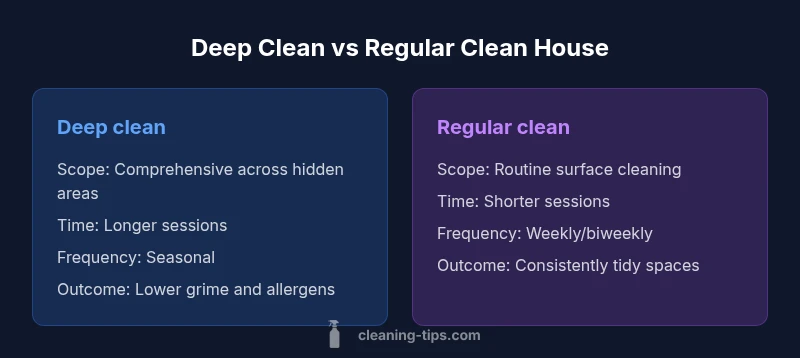
Deep Clean vs Regular Clean House: An Objective Side-by-Side Guide
Compare deep cleaning and regular cleaning to decide when to sanitize, refresh, and maintain a healthier home. Learn scope, timing, tools, and costs for practical home care.


In short, the choice between deep clean vs regular clean house hinges on grime level, health goals, and time. A deep clean targets hidden grime, allergens, and buildup across surfaces, while a regular clean maintains daily cleanliness. For many homes, a seasonal deep clean paired with frequent routine cleans offers the best balance, efficacy, and value.
What qualifies as a deep clean and a regular clean?
In everyday conversations, people use “deep clean” and “regular clean” to describe different levels of effort and scope. This section clarifies what each typically covers in a home cleaning plan. When you look at defining the terms for a given living space, the decision often hinges on goals, timelines, and health considerations. A deep clean addresses hidden grime, mildew, soap scum, and buildup in hard-to-reach places, while a regular clean focuses on visible surfaces, floors, and standard maintenance. For households with pets, children, or allergies, more thorough disinfection, ventilation checks, and odor control may be valuable. The Cleaning Tips team emphasizes that the distinction is not about one being right and the other wrong; it is about choosing the appropriate level for current needs and then establishing a sustainable cadence. According to Cleaning Tips, this approach helps maintain a healthier home by balancing effort and results.
Why health and hygiene matter in choosing a cleaning level
Why should a homeowner consider deep cleaning for health reasons? Depth cleaning reduces concealed grime, mold spores, and bacteria that regular weekly upkeep might miss. This is particularly important in kitchens, bathrooms, and high-traffic zones where moisture and residue can create persistent issues. The deep clean vs regular clean house decision becomes more urgent if household members have allergies, asthma, or immune sensitivities. Beyond personal health, the process also lowers the chance of long-term damage from soap scum, mineral buildup, and dirt that become ingrained over time. A well-executed deep clean can yield measurable improvements in air quality and perceived freshness, and it often makes subsequent regular cleans easier and faster. Cleaning Tips’s guidance highlights that a health-oriented cadence should drive the plan, not fear of dirt alone.
The daily maintenance role of a regular clean
Regular cleaning keeps the home livable and comfortable. It targets surfaces that accumulate dust, spills, and grime from daily life. A regular clean typically includes sweeping, mopping, surface wiping, and bathroom attention on a routine schedule (often weekly or biweekly). These sessions prevent buildup, reduce odor, and make the home look presentable. While not as exhaustive as a deep clean, consistent regular cleaning prevents the appearance of neglect and minimizes the need for intensive interventions. The key is consistency: short, focused sessions that build good habits over time can substantially extend the intervals between deeper cleanings and preserve room longevity. For busy households, this cadence balances time management with a clean, healthy environment.
Scope, duration, and effort: what changes between the two
A deep clean is typically broader in scope and longer in duration than a regular clean. It often involves dislodging grime from grout, behind appliances, vent covers, baseboards, and interior surfaces, plus more thorough sanitization. A regular clean concentrates on the obvious surfaces and commonly touched areas, with less emphasis on hidden zones. Time commitments vary by home size, condition, and cleaning speed, but deep cleans can require multi-hour sessions or even a two-visit process, especially for larger homes. Regular cleans usually fit into a few hours and can be scheduled to align with weekly routines. The difference in time translates into scheduling considerations, impact on daily life, and perceived value. Both approaches benefit from a clear plan and realistic expectations about disruption and results.
Areas and surfaces that typically require deeper attention
Not all spaces demand the same effort. Typical deep-clean targets include kitchen appliance interiors, oven racks, refrigerator seals, exhaust fans, under-sink cabinets, window tracks, air vents, and bathroom grout lines. High-traffic entryways, pet zones, and damp corners are common trouble spots. Regular cleaning tends to focus on surfaces visible to guests: countertops, floors, sinks, mirrors, and the top layers of fixtures. Understanding which zones require intensive attention—and how often—helps homeowners prioritize tasks, allocate resources, and avoid rework. A practical approach is to schedule a seasonal deep-clean sweep for the entire home, then maintain key areas with routine cleans in the interim.
Tools, products, and safety considerations by method
Deep cleaning often benefits from stronger cleaners, specialty degreasers, and sanitizers, used with proper ventilation and safety gear. It may also require tools like grout brushes, steamers, and long-handled dusters. Regular cleaning relies on everyday cleaners, microfiber cloths, and standard mops. Regardless of method, safety remains a priority: read labels, test cleaners on inconspicuous areas, and ensure children and pets are out of the space during strong chemical use. Sustainable options, such as vinegar and baking soda for certain tasks, can be part of an eco-minded approach, though not all tasks are suitable for natural cleaners alone. The right products and methods depend on surfaces, finishes, and household needs, so plan ahead and adjust as you observe results.
Scheduling: frequency and time management
A prudent schedule blends seasonal deep cleans with ongoing regular maintenance. For many households, a seasonal deep clean covers a full-home refresh, followed by weekly or biweekly maintenance cleans to sustain the gains. The timing of deep cleaning often aligns with seasonal shifts, home improvement cycles, or health concerns that necessitate a more aggressive approach. Time management is essential: block out dedicated sessions, enlist help if possible, and set realistic expectations for what can be accomplished in each cleaning window. A structured cadence reduces burnout, minimizes surprises, and keeps the home consistently fresh. For families juggling work and school, a predictable routine helps everyone know when to prepare for a deeper session and when to expect lighter, quick cleans.
Costs and value considerations
Cost considerations will vary by home size, location, and the scope of the cleaning. Deep cleans typically involve higher per-session costs due to longer time commitments and more intensive labor, while regular cleans are more affordable per session but require more frequent visits. From a value perspective, a well-timed deep clean can extend the lifespan of fixtures, reduce the need for costly restoration, and improve indoor air quality, potentially offsetting upfront costs over time. Homeowners should weigh immediate budget constraints against long-term health and maintenance benefits. Cleaning Tips suggests framing cleaning as an investment in living conditions and home longevity, rather than a one-off expense. When planning, consider whether to bundle services (e.g., add oven cleaning or vent cleaning) to maximize value and consistency.
Case studies: common household scenarios
Consider a family with two kids who frequently cook, spill, and track in dirt from outdoor play. A deep clean after a season of high activity can dramatically improve kitchen hygiene and reduce lingering odors, but it may disrupt routines for a weekend. For a single-person apartment with light traffic, a biannual deep clean may be sufficient, with weekly quick cleans that keep surfaces pristine without overwhelming schedules. For households with pets, especially those with dander or hair shedding, a deeper refresh can mitigate allergens and improve comfort levels substantially. Finally, a home undergoing renovation often benefits from a deep clean to remove dust, debris, and residues that accumulate during construction. In each case, a structured plan tailored to occupancy, lifestyle, and health goals yields the best outcomes.
Step-by-step example plan: from a regular clean to a deep clean
- Assess and orient: walk through rooms to identify problem spots and note surfaces needing special attention. 2) Gather gear: assemble microfiber cloths, scrub brushes, steam cleaner, grout brush, long-handled duster, and appropriate cleaners. 3) Start with safety: ventilate spaces and remove people and pets. 4) Deep-clean sequence: tackle hidden zones first (behind appliances, grout lines, vents), move to mid-level areas (shelves, baseboards), finish with top surfaces and final sanitization. 5) Post-clean assessment: recheck areas, re-clean stubborn spots, and adjust cleaning frequency for maintenance. 6) Transition plan: schedule the next deep clean and maintain a regular cleaning cadence to preserve results.
Maintenance tips to extend results after a deep clean
Maintain the gains from a deep clean with a disciplined routine: wipe high-touch areas daily, sweep and mop weekly, and address spills promptly. Use odor-absorbing mats, improve ventilation, and replace worn-out cleaning tools to prevent re-depositing dirt. Regular maintenance reduces the need for frequent, intensive interventions and helps surfaces last longer. Consider a quarterly quick-check to identify spaces where grime tends to accumulate, and adjust your routine accordingly. By combining a thoughtful maintenance plan with periodic deep cleans, households can preserve a healthier, more comfortable living environment throughout the year.
Common mistakes to avoid when choosing between cleaning levels
Common mistakes include assuming a deep clean is always required, underestimating the time and effort needed, and failing to plan for safety and ventilation. Skipping a pre-clean assessment can lead to missed spots or overuse of chemicals. Another pitfall is inconsistency: alternating between deep cleans and light cleans without a defined cadence can waste effort and reduce results. Finally, rely on the wrong products for certain surfaces, which can cause damage or discoloration. By anticipating these issues and following a structured plan, households can make the most of both approaches and achieve a consistently clean and healthy home.
Final thoughts: integrating deep cleaning with daily living
The most effective approach combines the best aspects of both methods. Use a regular cleaning routine to maintain day-to-day cleanliness and health, and schedule periodic deep cleans to refresh hard-to-reach areas and reset overall hygiene. This integration minimizes disruption while maximizing long-term outcomes. The goal is not to repeatedly start from zero, but to sustain a high level of cleanliness with targeted, purposeful deep-clean sessions. With deliberate planning and the right tools, any home can achieve a healthier, more balanced cleaning rhythm.
Comparison
| Feature | Deep clean | Regular clean house |
|---|---|---|
| Scope of cleaning | Comprehensive, including hidden grime, mold-prone zones, and thorough sanitization | Routine surface-level maintenance focused on visible areas |
| Time required | Longer sessions; may require multi-hour blocks or multiple visits | Shorter sessions; typically a single cleaning within a few hours |
| Frequency | Seasonal or biannual deep sessions with intervals in between | Weekly or biweekly maintenance |
| Disruption level | Higher due to thorough process and potential chemical use | Lower with quick upkeep routines |
| Cost implications | Higher per session; total investment may be greater over time | Lower per session but more frequent over time |
| Ideal for | Homes with high traffic, allergies, pets, or post-renovation needs | Homes seeking continuous upkeep and convenience |
| Expected outcome | Significant reduction in grime and allergens; longer-lasting surfaces | Consistently clean surfaces with less buildup |
Strengths
- Addresses hidden grime and allergens for a thorough refresh
- Reduces long-term maintenance by tackling buildup
- Can improve indoor air quality and surface longevity
- Provides a fresh, sanitized home for sensitive households
- Can be scheduled as part of a seasonal cleaning plan
Weaknesses
- Higher upfront time and cost per session
- Requires planning and potential temporary disruption
- Not always necessary for very clean homes with low traffic
- Stricter cleaners may be needed for sensitive individuals
Deep clean is the better choice for a thorough reset and health-focused maintenance.
A deep clean addresses hidden grime and allergens across the home, while regular cleaning keeps daily upkeep manageable. For most households, a seasonal deep clean supplemented by regular cleans offers best value and health outcomes.
Questions & Answers
How often should I deep clean my house?
Most homes benefit from a seasonal deep clean, with additional sessions if there are pets, allergies, or recent renovations. Regular maintenance cleans should continue between deep cleans to preserve results.
A seasonal deep clean is often best, with regular maintenance cleans in between to keep the home fresh.
What areas should be prioritized in a deep clean?
Prioritize kitchens, bathrooms, entryways, and spaces with high moisture or heavy traffic. Pay attention to grout, vents, behind appliances, and baseboards where grime accumulates over time.
Focus on kitchens, bathrooms, and high-traffic areas first, then tackle hidden spots like behind appliances.
Can I perform a deep clean myself, or should I hire professionals?
A DIY deep clean is feasible for smaller homes or if you have the right tools and time. Larger homes or complex tasks (vented systems, heavy mold) may benefit from professional services to ensure safety and effectiveness.
You can do it yourself for smaller spaces, but for bigger homes or tricky tasks, consider professionals.
Is a deep clean necessary if we already clean regularly?
Regular cleaning maintains daily upkeep, but a deep cleaning addresses hidden grime and sanitizes hard-to-reach areas. The decision depends on health goals, odor, and the presence of signs of buildup.
Regular cleaning helps, but you still may need a deep clean for hidden grime.
How long does a typical deep clean take?
Duration varies with home size and condition but expect several hours for a single session, possibly more for larger homes or comprehensive sessions.
Expect several hours for a typical deep clean, longer for larger homes.
How do I maintain results after a deep clean?
Maintain results with a regular cleaning cadence, spot-cleaning spills promptly, and addressing problem areas frequently. Schedule follow-up deep cleans as needed to reset the space.
Keep up with quick daily cleans and plan a seasonal reset.
The Essentials
- Define your goals before choosing.
- Schedule a seasonal deep clean for a full reset.
- Pair with regular cleans for balance and consistency.
- Invest in safe, effective tools and products.
- Consider allergies and health risks when planning.