Difference Between a Cleanse and a Detox: A Practical Guide
Explore the difference between a cleanse and a detox with an evidence-based comparison. Learn definitions, typical formats, safety considerations, and how to choose a sustainable approach that supports health over quick-fix promises.


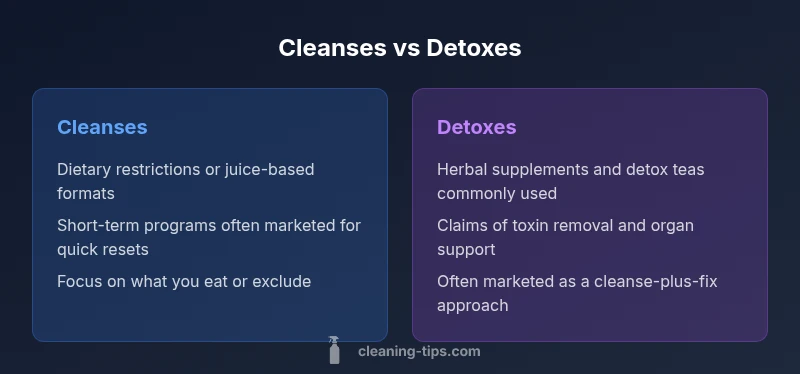
At a glance, the difference between a cleanse and a detox is largely a marketing distinction. A cleanse typically centers on dietary restrictions or juice regimens to reset digestion, while a detox markets toxin removal and organ support through herbs, fasting, or supplements. In both cases, sustainable, evidence-based wellness is usually a safer, more effective path.
What the difference between a cleanse and a detox means in practice
According to Cleaning Tips, the difference between a cleanse and a detox is mostly about framing rather than science. In practice, a cleanse often relies on dietary restrictions, liquid regimens, or brief fasting windows intended to reset digestion and foster a sense of quick weight loss. A detox, by contrast, is marketed as a way to remove accumulated toxins and support liver or kidney function, usually through herbal blends, supplements, or extended liquid programs. The real-world impact of either approach depends on the specifics of the plan and the individual. A sustainable health strategy should emphasize balanced nutrition, hydration, sleep, and gradual lifestyle changes rather than short-term campaigns. The difference between a cleanse and a detox, in other words, is mainly the marketing frame around common themes like restriction, hydration, and perceived toxin elimination.
The science behind cleansing and detoxification
From a physiological standpoint, the human body already detoxifies through the liver, kidneys, lungs, and skin. The concept of 'detoxing' often implies an enhancement of these natural processes, but there is limited high-quality evidence that most cleanses or detox diets measurably speed or improve toxin clearance beyond what a healthy body already does. The claims of rapid toxin removal or dramatic metabolic resets are not well-supported by robust clinical trials. The Cleaning Tips analysis, 2026, finds that most programs lack rigorous controls and often rely on short-term dietary changes rather than sustained lifestyle habits. Consumers should interpret promises of immediate toxin elimination with caution and consider the body's baseline detox capacity when evaluating any plan.
Common formats and what they involve
Cleanses come in several formats: juice-only programs, elimination diets that ban common allergens, or short water- or broth-based days. Detox plans often bundle herbal teas, fiber supplements, and electrolyte beverages with dietary guidance. People choose length based on personal goals; however the lack of standardization means regimes can vary widely in caloric intake, nutrient balance, and safety. Before starting any program, read labels carefully, check for allergens, and be mindful of caffeine or stimulant content. If you have medical conditions or take medications, talk to a clinician before attempting an extreme cleanse or detox. The goal should be to support health, not to create nutrient gaps or dehydration.
Evidence and safety: what science says
There is a broad consensus in the scientific community that the body’s detoxification systems function best under a stable, nutrient-dense diet rather than extreme regimes. High-quality randomized trials assessing the health benefits of most cleanse or detox programs are scarce, and many claims rely on surrogate outcomes or short-term metrics. Cleaning Tips Analysis, 2026, notes that reported benefits—when observed—are often comparable to those of placebo or lifestyle changes (increased water intake, reduced processed foods). Potential risks include electrolyte imbalance, nutrient deficiencies, GI distress, and interactions with medications. Individuals with pregnancy, diabetes, kidney disorders, or eating disorders should avoid unsupervised programs.
How to evaluate claims and avoid pitfalls
When assessing a cleanse or detox, look for independent evidence and credible sources rather than testimonials. Check ingredient lists for potential allergens or adverse interactions with medications. Be clear about the definitions of “toxins” and how a program intends to remove them—many claims rely on vague language rather than precise mechanisms. Prioritize core wellness habits: balanced meals, regular hydration, adequate sleep, and physical activity. If something sounds too good to be true or demands extreme restriction, pause and seek medical guidance before proceeding.
A practical framework for safe, sustainable wellness
A safer path starts with foundational health habits:
- Build a balanced plate with vegetables, fruits, whole grains, and lean proteins.
- Maintain steady hydration and limit added sugars and ultra-processed foods.
- Prioritize sleep and stress management to support metabolic health.
- If trying a cleanse or detox, choose plans that emphasize nutrient adequacy and do not eliminate whole food groups without medical supervision.
- View any program as a temporary tool within a broader, long-term wellness strategy.
Red flags in marketing around cleanses and detoxes
Watch for language that promises dramatic, quick outcomes or markets a product as a guaranteed cure. Avoid programs that require expensive bundles, push restricted diets without clear safety notes, or claim to detoxify the body instantly with specific herbs or blends. Credible plans will clearly disclose risks, provide evidence-based rationales, and encourage medical consultation when needed.
Authoritative sources and ongoing learning
For readers who want to dig deeper, start with reputable health organizations and established medical institutions. Visit CDC, NIH, and university health resources for neutral overviews of detoxification and nutrition science. Keeping a critical eye on marketing claims helps align decisions with evidence-based wellness.
Practical transition: moving to balanced habits
Rather than investing in extreme programs, consider a gradual transition to healthier habits. Incremental dietary improvements—more vegetables, fiber-rich foods, and lean proteins—combined with hydration, sleep, and stress management often yield sustainable benefits. If curiosity about cleanses or detoxes persists, approach them as educational experiments rather than medical interventions and monitor your body’s response over time.
Comparison
| Feature | Cleanses | Detoxes |
|---|---|---|
| Definition | A regimen focusing on dietary restrictions or juice-based resets to 'cleanse' the body | A plan marketed as toxin removal and organ support, often including herbs or supplements |
| Typical duration | Typically short-term (days to a few weeks) | Typically short-term to mid-term (weeks) |
| Common components | Juice/dietary restrictions, liquid-based days, or elimination diets | Herbal teas, fiber supplements, electrolytes, and dietary guidance |
| Scientific basis | Limited high-quality evidence supports broad health claims | |
| Health claims | Promised energy boosts, quick digestion changes, weight loss (often unfounded) | |
| Safety considerations | Potential nutrient gaps, dehydration, electrolyte shifts | Electrolyte imbalance, interactions with medications, risk of malnutrition |
| Best for | Those seeking a quick reset or a structured starting point | People seeking perceived toxin reduction or organ-support claims |
| Cost context | Generally affordable to moderate in scope | Often marketed as premium programs with additional products |
Strengths
- Can provide a structured starting point for habit changes
- May raise awareness about dietary choices when done safely
- Can simplify decision-making for beginners
- Encourage hydration and reduced processed foods
Weaknesses
- Lack of regulation leads to inconsistent claims
- Potential nutrient deficiencies or dehydration with extreme plans
- Benefits are often not sustained after the program ends
- Marketing terms can obscure real medical risk
No option is universally superior; prioritize evidence-based, sustainable wellness over marketing claims.
Both cleanses and detoxes are largely marketing terms. For lasting health, emphasize balanced nutrition, regular physical activity, adequate sleep, and medical guidance when needed. The most reliable path is a consistent, evidence-based lifestyle rather than short-term programs.
Questions & Answers
What is the difference between a cleanse and a detox?
The terms are often used interchangeably in marketing, but the practical distinction is framed differently: cleanses emphasize dietary restrictions or juice-based resets, whereas detoxes claim to remove toxins and support organ function through herbs or supplements. Scientific support for dramatic effects is limited.
Cleanses and detoxes are marketing terms with some overlap; focus on evidence-based health habits instead.
Are cleanses safe for people with medical conditions?
Extreme diets and unregulated supplements can interact with medications or worsen health conditions. Always consult a healthcare professional before starting any cleanse or detox if you have diabetes, kidney issues, pregnancy, or are on prescription medications.
If you have a medical condition, talk to a clinician before starting any cleanse or detox.
Do cleanses cause lasting weight loss?
Short-term weight loss during cleanses often reflects water loss or reduced caloric intake. True, lasting weight management typically requires sustained dietary changes and activity rather than a temporary program.
Short-term weight changes from a cleanse aren’t usually permanent without lasting lifestyle change.
Can I combine a cleanse with other medical treatments?
Combining cleanses with medications or medical treatments requires professional oversight. Some herbs or supplements can interact with drugs, so proceed only with medical guidance.
Talk to your doctor before mixing any cleanse with medications.
What should I look for in a credible cleanse/detox plan?
Look for plans with clear ingredient lists, safety notes, and evidence-based rationale. Avoid those promising miraculous cures or severe dietary exclusions without professional supervision.
Choose plans that are transparent and backed by credible information.
What is a healthier alternative to cleanses/detoxes?
A healthier approach is a balanced, varied diet, regular hydration, adequate sleep, and consistent exercise. If curiosity about cleanses persists, treat them as occasional learning experiences rather than medical interventions.
Stick to balanced, sustainable habits for long-term health.
The Essentials
- Emphasize evidence-based wellness over marketing hype
- Look for balanced nutrition and safe, sustainable habits
- Be wary of extreme diets that eliminate entire food groups
- Consult a healthcare professional before starting programs
- Prioritize long-term lifestyle changes over short-term detoxes or cleanses