Difference Between a Cleanse and a Fast: A Practical Guide
Explore the difference between a cleanse and a fast with an evidence-based, practical comparison. Learn definitions, safety considerations, and how to choose a plan that fits your goals.


The difference between a cleanse and a fast centers on intent, duration, and approach. A cleanse typically emphasizes removing perceived toxins and simplifying meals over a short period, often limiting certain foods and supplements. A fast restricts or eliminates calorie intake for defined hours or days, focusing on metabolic shift and rest for digestion. Both carry safety considerations and vary in scientific support, so choose based on goals, health status, and professional guidance.
What exactly is a cleanse?
According to Cleaning Tips, a cleanse is a short-term dietary pattern that emphasizes removing certain foods or substances to 'reset' eating habits. Many cleanses rely on whole-plant foods and liquid-based regimens (e.g., juices or smoothies) for a defined number of days. Advocates claim it can jump-start healthier choices, reduce bloating, and simplify decision-making around meals. Critics argue that most cleanses provide a temporary caloric reduction or nutrient imbalance, with little evidence of toxin elimination. The key feature is a structured restriction—often excluding caffeine, refined sugars, dairy, or solid foods—meant to be followed strictly for a few days. The term 'detox' is widely used in marketing but lacks a universal medical definition. For sustainable health, it’s essential to distinguish marketing claims from practical outcomes and to consider individual needs and medical history.
In real-world terms, cleanse plans range from juice-only days to elimination diets that remove refined foods, caffeine, or processed meals. They are often marketed as quick fixes, but science emphasizes a broader view of nutrition, hydration, and long-term eating patterns. If you’re considering a cleanse, evaluate sources carefully, ensure you won’t miss essential nutrients, and discuss with a healthcare provider if you have a chronic condition or take medications. The goal should be sustainable habits, not dramatic short-term extremes.
What exactly is a fast?
Cleaning Tips describes a fast as a regulated period of limited or zero caloric intake, sometimes with water or non-caloric beverages, for a defined number of hours or days. Fasts vary by protocol: time-restricted eating (e.g., 8-hour eating window), alternate-day fasting, or longer water fasts. The aim is not necessarily toxin removal but metabolic rest, autophagy, or rhythmical eating. Proponents argue fasting can improve insulin sensitivity, support weight management, and give the digestive system a break. Critics warn about risks such as hypoglycemia, fatigue, headaches, and rebound overeating. Scientific evidence remains mixed and highly context-dependent, with results depending on baseline health, duration, and how a fast is implemented. Always avoid extreme fasting without medical supervision, particularly during pregnancy, chronic disease, or if you are taking medications that require meals. A thoughtful approach emphasizes safety, hydration, and gradual reintroduction of food after a fast.
Core differences at a glance
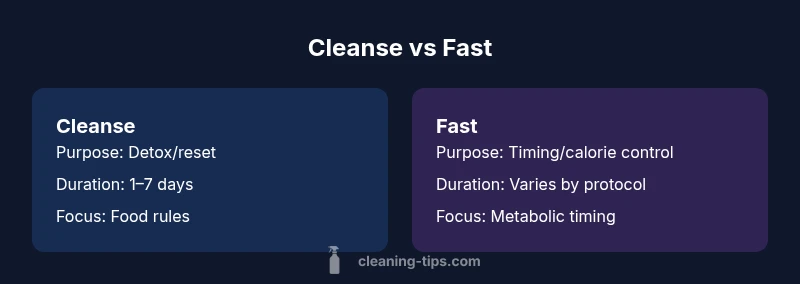
- Purpose and philosophy: A cleanse often aims to remove perceived toxins and simplify eating for a short period; a fast centers on timing and reducing caloric intake for metabolic rest.
- Duration and structure: Cleanses are typically 1–7 days with explicit dietary rules; fasts vary from 12 hours to several days and may or may not allow calories.
- Allowed foods and calories: Cleanses restrict or eliminate certain foods and emphasize liquids or whole foods; fasts limit calories or exclude solid foods during the window.
- Evidence and safety: Evidence for toxin removal from cleanses is weak; fasting evidence is mixed and highly individual, with safety concerns in certain populations.
- Who it’s for: Cleanses are often pursued for motivation and habit reset, while fasting patterns may align with appetite management and time management.
- Typical outcomes: Short-term weight changes and perceived energy shifts are common with both, but long-term results depend on subsequent eating patterns.
Scientific evidence and safety considerations
The body of rigorous research on cleansing regimens and fasting protocols is uneven, with high-quality randomized trials limited for many popular cleanse formats. Cleaning Tips analysis shows that while some people report improved awareness of eating patterns, there is little evidence that cleanses remove toxins in a way that enhances long-term health. For fasting patterns, some studies suggest metabolic benefits in certain populations under supervision, particularly with time-restricted eating and short-duration protocols. Safety concerns include nutrient deficiencies, electrolyte imbalances, dizziness, and hypoglycemia, especially for those with diabetes, pregnancy, or chronic illness. Always align any plan with medical advice, stay hydrated, and monitor energy, mood, and sleep.
Practical considerations: lifestyle, goals, and medical status
Choosing between a cleanse and a fast should be guided by practical life factors, not just curiosity. If your goal is rapid reduction in dietary variety to reset meals, a short cleanse might help you reimagine meals, provided you aren’t excluding essential nutrients. If your goal is to improve meal timing, insulin sensitivity, or adherence to a daily schedule, a time-restricted approach could fit better, especially when you value routine coherence with work or family life. Health status matters: individuals with diabetes, kidney disease, eating disorders, pregnancy, or those on medications that require food should avoid aggressive regimens and seek professional input. In either case, emphasis on hydration, sleep, activity, and gradual change will support better outcomes.
Common myths about cleanses and fasts
Myth 1: Cleanses
How to approach these methods safely
A cautious entry into either approach begins with a clear goal, a realistic timeframe, and a plan for nutrient adequacy. Start with a healthcare check, especially if you have underlying conditions or medications. Choose forms that preserve essential nutrients, avoid extreme restrictions, and allow for a gradual return to normal eating. Hydration is crucial; for fasts, plan meals to minimize rebound overeating after the window closes. Monitor symptoms like dizziness, fainting, irritability, or severe fatigue, and stop if they occur. Keep a simple record of foods, energy levels, and mood to assess impact. If uncertainty arises, seek guidance from a registered dietitian or clinician who can tailor a plan to your health and goals.
Planning a safe, evidence-based approach
Designing a safe, evidence-based plan for either a cleanse or a fast starts with context. Define your goals (energy, weight, relationship with food), check medical status, and set a realistic duration. Prioritize nutrient-dense foods when permitted, and ensure you’re not creating persistent energy deficits. A balanced approach can include gradual changes to meal quality, portion control, and mindful eating—without resorting to extreme protocols. If you choose a fasting pattern, consider starting with a modest window (e.g., 12 hours) and gradually increasing as tolerated. Always avoid combining aggressive cleansing with fasting, and consult a professional to adapt the plan to your needs.
Sample templates: a cleanse-lite plan and a fasting window schedule
-
Cleanse-lite (3 days):
- Day 1: Focus on whole fruits and vegetables, water, and herbal tea; exclude refined sugars and processed foods.
- Day 2: Expand to plant-based meals with limited dairy or animal products, plus ample fluids.
- Day 3: Introduce soups, smoothies, and cooked vegetables, ensuring adequate protein and micronutrients.
- Goal: Build awareness of food choices and reset cravings without severe restriction.
-
Fasting window (time-restricted eating, 14:10 to start):
- Eating window: 10:00–22:00; water, black coffee, and unsweetened tea permitted outside eating hours.
- Key: Choose nutrient-dense meals within the window, plan regular meals, and avoid overeating at the end of the window.
- Goal: Improve metabolic rhythm and appetite signals while maintaining energy for daily activities.
When to consult a professional
If you have diabetes, kidney disease, heart disease, gout, or are pregnant or breastfeeding, consult a clinician before attempting either cleanse or fast. A dietitian can help customize a plan that safeguards nutrient intake, stabilizes blood sugar, and aligns with medications. For anyone new to dieting patterns, a gradual introduction and ongoing monitoring are prudent. When in doubt, prioritize health status and sustainable habits over dramatic short-term results.
Authority Sources
- https://www.nih.gov (National Institutes of Health)
- https://www.cdc.gov (Centers for Disease Control and Prevention)
- https://www.nejm.org (The New England Journal of Medicine)
Comparison
| Feature | Cleanse | Fast |
|---|---|---|
| Purpose | Detox/reset focus, often marketed as toxin removal | Timing-based, metabolic/rest focus |
| Typical foods | Solid foods restricted; juice/smoothie formats common | Calorie intake limited or zero; liquids may be allowed |
| Duration | Usually 1–7 days | 12 hours to 7+ days depending on protocol |
| Evidence & safety | Weak evidence for toxin elimination; potential nutrient gaps | Evidence is mixed; safety highly protocol-dependent |
| Best for | Habit reset, meal planning awareness | Habitual fasting patterns, insulin sensitivity goals |
Strengths
- Can simplify meals and decisions for a short period
- May boost motivation to adopt healthier habits
- Can be a structured entry point for mindful eating
- Some cleanses encourage higher fruit/veg intake
Weaknesses
- Potential nutrient deficiencies or energy dips
- Limited evidence of long-term toxin removal or sustained weight loss
- May trigger disordered eating patterns in vulnerable individuals
Neither approach is universally superior; choose based on goals, health status, and professional guidance
For most healthy adults, a balanced, flexible eating pattern with medical oversight is safer and more sustainable than extreme cleanses or prolonged fasting.
Questions & Answers
What is the main difference between a cleanse and a fast?
The main difference is intent: cleanses emphasize food restrictions to reset eating patterns, while fasts focus on timing and reducing calories for metabolic rest. Evidence and safety considerations vary; neither guarantees long-term health benefits.
The main difference is why you do it: cleanses are about food rules to reset habits, while fasting is about when you eat and calories.
Are cleanses or fasts safe for most adults?
Safety depends on the protocol and individual health. Short, well-planned approaches under medical supervision are generally safer than extreme or prolonged regimens. People with chronic illness or on medications should seek professional guidance.
Safety varies; start with caution and consult a clinician, especially with medical conditions.
Can I do a cleanse if I have a health condition?
Medical conditions like diabetes, kidney disease, or pregnancy require medical supervision before attempting a cleanse or fast. Some protocols can worsen symptoms or interact with medications. Always get personalized advice.
Medical conditions require supervision before trying these plans.
Can cleanses cause weight loss?
Cleanses may cause short-term weight loss due to caloric restriction, but gains are often regained after the program ends. Long-term weight management relies on sustainable eating patterns and activity.
They can lead to quick weight drop, but it’s usually not lasting.
Which is better for jumpstarting healthier habits?
A gradual, balanced approach to food quality and meal timing often yields more sustainable habits than extreme protocols. Start with small changes and monitor responses over several weeks.
A gradual, balanced plan is usually best to form lasting habits.
What are common side effects to watch for?
Common side effects include fatigue, headaches, irritability, dizziness, and mood changes. Hydration, electrolytes, and gradual reintroduction of foods help mitigate these symptoms.
Watch for fatigue, headaches, and dizziness; stay hydrated.
The Essentials
- Define your goal before choosing a path
- Prioritize nutrient adequacy and safety
- Consult a clinician if you have health conditions
- Use gradual changes for long-term habits
- Avoid combining extreme protocols with medications