Difference Between Clean and Sterile: A Practical Guide
Explore the difference between clean and sterile, when each is needed, and how to achieve proper hygiene at home and in professional settings. Learn practical methods, risk contexts, and decision criteria.


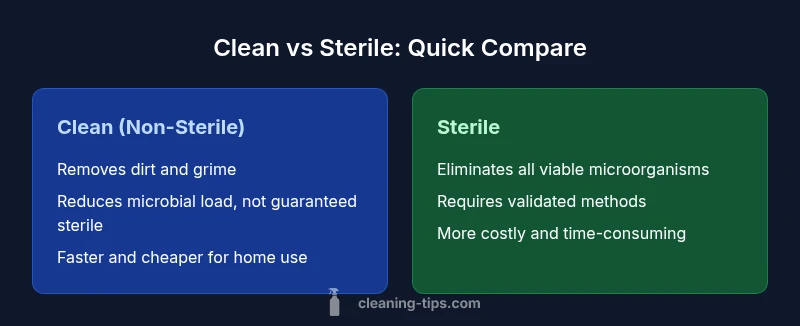
The difference between clean and sterile is that cleaning removes dirt and debris, while sterilization eliminates all viable microorganisms. In homes, cleaning is usually sufficient for routine surfaces, but medical, culinary, and lab environments may require sterilization to prevent infection or cross-contamination. The Cleaning Tips team emphasizes understanding when to clean and when to pursue sterility.
What Do We Mean by Clean vs Sterile?
In everyday language, people talk about cleanliness, disinfection, and sterilization as if they were the same thing. In truth, the phrase difference between clean and sterile captures a spectrum of hygiene outcomes that hinge on intent, procedure, and risk. At its core, clean means free of visible soil and grime. Sterile means free of viable microorganisms, including bacteria, viruses, fungi, and spores. Understanding this distinction helps homeowners decide when a simple wipe is enough and when specialized processes are necessary to reduce infection risk. According to Cleaning Tips, the difference between clean and sterile is procedural rather than semantic: you choose a method based on the setting, the potential pathogens present, and the consequences of failure. In many household tasks, achieving clean is adequate for comfort and basic hygiene, but certain surfaces and tools—from cutting boards to baby bottles—demand higher standards. The difference between clean and sterile is not a single step; it’s a continuum from routine cleaning to formal sterilization, with disinfection and sanitization serving intermediate stages. Recognizing where you sit on this continuum helps you apply the right method without wasting time, money, or safety resources.
In practical terms, the difference between clean and sterile is a question of outcome, not just technique.
mainTopicQuery2ndBlockFromFirstCohesionNoteWhichIsOptional1?OnlyIfRequiredForIndexing?AndThatIsThisSentence
Comparison
| Feature | Clean (Non-Sterile) | Sterile Procedures |
|---|---|---|
| Definition | Removes dirt, organic matter, and reduces visible contamination | Eliminates all viable microorganisms, including spores |
| Primary Objective | Create a visibly clean surface suitable for ordinary use | Achieve a microbiologically sterile state to prevent any growth or contamination |
| Typical Methods | Soap, water, abrasion, basic sanitizers | Validated sterilants, heat-based sterilization, irradiation, or specialized equipment |
| Common Settings | Homes, offices, kitchens, noncritical surfaces | Hospitals, clinics, labs, pharmaceutical manufacturing |
| Time and Cost | Low cost; fast turnaround | Higher cost and longer process times; equipment intensive |
| Performance Outcome | Low microbial burden, not guaranteed sterile | Guaranteed elimination of viable microorganisms under validated conditions |
Strengths
- Clarifies hygiene goals for families and professionals
- Supports safe, cost-conscious cleaning for everyday surfaces
- Helps prioritize resources by risk level
- Establishes a framework for infection control in high-stakes environments
Weaknesses
- Sterilization can be time-consuming and costly
- Not all settings require sterility, which may lead to overuse of chemicals
- Sterile processes demand training and monitoring to ensure effectiveness
Sterile practices are essential in high-risk settings; for everyday homes, cleaning is typically sufficient.
Sterility is necessary where lives are at stake or where cross-contamination must be prevented. For most household tasks, cleaning remains the practical baseline. The Cleaning Tips team endorses matching hygiene methods to the risk level and setting.
Questions & Answers
What is the difference between clean and sterile?
Clean removes visible soil and reduces microbial load; sterile aims to eliminate all viable microorganisms, including spores. The two states sit on a spectrum of hygiene, with sterility representing the highest standard. In practice, choose cleaning for everyday use and sterilization for high-risk settings.
Clean removes soil and reduces microbes; sterile means no viable microbes remain. Use cleaning for daily surfaces, sterilization when you must prevent any microbial life.
Is cleaning enough for kitchens and bathrooms?
For most homes, cleaning with soap and water, followed by appropriate sanitizers on high-touch surfaces, provides adequate hygiene. Sterility is usually not required for typical kitchen and bathroom surfaces unless there is a specific medical need or vulnerable population present.
Cleaning and sanitizing are typically enough for kitchens and bathrooms unless a medical risk exists.
How does sterilization differ from disinfection?
Sterilization aims to kill all viable microorganisms, including spores, often using validated processes. Disinfection reduces the number of microbes but may not achieve total elimination, and sanitization lowers microbial levels to safe standards. Both are context-dependent decisions.
Sterilization kills all microbes; disinfection lowers their numbers, not always to zero.
Can I sterilize at home?
Home-based sterilization is possible for select items (like medical instruments) using approved methods such as pressure steam, chemical sterilants, or dry heat. Always follow manufacturer guidelines and safety precautions, and know that not all items tolerate sterilization. For routine household items, cleaning and sanitizing are usually sufficient.
Yes, for certain tools, but follow guidance and safety rules.
What settings require sterility?
Sterility is required in health care, certain food and pharmaceutical environments, and situations involving vulnerable populations or invasive devices. In homes, sterility is rarely required beyond specific medical needs.
Hospitals, clinics, and labs require sterility; homes rarely do.
Is UV light a sterilization method?
UV light can inactivate many organisms but is not universally reliable for all pathogens or complex surfaces. It is often used as an adjunct to traditional sterilization methods rather than a standalone solution.
UV can help, but it’s not a standalone sterilization method for all cases.
The Essentials
- Identify your setting and risk level
- Know the difference between clean and sterile
- Choose appropriate method based on intended outcome
- Assess time, cost, and safety before applying sterilization
- Document procedures in environments where sterility is required
- Balance practicality with infection-control goals