Difference Between Clean and Sanitize: A Practical Guide
Understand the difference between cleaning and sanitizing surfaces, when to use each method, and practical steps to keep your home safer and healthier today.


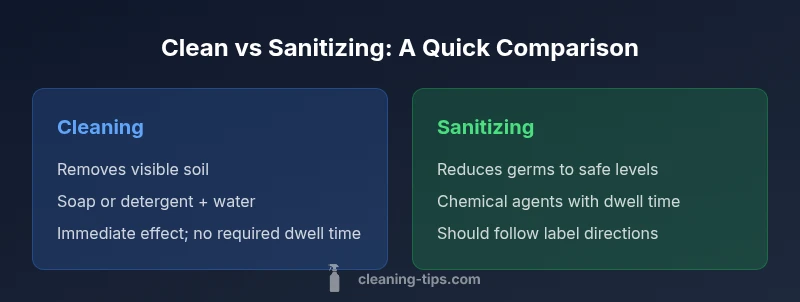
Different cleaning tasks use cleaning versus sanitizing. Cleaning removes visible dirt, while sanitizing reduces germs to safe levels recommended for everyday surfaces. For most homes, clean first, then sanitize on high-touch areas like kitchen counters and bathroom fixtures. The difference between clean and sanitize lies in purpose, method, contact time, and safety considerations.
The difference between clean and sanitize: definitions and goals
Understanding the difference between clean and sanitize is essential for effective home hygiene. Cleaning means removing visible dirt, grease, and residues from surfaces using detergents and water. Sanitizing, on the other hand, means reducing the number of microbes on a surface to levels deemed safe by health guidelines, typically using chemical agents. The Cleaning Tips team emphasizes that these are two distinct steps that often work in sequence: you clean to remove soil, then you sanitize to lower microbial risk. The distinction matters across rooms and surfaces, from kitchen counters to bathroom fixtures, and it matters for families with children, pets, or vulnerable household members. According to Cleaning Tips, many households skip straight to sanitizing or rely on rinsing rather than following proper contact times, which undermines effectiveness. The practical takeaway is simple: choose the method that matches your goal—visible cleanliness or microbial safety—and apply it correctly.
Core differences at a glance
- Purpose: Cleaning targets visible dirt; sanitizing targets microbes to safe levels.
- Methods: Cleaning uses soap/detergent and water; sanitizing uses chemical agents with specified contact times.
- Surface types: Cleaning handles most soils; sanitizing is crucial on high-touch and food-contact surfaces.
- Safety: Cleaning typically requires rinsing; sanitizing requires appropriate ventilation and following label instructions to avoid residue or chemical exposure.
- Outcome: Cleaning achieves a visually clean surface; sanitizing reduces health risk by lowering microorganisms. The two steps often work together for optimal hygiene.
How sanitizers work: contact time and concentration
Sanitizers work by applying a chemical agent that disrupts microbial cells. The effectiveness depends on following the product’s recommended contact time and concentration. Important concepts include ensuring the surface remains wet for the required duration and avoiding dilution mistakes. Different sanitizers target different microbes, and the choice should align with the surface being treated and whether it contacts food or skin. The Cleaning Tips team notes that consumers sometimes misapply sanitizers, which reduces efficacy. Always read the label, use the correct utensil or spray bottle, and keep faces and hands away from concentrated vapors. Proper storage after use minimizes accidental exposure and environmental impact.
When to clean vs sanitize: common surfaces
In most homes, routine dirt and grime accumulate on kitchen counters, sinks, and bathroom fixtures, which calls for cleaning first. High-touch surfaces—doorknobs, light switches, faucet handles—benefit from sanitizing to reduce germ load, especially during illness or when cleaning up after contaminated events. Food-contact surfaces like cutting boards and countertops require cleaning and then sanitizing if they come into contact with raw meat or unwashed produce. Electronics, cloth surfaces, and natural stone require careful product selection to avoid damage; in these cases, rely on manufacturer guidance and test on a hidden area first. The goal is clear: tailor the sequence to the surface and its use to maintain safety without causing damage.
Step-by-step routines: clean then sanitize
- Gather appropriate cleaners and sanitizers for the surfaces you plan to treat.
- Remove loose debris with a dry wipe or vacuum before damp cleaning to reduce soil spread.
- Clean with soap or detergent and water, scrubbing to remove residues; rinse if the product requires it.
- Allow the surface to air-dry, or wipe with a clean cloth as directed by the product label.
- Apply the sanitizer according to label directions; ensure the surface remains visibly wet for the stated contact time.
- If required, rinse or wipe off residues after the contact time, depending on the product and surface.
- Store products securely and away from children and pets. This routine—clean first, sanitize second—maximizes effectiveness while protecting surfaces.
Practical tips and common myths
A common myth is that cleaning alone is enough to ensure safety; in reality, some surfaces require sanitizing to reduce microbial load, especially in kitchens and bathrooms. Another misconception is that any spray will sanitize; only label-approved products used at correct concentrations and contact times achieve the intended effect. To maximize results, ventilate the area, wear gloves if you have sensitive skin, and never mix cleaners with other chemicals. The Cleaning Tips Analysis, 2026, suggests that many households benefit from a clear routine and consistent product use rather than ad hoc cleaning.
Real-world practice favors a simple rule: match the method to the risk level of the surface. High-risk environments, like food preparation zones or bathrooms, deserve deliberate sanitation steps in addition to cleaning.
Regulatory guidelines and safety considerations
Health guidelines emphasize distinct goals for cleaning and sanitizing. When in doubt, start with cleaning to remove soil, then apply a sanitizer to reduce microbial presence on high-risk surfaces. Always follow label directions for dilution, contact time, and ventilation. Avoid mixing cleaners, which can release harmful fumes or create ineffective compounds. Use PPE where necessary and store chemicals securely away from children and pets. Cleaning Tips supports cautious, rules-based usage of cleaning and sanitizing products to minimize risks and environmental impact.
Real-world scenarios and decision tips
Consider these scenarios: daily kitchen worktops are cleaned regularly, with sanitizing applied after cutting meat or handling raw poultry. Bathroom sinks and toilet areas may require routine cleaning plus periodic sanitizing to reduce surface germs. In homes with babies, elderly relatives, or illness, adopt sanitizing more consistently on frequently touched surfaces. For electronics and fabrics, prefer non-abrasive cleaners and consult manufacturer instructions. The goal is practical hygiene, not perfection; build a predictable routine that reduces risk without damaging surfaces or provoking allergies.
How to choose products and maintain surfaces
Choose cleaners that are appropriate for the surface material—non-abrasive detergents for glass and polished stone, and non-corrosive sanitizers for metal fixtures. Use test patches on sensitive surfaces before broad application. For food-contact surfaces, select sanitizers approved for food safety and ensure proper rinsing if required by the product. Avoid over-wetting porous surfaces and always dry completely to prevent moisture-related damage. Regular maintenance, including periodic sanitizing of high-touch areas, helps sustain a safer home without excessive product use.
Comparison
| Feature | Cleaning surfaces | Sanitizing surfaces |
|---|---|---|
| Definition | Removes visible dirt and residues with soap/detergent | Reduces microorganisms to safe levels with chemical agents |
| Primary goal | Visible cleanliness and soil removal | Microbial safety and risk reduction |
| Typical agents | Water, soap or detergent, physical agitation | EPA-registered sanitizers or approved disinfectants |
| Recommended surface type | Most household surfaces; porous vs non-porous handled by product choice | Non-porous and high-touch surfaces; food-contact surfaces when required |
| Contact time | No specified contact time beyond rinsing/air-dry | Must remain wet for the label's contact time |
| Safety considerations | Rinsing may be needed; avoid residue buildup | Proper ventilation; prevent inhalation of fumes; store safely |
Strengths
- Clarifies hygiene steps for households
- Improves safety on high-touch surfaces
- Reduces microbial risk with proper use
- Supports better overall cleanliness
Weaknesses
- Requires more time and discipline to perform both steps
- Improper use can leave residues or be ineffective
- Some surfaces may be sensitive to sanitizers
- Over-reliance can give a false sense of security if done incorrectly
Clean first, then sanitize on high-risk surfaces for best results
A disciplined routine of cleaning followed by sanitizing offers the most reliable protection. Use cleaning to remove soil, then apply sanitizer to reduce germs on commonly touched surfaces, guided by product labels and safety notes.
Questions & Answers
What is the difference between clean and sanitize?
Cleaning removes visible soil, while sanitizing reduces microbes on surfaces to safe levels. They are distinct steps that are often used in sequence for best hygiene. Understanding this difference helps homeowners apply the right method at the right time.
Cleaning removes dirt; sanitizing reduces germs. Use cleaning first, then sanitize high-touch areas.
When should I clean instead of sanitize?
Clean surfaces to remove soil and residues whenever they appear dirty or greasy. Sanitizing becomes important on high-touch surfaces or after events like illness or handling raw meat. The choice depends on visible cleanliness and microbial risk.
Clean to remove soil; sanitize when you need to lower germs on high-touch areas.
Can you sanitize without cleaning?
Sanitizing without cleaning is less effective because soil and organic matter can shield microbes. Effective sanitation usually requires pre-cleaning to remove soils first. Always follow product labels for best results.
Sanitize after cleaning for best results.
Does rinsing matter after cleaning?
Rinsing depends on the cleaner used. Some detergents require a rinse to remove residues, while others are designed to air-dry. Always read the product instructions to decide if rinsing is needed.
Follow label directions; some cleans require rinsing, some don’t.
Are electronic devices safe to sanitize?
Electronics require special care. Use manufacturer-approved wipes or products and avoid soaking. When in doubt, use dry microfiber cloths for cleaning and consult device guidance for sanitizing options.
Be cautious with electronics; use approved methods.
What safety tips apply to sanitizers?
Ventilate the area, wear gloves if you have sensitive skin, and never mix different cleaners. Store sanitizers out of reach of children and pets. Read labels for concentration and contact time to ensure safety.
Ventilate, follow label times, store safely.
The Essentials
- Define your goal: remove dirt vs reduce germs
- Always clean before sanitizing on most surfaces
- Follow label directions for contact time
- Target high-touch and food-contact surfaces with sanitizers
- Store and handle cleaners safely to protect household members