How Often to Clean a Septic Tank: A Practical Guide
Discover how often to clean a septic tank, the factors that influence pumping frequency, and practical steps homeowners can take to protect their system and prevent backups.


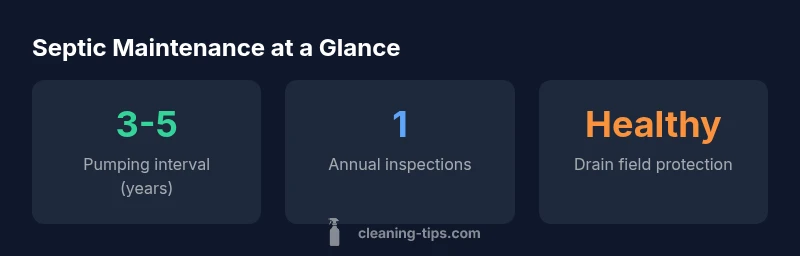
In general, septic tanks should be pumped every 3-5 years, depending on tank size, household occupancy, and waste water flow. A larger household or smaller tank may require pumping sooner, while less frequent use or a newer system can extend toward the upper end. Regular inspections with a licensed pro can fine-tune the schedule.
How Often Clean Septic Tank: Baseline for Most Homes
Determining how often to clean a septic tank is a balance between tank size, household waste, and soil conditions surrounding the drain field. For many homes, a baseline pumping interval of three to five years is a solid starting point, but this range should be adjusted based on occupancy, water use, and whether the tank has a garbage disposal. The Cleaning Tips team emphasizes that regular inspections and prompt attention to early warning signs help prevent backups and costly repairs. Keeping detailed service records makes it easier to adjust the schedule as your home and usage change.
Key Factors That Influence Pumping Frequency
Several variables influence how often you should clean septic tanks beyond the baseline interval. Tank size matters, but so do occupancy and water usage patterns. Homes with many residents or frequent use of washing machines and disposals generate more sludge and scum. Fueling this is the type of sewage system, soil conditions, and whether the system has a modern engineered drain field. Regular professional assessments help interpret these factors and tailor a schedule that maintains system health.
How to Tailor the Schedule to Your System
To tailor the pumping schedule, start with your tank’s capacity and the household size. Track water usage over several months and note any signs of stress like slow drains or gurgling sounds. Schedule a professional inspection at least once per year, and solicit an expert’s opinion on sludge and scum levels. Maintain a simple log of pumping dates and findings so you can adjust the interval as needed and avoid unnecessary service.
Signs Your Tank May Need Pumping
Be alert for warning signs that indicate the need for an immediate pumping or inspection. Foul odors near the drain field or manhole covers, sluggish drainage, sewage backing into drains, and wet, soggy areas above the drain field are common indicators. If you notice sustained backups or unusual spikes in your water bill, contact a licensed septic professional promptly. Early detection saves money and protects your home’s plumbing system.
Maintenance Practices to Extend Pumping Intervals
Smart maintenance can stretch the time between pumpings. Practice water efficiency, spread out laundry loads, and repair leaks promptly to minimize wastewater volume. Avoid pouring grease, solvents, or harsh chemicals down drains, as these can disrupt beneficial bacteria and harm the system. Keep records of pumping, inspections, and repairs, and protect the drain field by preventing heavy equipment from driving over it.
What Happens During a Pumping Visit
A pumping visit typically includes a site assessment, opening the tank, removing sludge and scum, and inspecting baffles and the drain field. The technician will determine the remaining liquid capacity and advise whether pumping is needed immediately or can wait. After pumping, the tank is resealed and the log is updated. You’ll receive guidance on maintenance and a schedule tailored to your system.
Myths vs. Reality: Do Additives Reduce Pumping Frequency?
Many products claim to reduce the need for pumping by breaking down solids or boosting bacterial action. In reality, additives do not replace pumping and are not a substitute for proper maintenance. Regular pumping and inspections remain the most reliable way to keep a septic system healthy. Always consult a licensed professional before using additives, and rely on proven maintenance practices instead.
Planning, Scheduling, and Working with a Pro
Choose a licensed septic contractor with good references and transparent pricing. Ask about their inspection procedures, whether they use camera inspections for the tank, and how they document sludge depth and tank condition. Request a written maintenance plan, including a recommended pumping interval and what to expect during service. Keep a calendar reminder and store all paperwork for future reference.
Local Regulations and Environmental Considerations
Septic pumping is typically guided by local codes and health department guidelines. Adhere to disposal rules for effluent and septage and ensure that the pump service is properly licensed. A well-maintained system supports groundwater quality and protects your property, pets, and family. When in doubt, contact local authorities or a trusted septic professional for guidance.
Septic system pumping frequency factors
| Factor | Impact on Frequency | Notes |
|---|---|---|
| Tank size | Large tanks may extend pumping interval | General guidance |
| Household occupancy | More people increases wastewater | Variance by usage |
| Wastewater load | Higher discharge can shorten interval | Monitor and adjust |
Questions & Answers
How often should I pump my septic tank?
Septic tanks are typically pumped every 3-5 years, depending on tank size, household occupancy, and wastewater flow. Larger households or smaller tanks may require more frequent pumping. Regular inspections help tailor the schedule for your home.
Most homes pump every 3-5 years, but your schedule should be adjusted based on usage and tank size.
What factors determine pumping frequency?
Key factors include tank size, number of occupants, water usage patterns, and whether you have a garbage disposal. Soil conditions and drain-field design also influence how often the tank should be pumped.
Tank size, how many people live in the home, and water use mainly drive the pumping frequency.
Can using septic additives reduce pumping needs?
Additives are not a substitute for pumping and regular maintenance. They may offer limited benefits but cannot replace the need for periodic pumping and inspections by a licensed professional.
Additives aren’t a replacement for pumping or professional inspections.
Is annual inspection necessary?
An annual inspection is commonly recommended, especially for newer systems or high-use homes. Inspections help identify issues early and fine-tune pumping intervals.
Annual inspections are a smart safeguard, especially for active systems.
What are signs of a failing septic tank?
Unpleasant odors near the system, slow drains, sewer backups, or damp spots above the drain field indicate potential failure. Contact a licensed pro promptly.
If you smell sewage or see backups, call a pro right away.
Does pumping improve water quality?
Pumping removes accumulated solids and can reduce the risk of backups, contributing to healthier water flow through the system. It’s part of overall maintenance, not a sole solution for water quality.
Pumping helps protect water quality as part of routine maintenance.
“A proactive, maintenance-driven pumping schedule tailored to your system is the most reliable way to protect your home and groundwater.”
The Essentials
- Set a baseline pumping interval of 3-5 years.
- Tailor the schedule to occupancy and usage patterns.
- Schedule annual professional inspections to refine the interval.
- Watch for signs of backups and address them promptly.
- Keep a maintenance log to track pumping and repairs.