Septic Tank Cleaning Near Me: A Practical Guide
Learn how to locate reliable septic tank cleaning near you, what to expect during pumping, typical cost ranges, and practical maintenance tips from Cleaning Tips for a healthier home.


To find septic tank clean near me, start by searching for licensed septic service providers in your area, compare quotes, and check credentials. Look for upfront pricing, service guarantees, and clear inspection reports. According to Cleaning Tips, prioritize local firms with demonstrated experience and transparent communication to avoid common scams and ensure code-compliant pumping.
Why Regular Septic Tank Cleaning Matters
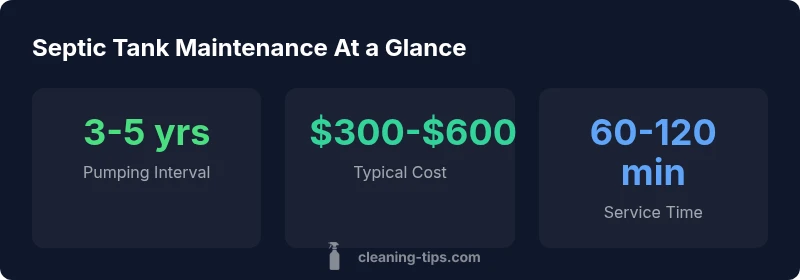
Regular septic tank cleaning is essential to prevent backups, protect your drain field, and maintain home value. A neglected system can lead to unpleasant odors, slow drains, and costly repairs. The Cleaning Tips team emphasizes proactive maintenance as the best defense against disruptions. In many homes, the tank sits underground, invisible until a problem surfaces; timely pumping keeps solids from clogging the outlet and harming the leach field. Home sanitation and environmental health depend on a properly functioning septic system. By scheduling routine pumping every 3-5 years (or as advised by a local pro), homeowners reduce the risk of overflows and costly excavations. In short, regular maintenance is a small investment that yields long-term comfort and reliability.
How Septic Systems Work: A Quick Primer
A typical septic system has three main parts: the septic tank, the drain field, and the soil that treats wastewater. Wastewater flows into the tank, where solids settle to the bottom and scum rises to the top. Bacteria in the tank help break down some material, but most solids still need to be pumped out periodically. The clarified liquid then exits to the drain field, where soil microorganisms and oxygen help purify it before it re-enters the groundwater. When pumping is delayed, solids accumulate, potentially clogging outlets and causing backups. Understanding this flow helps homeowners appreciate why regular pumping is essential for system health and environmental safety.
Finding a Reputable Provider Near You
Start with local searches for septic tank clean near me, then narrow by licensing and insurance. Request references and read multiple reviews to gauge consistency in workmanship and reliability. Ask about service area, availability, and whether the price quote includes inspection reports and written recommendations. A reputable pro will provide a transparent estimate, explain the scope of the pumping, and share a written report after the job. When possible, choose a provider with experience in your soil type and household size, since these factors influence leach field load and maintenance needs.
What to Look For in a Septic Service
Beyond a valid license and insurance, look for certifications from state or local regulators, especially for pumping and inspecting leach fields. Verify the company uses up-to-date equipment, clean truck practices, and properly seals access lids to prevent hazardous exposure. Ask about scheduling options (emergency vs. routine) and what happens if the tank needs more extensive work or trenching. A solid contractor should offer a written contract, clearly state pricing for pumping, inspection, and any recommended repairs, and provide a post-service summary with tank capacity, sludge depth, and flow status.
What Happens During Pumping and Cleaning
During pumping, technicians locate the tank and open the access lid, remove standing wastewater, and use a pump truck to remove solids from both chambers. In addition to removing solids, a thorough cleaning involves inspecting baffles, inlet and outlet pipes, and checking for root intrusion or cracks. Many pros will perform a basic inspection of the drain field to detect signs of inefficiency, such as slow drainage or soggy areas above the leach field. A good pump job ends with a written report detailing observations, recommended next steps, and a maintenance plan tailored to your home.
Cost Range and Hidden Fees
Costs vary by tank size, local labor rates, and whether additional services are bundled. Typical pumping projects fall within a broad range that reflects regional price differences and septic tank size. When budgeting, ask for a price breakdown that includes pumping, inspection, and any required permits or disposal fees. Be wary of upsells for unnecessary additives or routine maintenance packages. A competent technician will explain what is essential for your tank’s health and avoid pressure to purchase unrelated services.
Maintenance to Extend Tank Life Between Pumps
Preventive maintenance can extend the life of your septic system and reduce emergency visits. Use only septic-safe cleaners and avoid flushing paper towels, feminine products, grease, or chemicals that kill beneficial bacteria. A consistent water usage pattern helps prevent overloads; consider spreading out high-water activities and fixing leaks promptly. Periodic inspections of the tank lid, access risers, and the distribution box (if present) help catch issues early. Keep records of pumping dates and service notes to track system health over time.
Common Myths and Misconceptions
Myth: Additives restore a failing septic system. Reality: Most systems require mechanical pumping and professional inspection rather than chemical additives. Myth: Pumping can be skipped if the tank seems okay. Reality: Buildup can be hidden; regular pumping is essential even when there are no obvious symptoms. Myth: You can DIY a septic tank cleanup. Reality: Handling sludge and wastewater poses health risks and legal concerns. Always rely on licensed professionals for pumping and inspection.
Emergency Signs and When to Call a Pro
Backups, sewage odors, gurgling toilets, or standing wastewater near the tank are red flags. If you notice wet spots in the yard, unusually lush patches around the drain field, or a sudden drop in drainage performance, contact a licensed septic service promptly. Delays can lead to more extensive damage and costly repairs. In urgent situations, schedule an emergency visit and request a written assessment to guide subsequent maintenance decisions.
Common septic tank services and durations
| Service Type | Typical Cost Range | Estimated Time |
|---|---|---|
| Pumping & Cleaning | $300-$600 | 60-120 min |
| Full System Inspection | $150-$300 | 30-60 min |
| Add-ons (Maintenance) | $100-$250 | 15-45 min |
Questions & Answers
What does septic tank pumping involve?
Pumping involves removing the liquid and solids from the tank, inspecting the baffles and inlet/outlet pipes, and providing a post-service report with recommendations. It’s a routine maintenance task that prevents solids from clogging the drain field.
Pumping removes liquids and solids from the tank, checks critical parts, and gives you a report with recommendations. It’s a routine maintenance task that prevents drain field clogs.
How often should I pump my septic tank?
Most tanks should be pumped every 3-5 years, but this depends on tank size, household size, and usage. An annual inspection can help fine-tune that schedule.
Most tanks get pumped every 3-5 years, but it depends on size and use. An annual check helps set the right schedule.
Are DIY septic cleaning products safe?
DIY cleaners and additives can disrupt the septic balance or damage the system. It’s safer to use septic-safe products and rely on licensed professionals for pumping and inspection.
DIY products can upset the septic balance. Use septic-safe cleaners and rely on professionals for pumping.
What credentials should a septic service have?
Choose a contractor with current state licenses, appropriate insurance, and, if possible, local references. Certifications from recognized state programs add assurance of competence.
Look for current licenses, good insurance, and solid references; certifications help confirm competence.
Can additives replace pumping?
No. Additives cannot replace the mechanical removal of solids. Pumping remains essential for preventing backups and protecting the drain field.
No; pumping is essential and additives can’t replace it.
What signs indicate a septic issue?
Slow drains, gurgling sounds, sewage odors, wet patches in the yard, and backups are common signs that your system may need service.
Slow drains, odors, and yard patches often mean septic trouble—call a pro.
“Regular septic maintenance prevents surprises and costly repairs; proactive pumping and inspection keep your system healthy and odor-free.”
The Essentials
- Search locally and verify licensing before booking.
- Ask for upfront pricing and a written pump report.
- Schedule pumping every 3-5 years to prevent backups.
- Use septic-safe products and avoid flushing non-biodegradables.