How to Check Clean Ingredients in Cleaning Products
Learn how to check clean ingredients in cleaning products with a practical, step-by-step guide. Read labels, verify certifications, and compare disclosures to choose safer, eco-friendly options for your home.


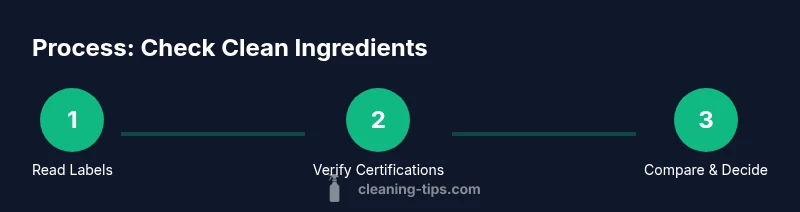
You will learn how to check clean ingredients in cleaning products by understanding ingredient lists, recognizing safe certifications, and avoiding common contaminants. Start by reading the label front and back, identifying potentially harmful fragrances or solvents, and comparing ingredient disclosures across brands. This quick guide helps homeowners verify safer, eco-friendly choices.
Understanding What Clean Ingredients Mean
Clean ingredients refer to substances in cleaning products that are generally safer for people and the environment. They are typically low-tox or non-toxic, biodegradable, and free from certain restricted or persistent hazardous chemicals. However, blanket claims like “natural” or “green” do not guarantee safety. The goal is to look for transparency, minimize exposure to irritants, and choose formulations that achieve cleaning goals without unnecessary additives. According to Cleaning Tips, building a practical definition of clean ingredients means prioritizing disclosures you can verify and avoiding vague marketing language. In practice, this means reading full ingredient lists, noting any fragrances or solvents, and comparing products that advertise similar outcomes. A thoughtful approach helps households reduce exposure, improve indoor air quality, and maintain healthier surfaces over time.
If you’re new to this, start with a simple rule: favor products with complete disclosures and avoid those that hide ingredients behind vague terms. Over time, you’ll recognize common safe options (like simple, widely used ingredients) and you’ll gain confidence evaluating new cleaners as they come to market.
For renters and homeowners alike, adopting this mindset turns cleaning into a proactive habit rather than a guessing game. The Cleaning Tips framework emphasizes practical checks you can perform in minutes and scale up as needed.
Reading Labels: Front, Back, and INCI Names
Label literacy is the cornerstone of checking clean ingredients. Front-of-pack claims often emphasize benefits such as “hypoallergenic” or “fragrance-free,” but those claims can be misleading if the full ingredient list reveals irritants or allergens. Always flip to the back label or the ingredient panel. In many jurisdictions, ingredients are listed in descending order by concentration, which helps you gauge exposure risk.
Some products use INCI names (International Nomenclature of Cosmetic Ingredients) that differ from household terms. If you see terms like “d-limonene” or “benzisothiazolinone,” you’re looking at specific chemical disclosures, not marketing fluff. If you’re unsure about an ingredient, search the exact name on a trusted database or the brand’s official site. Always check for fragrance-related ingredients separately; a product can be fragrance-free yet contain masking agents that irritate sensitive individuals.
When you document ingredients, keep notes on any unfamiliar terms and whether they’re associated with known irritants or allergies. This habit pays off when you face similar products in the future and makes price and performance comparisons more meaningful. The goal is transparency: you should be able to identify every chemical and its purpose in the formulation.
Certifications That Matter When Cleaning Products
Certifications are helpful anchors when you’re evaluating cleaning products. Look for recognized third-party seals that indicate safer formulations, rather than relying on marketing language alone. Common certifications include EPA Safer Choice, Green Seal, and UL Ecologo. These programs assess ingredients, testing standards, and product claims to verify safety and environmental impact where possible.
While certifications are useful, they don’t guarantee perfection for every consumer. Some products may be compliant with one standard but not another, and regional regulations can vary. Use certifications as a starting point, then verify specific ingredients on the product label and the brand’s website. Cleaning Tips recommends compiling a small, personal list of preferred certifiers and using this as a baseline for ongoing purchases.
To make certification checks efficient, bookmark official databases and cross-check new products against your established list. This reduces the time spent evaluating each item and reinforces consistent safety habits across your home.
Verifying Information Online and in Stores
Online verification starts with the brand’s official website and the product’s data sheet. Look for a complete ingredient list, safety data (or SDS), and any notes on fragrance, dyes, or solvents. Reputable databases and government sites can supplement brand information; when in doubt, use multiple sources to confirm details. If you’re comparing products in a store, take a photo of the ingredient panel or use a note app to capture key terms for later lookup.
Be wary of user reviews that claim safety without citing specifics. Real verification happens when you can point to exact chemical names, safety statements, and third-party certifications. Cleaning Tips suggests creating a brief comparison table for each product: ingredients, concentrations, certifications, and your personal safety needs (e.g., sensitivities, household occupants). This method makes it easier to select products that align with your standards while avoiding edge cases.
Practical Ingredient Profiles: Vinegar, Baking Soda, and Surfactants
Vinegar (acetic acid) and baking soda (sodium bicarbonate) are popular, widely used cleaners. They are often safer options for many tasks, but vinegar should never be mixed with bleach due to chlorine gas production. Surfactants vary widely; some are mild and biodegradable, while others can irritate skin or eyes. When you see these ingredients on a label, look for concentrations or formulations that explain their role (e.g., “aqueous solution with 10% acetic acid”). If a product uses a proprietary blend, seek accompanying safety data or contact the manufacturer for specifics.
In all cases, compare the overall formulation—not just individual ingredients. A product can list safe components but still contain irritants in higher concentrations or contain additives that cause adverse reactions in sensitive individuals. The key is context: how the ingredients work together, the intended surface, and the household’s needs. Cleaning Tips emphasizes documenting your experiences with each ingredient profile to build a personal library of reliable cleaners.
A Simple, Actionable Checklist You Can Use Today
- Gather every cleaner you currently use and list their ingredients side by side.
- Read the full ingredient list, starting from the largest-concentration items.
- Check for real certifications (EPA Safer Choice, Green Seal, Ecologo) and verify on official sites.
- Note any fragrance, dye, or allergen-containing components and decide if you’ll replace or mask them with fragrance-free options.
- Compare products with similar cleaning goals and record performance versus safety trade-offs.
- Test new products on a small, inconspicuous area before full use to confirm no staining or adverse reactions.
- Maintain a simple log so you can track improvements and update your routine over time.
This checklist is designed to be quick to use, yet comprehensive enough to influence safer home choices. By keeping records, you’ll spot patterns and build confidence in your purchasing decisions.
Common Pitfalls and How to Avoid Them
Even the most well-intentioned cleaners can hide risks in marketing terms or incomplete disclosures. Watch out for vague terms like “plant-based” without specifics, and beware products that refuse to disclose all ingredients. Fragrance can mask irritants, so prefer fragrance-free or clearly labeled essential-oil-based scents with transparent ingredient lists. Proprietary blends may protect formulas, but if a brand doesn’t share ingredients, it’s a red flag for safety-conscious shoppers. Always cross-check branded claims against independent sources and official certifications to avoid relying solely on marketing.
If you’re unsure about a product, pause and test a small area or switch to a known-safe alternative while you research. Over time, your personal risk assessment becomes faster and more accurate, helping you avoid unnecessary exposures.
Next Steps: Building a Safer Cleaning Routine
To translate what you’ve learned into daily practice, replace one or two high-risk cleaners with safer alternatives each month. Use your label-reading skills to evaluate new products before adding them to your rotation. Establish a baseline of trusted products that meet your safety requirements, then expand gradually by comparing new options against that baseline. Finally, revise your routine annually or after significant changes in household needs (new pets, small children, or sensitive occupants) to maintain a consistently safer cleaning environment.
Tools & Materials
- Product labels and ingredient lists(Collect current cleaners you own; have them handy for quick reference)
- Pen and notebook or digital notes app(Use for rapid logging of findings and decisions)
- Access to brand websites or official certification databases(Needed to verify claims and gather SDS/docs)
- Smartphone or camera (optional)(To capture labels when you’re in-store)
Steps
Estimated time: 15-30 minutes
- 1
Gather product labels
Collect all cleaners you plan to evaluate. Have the full ingredient lists visible or accessible, either in-store or from the product packaging.
Tip: Organize by cleaning task (kitchen, bathroom, floors) to focus comparisons. - 2
Read the full ingredient list
Examine the list from top to bottom. Note any fragrances, solvents, or dyes, and identify unfamiliar chemical names for later lookup.
Tip: If it’s unclear, search the exact chemical name in a trusted database before buying. - 3
Check for certifications
Look for EPA Safer Choice, Green Seal, or Ecologo marks. Verify the certification status on the official database and cross-check with the product label.
Tip: Certification is a strong indicator, but always confirm the current status as programs update their criteria. - 4
Compare with safer alternatives
For similar tasks, compare two or more products on safety disclosures, concentrations, and performance notes. Favor options with clearer ingredient disclosures.
Tip: Create a simple side-by-side table to visualize trade-offs quickly. - 5
Test on a small area
Before full use, apply a small amount to a non-visible patch to check for staining or adverse reactions, especially on fabrics or finishes.
Tip: Document results so you can recall what worked for future choices. - 6
Document and adjust
Record your findings and adjust your routine gradually. Update logs after new purchases or changes in household needs.
Tip: Consistency beats speed—short, regular updates keep you aligned with your safety goals.
Questions & Answers
What does 'clean ingredients' mean in cleaning products?
Clean ingredients refer to substances that are generally safer for people and the environment, with clear disclosures and minimal risk. It involves understanding the full ingredient list and avoiding vague claims. Always verify with trusted sources.
Clean ingredients are substances with transparent disclosures and lower risk; verify with official sources and read the full list.
Are natural ingredients always safer?
No. Natural ingredients can still cause allergies or irritation and may have environmental impacts. Always review the specific chemical names, concentrations, and certifications rather than assuming safety based on origin.
Natural doesn’t automatically mean safe; check actual ingredients and certifications.
Which certifications should I trust?
Look for EPA Safer Choice, Green Seal, and Ecologo as starting points. Verify claims on official databases and supplement with brand disclosures.
Trust major third-party certifications and verify them online.
What if a product does not list all ingredients?
If a product withholds ingredients, avoid it or contact the manufacturer for a full disclosure. Consider safer alternatives with complete labeling.
If you can’t see all ingredients, don’t use the product until you get full disclosure.
Can I ever completely ensure a cleaner is safe?
No product is universally safe for all individuals. You can reduce risk by choosing well-documented ingredients, testing on small areas, and keeping a personal log of sensitivities and reactions.
You can reduce risk, but absolute safety isn’t guaranteed for everyone.
How often should I review product ingredients?
Review ingredients whenever you add a new product, when regulations update, or if household needs change (new pets, kids, or sensitivities). A yearly check is a good baseline.
Review ingredients whenever you bring in new cleaners, at least once a year.
Watch Video
The Essentials
- Read the full ingredient list on every product.
- Look for recognized safety certifications and verify them.
- Don’t rely on marketing terms alone; seek transparency.
- Keep a simple log of what works and what doesn’t.
- Review and update your routine as needed.