Eco Clean: A Practical Guide to Sustainable Home Cleaning
Discover eco clean techniques for a healthier home. This step-by-step guide covers safe, plant-based ingredients, reusable tools, and waste-reducing routines that keep your home clean without harsh chemicals.


Quick answer: You can achieve effective, safe cleaning by adopting an eco clean routine that uses simple, plant-based ingredients and reusable tools. This guide shows you how to build the routine, avoid toxic chemicals, and reduce waste across rooms, with practical steps you can start today.
What eco clean means
Eco clean is a holistic approach to cleaning that minimizes chemical use while maximizing effectiveness and health. It emphasizes safer ingredients, reusable tools, and waste-conscious habits. For homeowners and renters, adopting eco clean starts with simple shifts: swap harsh, single-use products for versatile, plant-based options; choose concentrates over ready-to-use bottles; and focus on routine maintenance rather than heavy, emergency cleaning. According to Cleaning Tips, eco clean also means designing routines that protect indoor air quality and reduce plastic waste, so you and your family breathe easier while the home stays fresh. The Cleaning Tips team found that households adopting these practices report fewer headaches, less nasal irritation, and less clutter from disposable products over time. By grounding your cleaning plan in these principles, you create a healthier home environment and a lighter footprint on the planet.
Health, safety, and environmental benefits
When you choose eco clean methods, you reduce exposure to synthetic fragrances, volatile organic compounds (VOCs), and other irritants that commonly accompany conventional cleaners. This matters for families with kids, pets, or anyone with allergies. A cleaner indoor environment can also support better air quality, especially in small apartments or rooms with poor ventilation. With fewer hazardous products, you lower the risk of accidental ingestion or eye irritation during routine cleaning. From a broader perspective, eco clean practices translate into less plastic waste and fewer trips to the store for disposable bottles. The Cleaning Tips analysis shows that communities adopting sustainable routines often report improved overall satisfaction with home cleanliness and a sense of empowerment from taking control of household chemicals. In short, eco-friendly routines support healthier living spaces without sacrificing effectiveness.
Core principles of eco clean
To build a sustainable system, lean on these core principles: 1) Use ingredients that are safe for people and the planet, such as vinegar, baking soda, and plant-based soaps; 2) Reduce plastic and single-use packaging by opting for concentrates, refills, and reusable spray bottles; 3) Target dirt, not the surface, with appropriate methods; 4) Prioritize damp cleaning over soaking or steam-based products unless necessary; 5) Test cleaners on inconspicuous areas first to protect finishes.
Ingredients that work—and what to avoid
Safe ingredients can handle most tasks around the home. White vinegar is great for glass, tiles, and deodorizing; baking soda offers gentle abrasion and deodorizing power; a mild Castile soap or plant-based detergent helps lift grime; lemon juice can enhance aroma and whitening on some surfaces. Avoid mixing bleach with ammonia or with acidic cleaners like vinegar—this creates dangerous gases. Always label mixtures, keep track of ratios in a spray bottle, and never store mixed chemicals in a single container for long. For sensitive surfaces like natural stone or wood, use water with a tiny amount of approved cleaner and test first. Remember that eco clean doesn't require expensive specialty products; many effective solutions are simple, common household ingredients. The aim is to achieve visible results with minimal risk.
Tools and reusable options
Practical tools matter as much as ingredients. Invest in microfiber cloths that pick up grime without chemicals; use a durable spray bottle for diluted cleaners; keep a small bamboo brush for grout lines; and a soft mop or microfiber mop head for floors. Reusable, refillable containers reduce waste and cost. Store cleaners in a cool, dry place away from sunlight to preserve effectiveness. Label bottles clearly with date and contents. For people who prefer fragrance-free options, choose unscented products or add a drop of essential oil to a single bottle for a light aroma—never mix essential oils directly into concentrated cleaners you plan to store long-term. Consistency in tools promotes better results.
A practical cleaning routine: room-by-room example
A practical, room-by-room routine keeps eco clean habits manageable. Start in the kitchen with a quick wipe of counters, sink, and stovetop using a diluted vinegar solution. Move to the bathroom with a gentle cleaner on taps and tiles, finishing with a microfiber wipe. In living areas, dust surfaces, clean glass, and polish wood with minimal water. Bedrooms benefit from a quick dusting and vacuuming or mopping with a mild cleaner. The goal is to complete 15–20 minutes of light cleaning daily, with deeper sessions weekly. Adapt the frequency to your schedule; consistency matters more than intensity. The key is to stay mindful of product choices and to reuse cloths and spray bottles whenever possible. A practical schedule makes eco clean feel sustainable rather than like a burden.
Stain removal and surface care
Stains respond well to targeted, gentle treatments. For stains on fabrics, apply a paste of baking soda and water, let sit, then blot with a clean cloth. For tough spots on ceramic, a vinegar solution can help dissolve mineral deposits, followed by a light wipe with a microfiber cloth. Avoid abrasive scrubbers on delicate finishes. For wood finishes, use a damp cloth with a minimal amount of a safe cleaner; dry promptly to prevent moisture damage. Keep a small toothbrush for grout lines and corners that accumulate dirt. If you encounter persistent stains, test your approach on a hidden area before applying it to visible surfaces.
Safety, storage, and disposal
Safety comes first with eco clean. Keep all cleaners away from children and pets, ideally in locked cabinets. Store bottles upright and clearly labeled; avoid mixing cleaners in the same container. Dispose of any outdated products according to local guidelines, and consider taking back-to-store packaging for recycling when possible. If you worry about indoor air quality, open a window briefly during cleaning and use fans to increase ventilation. Remember: eco clean is about reducing risk, not eliminating effort. Small, consistent actions add up to a healthier home over time.
Scaling eco clean across your home
As you become more confident, expand eco clean methods to more rooms and tasks. Implement a simple, shared checklist for all household members to follow, so cleaning becomes a team effort rather than a one-person task. Consider a basic inventory of ingredients, tools, and storage to avoid buying duplicates. Use refill stations or bulk purchases to lower plastic usage. When possible, replace disposable wipes with reusable microfiber alternatives and avoid spray canisters by refilling spray bottles. Regular audits of routines help identify wasteful steps and opportunities to improve. In this way, eco clean becomes part of your household culture rather than a series of occasional, separate tasks.
Authority sources and further reading
For deeper understanding and validation of eco clean practices, consult credible sources. The EPA's Safer Choice program highlights safer products and certifications that support greener cleaning. The CDC provides guidance on cleaning and disinfection in homes during health outbreaks. The NIEHS Green Cleaning resources offer research-backed recommendations for reducing chemical exposure. These references help you verify safe practices and adjust routines to fit your home.
Tools & Materials
- Spray bottle (16 oz / 500 ml)(Glass or durable plastic; label contents clearly)
- Microfiber cloths(Use color-coded sets to avoid cross-contamination)
- Baking soda(Fine powder for paste and deodorizing)
- White vinegar (5% acidity)(Dilute for most surfaces; never mix with bleach)
- Castile soap or mild plant-based detergent(Optional but helpful for suds)
- Refillable glass jar for paste(Keeps ingredients organized)
- Latex or nitrile gloves(Protect hands during cleaning)
- Old toothbrush or scrub brush(For grout lines and tight corners)
Steps
Estimated time: 75-90 minutes
- 1
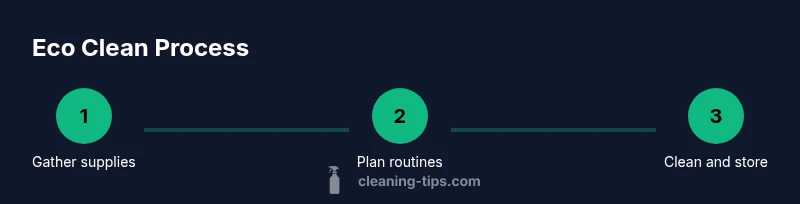
Gather eco-friendly supplies
Collect all necessary ingredients and tools before you start to avoid mid-session shopping. This helps maintain flow and minimizes impulse purchases that add waste. Having everything on hand also reinforces a consistent eco clean routine.
Tip: Place items in a portable caddy to move between rooms. - 2
Ventilate the space
Open windows or run a ventilation fan to keep air fresh while you clean. Ventilation reduces exposure to any fumes and improves comfort during longer sessions.
Tip: Even in cooler weather, a few minutes of airflow matters. - 3
Dust and wipe surfaces
Start with dry dusting using microfiber cloths to remove loose dirt, then wipe with a damp cloth using a diluted cleaner. This prevents smearing and reduces the need for repeated passes.
Tip: Work top-to-bottom to avoid recleaning lower areas. - 4
Prepare an eco-friendly cleaner
Fill a spray bottle with diluted vinegar-water solution and add a drop of mild soap if needed for stuck-on grime. This gives you a versatile, safe cleaner for many surfaces.
Tip: Label the bottle with contents and date. - 5
Clean glass and mirrors
Spray vinegar solution on glass and wipe with a microfiber cloth in a S-pattern for a streak-free finish. Avoid using excessive liquid to prevent drips onto surrounding surfaces.
Tip: Use a dry microfiber to finish and prevent streaks. - 6
Tackle stains with baking soda paste
Mix baking soda with a little water to form a paste. Apply to stubborn stains, let sit briefly, then scrub gently with a soft brush.
Tip: Test on a hidden area first to avoid damage. - 7
Mop floors with eco cleaner
Dilute an eco-friendly cleaner per label directions and mop floor surfaces. Allow to air-dry the natural way for best results.
Tip: Use slightly damp mops to avoid oversaturation. - 8
Rinse and dry surfaces
Wipe surfaces with a clean, damp cloth to remove residue, then dry with a separate cloth to prevent streaks and water damage.
Tip: Drying prevents moisture-related odors. - 9
Store cleaners safely
Return cleaners to a secure, labeled storage area away from children and pets. Check expiration dates and dispose of outdated products through local recycling programs.
Tip: Keep a minimal stock to reduce clutter.
Questions & Answers
What does eco clean mean in everyday cleaning?
Eco clean means using safer ingredients, reducing plastic waste, and employing reusable tools to achieve effective cleaning with minimal environmental impact.
Eco clean means safer ingredients and reusable tools that still keep your home clean.
Are eco-friendly cleaners as effective as traditional ones?
Yes, when used with proper technique. Simple ingredients like baking soda, vinegar, and plant-based soaps work well on most surfaces. For tough stains, apply targeted applications and allow time for action.
Eco-friendly cleaners work well with proper technique and patience.
Can I use essential oils in eco clean routines?
Essential oils can add fragrance and some benefits, but use them sparingly and avoid adding undiluted oils to concentrated cleaners. They should be used in small amounts and not replace primary cleaners.
Essential oils can be added sparingly for scent, not as a primary cleaner.
Is vinegar safe for all surfaces?
Vinegar is safe for many surfaces but should not be used on natural stone, some marble, or unfinished wood. Always test first and use dilution for most daily tasks.
Test vinegar on a small area first, especially on stone or wood.
How can I reduce plastic waste when cleaning?
Choose concentrates, bulk purchases, and refillable bottles. Reuse cloths and avoid disposable wipes whenever possible to minimize waste.
Buy concentrates, refill bottles, and reuse cloths to cut plastic waste.
Watch Video
The Essentials
- Adopt an eco clean mindset for safer homes.
- Use safe ingredients and reusable tools to cut waste.
- Room-by-room routines sustain consistency and outcomes.
- Test surfaces first and store chemicals safely.
- The Cleaning Tips team emphasizes practical, low-waste methods for healthier living.