How to Clean Pee Off a Couch: Step-by-Step Guide for Odor-Free Upholstery
Learn a practical, science-based method to remove urine from a couch, neutralize odors, and prevent staining. Safe for most fabrics with clear, actionable steps, tools, and aftercare tips from Cleaning Tips.


Learn how to clean pee off a couch quickly and safely, using simple household tools. This guide covers blotting, cleaning solutions, odor control, and thorough drying to protect fabric and indoor air quality. With step-by-step actions, quick decision-making, and fabric-specific notes, you'll minimize stains and odors even on delicate upholstery.
Why quick action matters when urine hits upholstery
If you’re wondering how to clean pee off a couch, acting quickly matters. Urine contains compounds that can bond with fibers, creating stains and a lasting odor if left untreated. According to Cleaning Tips, prompt blotting and a gentle cleaning routine reduce the risk of set-in coloration and stubborn scents. The sooner you start, the easier it is to prevent discoloration and ensure long-term fabric health. In most cases, a simple, methodical approach works across common fabrics like cotton blends, microsuedes, and some leathers—though leather requires special care and tests on a hidden area before full treatment. The goal is to remove liquid, neutralize odor, and restore comfort without compromising fiber integrity.
What you’ll need before you start
Having the right tools on hand saves time and prevents over-wetting, which can worsen odors. Gather a microfiber cloth or clean towels, paper towels, a spray bottle with a mild cleaning solution, warm water, white vinegar, baking soda, and optional enzymatic cleaner for heavy odors. If your couch has a delicate weave or a special finish, test cleaners on a hidden spot first and use the gentlest method that works. Proper prep also means ensuring the room is well-ventilated and that you have a dry space nearby for blotting and air-drying. The Cleaning Tips guide recommends keeping pets and kids away from the area during cleaning to avoid contamination and distraction while you work.
Fabric responsiveness and test spots
Before diving into full cleaning, identify the couch fabric type and check the care label. Some fabrics tolerate water-based cleaners, while others require solvent-free options or professional care. Always perform a small test on an inconspicuous area (under a cushion edge or the back) to confirm colorfastness and texture changes. If color transfer occurs or the fabric feels unusually tacky after cleaning, stop and switch to a milder method or seek professional cleaning advice. Testing helps you avoid unintended damage and gives you a baseline for results.
Odor control basics: neutralizing urine smells
Odor neutralization is as important as stain removal. A common home method is to apply a vinegar solution (equal parts white vinegar and water) to halt odor-causing bacteria. Following cleaning, baking soda can absorb residual moisture and odors when left to sit for 15–60 minutes before vacuuming. For persistent odors, enzymatic cleaners designed for pet stains break down organic compounds at the molecular level, offering more thorough deodorization. Always ensure the area is well-ventilated during odor-control steps to minimize fumes.
Drying and final checks
After cleaning, drying is critical to prevent mold and mildew. Blot remaining moisture with towels, then use a fan or a hair dryer on a cool setting to speed up evaporation. Avoid direct heat that could shrink or damage fibers, especially on synthetic blends. Once dry, inspect the fabric in natural light for any remaining stain or odor. If a faint stain persists, repeat a mild cleaning pass or consider a targeted stain remover suited to your fabric type. Proper drying also reduces the chance of recurring odors due to moisture retention.
Safety and maintenance tips for ongoing cleanliness
Keep a small cleaning kit handy and address spills promptly to reduce staining risk. Use washable covers or throws to protect upholstery from frequent accidents, especially in households with pets or small children. Regular vacuuming of cushions and surrounding areas helps remove dust and debris that could trap moisture and odors. If you’re dealing with repeated urine exposure (pets or kids), set a routine fabric check and consider training or barrier methods to minimize future incidents. Remember, patience and gentle cleaning preserve your couch’s appearance and comfort.
Common mistakes to avoid
Avoid rubbing or scrubbing hard, which can spread urine and push it deeper into fibers. Over-wetting with cleaners can leave sticky residues and encourage microbial growth. Do not mix cleaners unless the label explicitly approves it, as chemical reactions can release harmful fumes. Lastly, skip the odor-neutralizing step only if you’re certain the stain and odor have fully released; otherwise, you risk a lingering smell that becomes more noticeable in humid conditions.
Tools & Materials
- Vacuum cleaner with upholstery attachment(Pre-clean debris and dry surfaces for faster results)
- Clean cloths (microfiber preferred)(Soft, lint-free for blotting)
- Paper towels or absorbent towels(For initial blotting and moisture removal)
- Spray bottle with warm water(Mist lightly for rinsing)
- Mild dish soap(A drop in water solution for gentle cleaning)
- White vinegar (5% acidity)(Dilute 1:1 with water for odor neutralization)
- Baking soda(Sprinkle after cleaning to absorb moisture and odors)
- Enzymatic cleaner (pet odor remover)(Optional for stubborn odors)
- Fan or hair dryer (cool setting)(Accelerates drying)
- Latex gloves(Protection for hands if desired)
Steps
Estimated time: 30-60 minutes
- 1
Stop the spill and blot
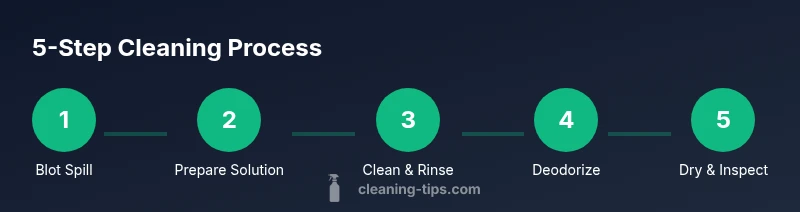
Gently press clean towels around the spill from the outside in toward the center to lift as much liquid as possible without rubbing. Avoid pressing hard into the fabric, which can push liquid deeper. Reassess the area after each blot to ensure you’ve removed most of the moisture.
Tip: Use multiple clean towels so you’re not reintroducing moisture from a soiled cloth. - 2
Make a mild cleaning solution
Mix a small amount of mild dish soap with warm water in the spray bottle. For odor control, prepare a 1:1 vinegar-and-water solution as an alternative. Always test on a hidden spot first to confirm colorfastness.
Tip: Keep the solution light; over-wetting invites residual odor and damage. - 3
Gently clean the fabric
Lightly mist the stained area and blot with a clean cloth, working from the outside edge toward the center to avoid widening the stain. Do not saturate the fabric; you’re seeking to lift the stain while preserving the base fabric.
Tip: Use a fresh cloth frequently to avoid reapplying contaminants. - 4
Rinse and blot to remove soap
Mist with clean water and blot again to remove any soap residue, which can attract more dirt if left behind. Repeat as needed until the cloth comes away clean. A dry towel can help wick moisture during this step.
Tip: Wring out towels well to maximize absorption. - 5
Deodorize and set enzymes (if needed)
If odor persists, lightly sprinkle baking soda over the area and let it sit for 15–60 minutes before vacuuming. For stubborn odors, apply an enzymatic cleaner per label and allow it to dwell as directed.
Tip: Avoid mixing baking soda with vinegar directly on the fabric—wait for baking soda to sit after cleaning. - 6
Dry thoroughly
Use a fan or a hair dryer on a cool setting to speed drying. Keep the area well-ventilated and avoid direct heat that can damage fibers. Check the fabric after it dries to ensure no residual dampness remains.
Tip: Do not place cushions back until fully dry to prevent mildew. - 7
Inspect and repeat if necessary
Once dry, inspect the spot under natural light. If any stain or odor remains, repeat the appropriate step with milder solution. For persistent cases, consider professional upholstery cleaning guidance.
Tip: Document the fabric care label to guide any future cleanings. - 8
Protect and prevent future spills
Cover the couch with a washable throw or slipcover, especially in homes with pets or young children. Regular vacuuming and prompt spill response will extend the life of the upholstery.
Tip: Establish a quick spill-response routine to minimize damage over time.
Questions & Answers
What should I do immediately after a pee spill?
Blot up as much liquid as possible with towels, then test a mild cleaning solution on a hidden area before proceeding with full cleaning.
Blot the spill quickly, test your cleaner on a hidden spot, then clean lightly.
Can I use household cleaners on all couch fabrics?
Not always. Check the fabric care label and test on an inconspicuous area. Some fabrics require specialized cleaners or professional care.
Always test first and respect the fabric label before cleaning.
Is it safe to apply heat to dry the couch?
Avoid high heat. Use a fan or cool setting on a hair dryer to dry; heat can shrink or damage some fabrics.
Dry with a fan or cool dryer instead of heat.
What if the odor persists after cleaning?
Use an enzymatic cleaner designed for odors and bacteria; re-clean if necessary and ensure thorough drying.
If odors stick around, re-clean with enzymes and dry completely.
When should I call a professional?
If stains are deeply embedded, fabric is delicate, or odors linger after repeated attempts, seek professional upholstery cleaning.
Consider professional cleaning for tough stains or sensitive fabrics.
Watch Video
The Essentials
- Blot spills promptly to minimize staining.
- Test cleaners on hidden areas before use.
- Use baking soda and enzyme cleaners for odors.
- Dry thoroughly to prevent mold and lingering smells.
- Protect upholstery with covers to reduce future incidents.