How to Clean the Leather Couch: Step-by-Step Guide
Learn safe, proven methods to clean, treat stains, and condition your leather couch. This Cleaning Tips guide helps homeowners keep upholstery looking new with practical steps and pro tips.


This guide teaches you how to clean the leather couch safely, covering surface cleaning, stain treatment, conditioning, and ongoing maintenance using common, gentle products. Before you start, gather a pH-balanced cleaner, distilled water, soft microfiber cloths, a spray bottle, and a leather conditioner suitable for your leather type.
Why Leather Couches Demand Gentle Care
Leather furniture blends elegance with durability, but it still requires thoughtful care. If you’re asking how to clean the leather couch without diminishing its beauty, the answer lies in gentleness, patience, and the right products. Leather finishes vary—from smooth, pigmented surfaces to more sensitive aniline hides—and each type reacts differently to cleaners. In general, you want to minimize water exposure, use pH-balanced cleaners, and avoid harsh solvents.
Maintenance starts with regular dusting using a dry microfiber cloth to prevent grime from embedding in pores. Before any cleaning, perform a patch test in an inconspicuous area—this is your first line of defense against discoloration or finish dulling. Cleaning is not a one-size-fits-all task; the Cleaning Tips team recommends a standard routine: light daily care, a more thorough wipe every 2-4 weeks, and a deeper cleaning every few months depending on use. The goal is to preserve flexibility, prevent cracking, and keep color even. Remember: how to clean the leather couch should guide your approach rather than dictate a single method; adapt to your leather type while following general safety rules.
Know Your Leather Type and Patch Testing
Leather comes in several finishes: aniline, semi-aniline, nubbed, and pigmented. Each type reacts differently to cleaners and water exposure. Before committing to a cleaning method, identify your couch’s finish and performance expectations. Always run a patch test on a hidden area and wait at least 15 minutes to observe any adverse reaction. If there’s no dye transfer, color change, or texture alteration, you can proceed with confidence. The patch test is your best defense against expensive color loss or finish damage. Cleaning tips for the leather couch emphasize gentleness, minimal moisture, and prompt drying to prevent water stains.
Know Your Cleaning Routine and Patch Test Protocol
A safe approach combines regular dusting, spot-cleaning for spills, and occasional conditioning. Start with the least intrusive method, such as dusting, then move to a damp cloth with a mild cleaner if needed. Do not saturate the leather; moisture should be light and controlled. As you build your routine, log what works best for your couch’s finish and color depth. The correct sequence—test first, then clean lightly, then condition—helps preserve the leather’s natural softness and luster over time.
Tools and Materials You Need Before You Start
Before you begin, assemble the following essentials to ensure a safe, effective clean:
- Leather cleaner or pH-balanced soap (essential)
- Distilled water (essential)
- Microfiber cloths (essential)
- Soft sponge or cloth for applying cleaner (essential)
- Spray bottle for even application (essential)
- Leather conditioner suitable for your leather type (essential)
- Soft-bristled brush (optional)
- Clean, dry towels for drying (essential)
Daily Cleaning and Surface Maintenance
Light daily care keeps a leather couch looking new. Start with a dry microfiber cloth to remove surface dust and loose debris. If you notice smudges, dampen the cloth slightly with a solution of distilled water and a small amount of pH-balanced cleaner. Wipe using gentle, circular motions, avoiding saturated areas. Always finish by drying with a clean towel to prevent moisture from seeping into seams. This routine reduces the buildup of oils and grime that can degrade the finish, and it minimizes the need for intensive stain treatments later on.
Tools & Materials
- Leather cleaner or pH-balanced soap (neutral pH)(Choose a product formulated for your leather type (aniline, semi-aniline, or pigmented).)
- Distilled water(Use distilled to avoid mineral deposits.)
- Microfiber cloths(Soft, lint-free microfiber works best.)
- Spray bottle(For even distribution of cleaner solution.)
- Soft sponge or cloth(Apply cleaner gently without rubbing hard.)
- Leather conditioner suitable for your leather type(Nourishes and preserves suppleness after cleaning.)
- Soft-bristled brush(Useful for nap textures or lightly textured surfaces.)
- Towels for drying(Pat dry and avoid leaving moisture behind.)
Steps
Estimated time: Total time: 30-45 minutes
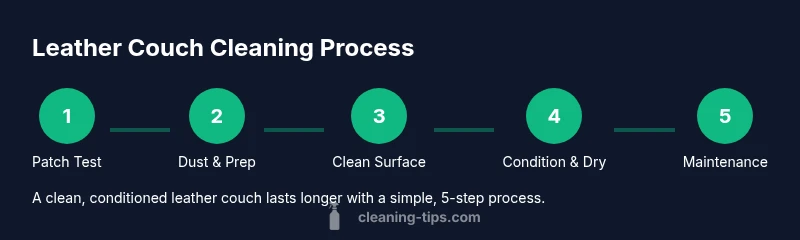
- 1
Test a patch on a hidden area
Apply a tiny amount of cleaner to an inconspicuous spot and wait 15 minutes. Check for color transfer, finish dulling, or texture changes. If all looks good, proceed with the full clean.
Tip: Patch tests save expensive mistakes—never skip it, even with familiar brands. - 2
Dust and prep the surface
Use a dry microfiber cloth to remove loose dirt and dust from the entire couch. This reduces the amount of cleaner needed and minimizes rubbing dirt into the surface.
Tip: Work in sections to maintain control over moisture exposure. - 3
Apply cleaner to a cloth, not directly to leather
Dampen a cloth with distilled water mixed with a drop of cleaner, then wipe the surface in gentle, circular motions. Avoid soaking the leather and never spray cleaner directly onto it.
Tip: Less is more; you can always repeat a pass if needed. - 4
Rinse and dry
Wipe away any residue with a separate damp cloth (water only or very light cleaner). Immediately dry with a clean towel to prevent water pooling at seams.
Tip: Moisture left in seams can cause stiffness or water stains. - 5
Condition the leather
After the couch is completely dry, apply a small amount of conditioner per the product’s instructions. Gently work it in with circular motions and let it absorb before use.
Tip: Conditioning should be done after cleaning to restore and protect the surface.
Questions & Answers
Can I use household soap to clean leather couches?
You can use a mild, pH-balanced soap or a dedicated leather cleaner. Avoid harsh dish soaps or solvents that can strip oils. Patch test first and always follow with conditioning.
A mild soap or leather cleaner is fine, but avoid harsh soaps and patch test first.
Is it safe to use water on leather upholstery?
Water should be used sparingly. Use distilled water with a minimal amount of cleaner, and always dry the surface promptly to prevent water spots and potential damage.
Water should be used cautiously and always dried quickly.
How often should I condition leather furniture?
Condition leather about every 6-12 months, depending on use and climate. If the leather feels dry or shows small cracks, condition sooner.
Typically every 6 to 12 months, sooner if it dries out.
What should I do if ink or dye transfers onto leather?
Spot-test an appropriate cleaner first. For stubborn stains, consult a professional if the color remains or the finish dulls.
Test a cleaner first, and if the stain stays, seek professional help.
Can I use vinegar on leather couches?
Vinegar is generally not recommended for leather; it can dry and damage the finish. Use a dedicated leather cleaner or pH-balanced solution instead.
Vinegar isn’t usually advised; stick to leather-safe cleaners.
Watch Video
The Essentials
- Test first in a hidden area before full cleaning
- Use pH-balanced products and minimal moisture
- Dry thoroughly and condition regularly
- Avoid harsh solvents and ammonia-based cleaners