How to Get Cleaning Contracts with Offices
Learn a proven, step-by-step approach to winning cleaning contracts with offices. From market research and proposals to pricing, SLAs, and onboarding, get practical, deployable tactics for B2B janitorial work.


How to get cleaning contracts with offices? This guide provides a practical, step-by-step path to win B2B janitorial work, from market research and outreach to pricing, SLAs, and winning proposals. You'll learn how to position services, build credibility, and close contracts with corporate facilities managers. Follow the checklist to prepare your pitch, pricing, and governance documents.
Understanding the Office Cleaning Contract Landscape
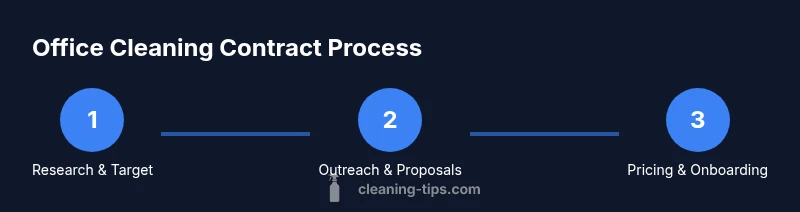
The market for office cleaning contracts is diverse, spanning small coworking spaces to mid-size corporate campuses. If you want to win this work, you first need to understand who buys these contracts and what they value. How to get cleaning contracts with offices is less about a single trick and more about a repeatable process that demonstrates reliability, compliance, and measurable results. According to Cleaning Tips, the most successful bidders begin with targeted research—mapping the decision makers, the building's schedule, and the client’s pain points. They frame their outreach around reducing disruption during business hours, improving hygienic standards, and delivering transparent pricing with clear SLAs.
The Cleaning Tips team notes that prospects respond best to proposals that acknowledge a facility’s specific rhythms—night cleaning for manufacturing floors, daytime cleaning for small offices, or weekend coverage for high-traffic locations. This means generic pitches underperform. A tailored approach, supported by data on crew capacity, shift coverage, and response times, signals credibility. When you know the building type, occupancy levels, cleaning frequency, and preferred products, you can move from “we clean
to
we help you maintain a clean, safe environment with minimal downtime.
Use this as your foundation for how to get cleaning contracts with offices.
Defining Your Value Proposition for Office Clients
To win contracts with offices, you must articulate a compelling value proposition that aligns with the client’s priorities. The most effective messages emphasize reliability, transparency, and measurable outcomes. Start by identifying the client’s pain points—unexpected absences, inconsistent cleaning quality, or health-and-safety concerns—and map your services to eliminate or reduce those issues. For offices, a strong value proposition often centers on predictable coverage, green cleaning options, real-time issue reporting, and documented escalation paths. When you frame performance as a business outcome, you’ll stand out in competitive bids. This is a core component of understanding how to get cleaning contracts with offices.
Beyond basic cleaning, think about how your team supports business operations. Do you offer night cleaning that minimizes disruption? Can you guarantee response times for emergency cleanups? Do you provide digital reporting that shows completed tasks and upcoming schedules? These differentiators become the backbone of your capability statement and proposal packages. As you refine your value proposition, tailor it to each office segment—small startups, medium-sized firms, and large campuses—so your messaging remains relevant across appointments and RFPs. The same basic proposition can be customized with sector-specific language for budgeting, compliance, and risk management. When clients see a clear ROI, they’re more likely to move from inquiry to contract.
If you’re asking how to get cleaning contracts with offices, make your value proposition concrete with examples and evidence. Describe how you reduce downtime for facilities teams, shorten the time needed to complete a clean, or improve air quality metrics with green products. Your capability statement should combine qualitative benefits with succinct, quantitative outcomes where possible. The impact you describe should be specific, verifiable, and easy for a procurement professional to include in an evaluation rubric.
Building a Winning Outreach Strategy
A robust outreach strategy is essential to move from cold inquiry to warm engagement. Start by identifying target office sectors, building owners, and property managers who oversee facilities. Create a clean contact list that includes decision-makers (facilities directors, operations managers) and influencers (tenants, building engineers). Prioritize outreach to offices with stable occupancy, clear maintenance budgets, and recent renovation or expansion plans. Your outreach should blend email, phone, and in-person touchpoints—each tailored to the recipient’s role and schedule. For example, a facilities director might respond best to a short, data-driven email with a link to a short capability deck, while a property manager may prefer a concise, one-page summary of services.
Back your outreach with a calendar that assigns follow-ups at realistic intervals—one week after initial contact, then two weeks later if unanswered. Offer a no-obligation pilot or a shortened trial period to demonstrate value and establish trust. Throughout outreach, emphasize your credentialed team, documented safety practices, and a transparent price framework. The cadence should feel respectful of the client’s busy schedule and procurement cycle. When you present your outreach, include a clear call to action—request a discovery call, ask for a site visit, or propose a pilot contract—and always provide contact details. Remember, how to get cleaning contracts with offices is not just about making contact; it’s about guiding the conversation toward a concrete next step that can be evaluated.
Your messaging should also reflect safety, compliance, and reliability. Share references to certifications, COIs, and safety records in your outreach materials. A professional, evidence-backed approach reduces objections and speeds up decision-making. In some markets, facilities buyers expect competitive bids within defined procurement windows, so align your timing with the client’s procurement calendar and respond quickly to requests for information. By combining targeted research with a thoughtful outreach cadence, you’ll gain more qualified opportunities and improve your win rate when pursuing office-based contracts.
Pricing Strategy and Service Levels
Pricing is a critical lever in winning office cleaning contracts. A transparent pricing model helps facilities teams compare options without chasing hidden costs. Start with a range rather than a single price to accommodate different office sizes, floors, or shifts. Prepare per-square-foot rates for standard cleans, time-based rates for special tasks, and bundled pricing for multi-facility contracts. When you present pricing, couple it with clear service levels, response times, and escalation protocols. This approach provides procurement teams with confidence that your price aligns with the value they receive. A well-structured price sheet also supports negotiations during the bid process and reduces back-and-forth time.
In addition to price, define service levels and KPIs that matter to office environments: scheduled cleanings completed on time, documented quality checks, incident reporting, and proactive issue resolution. Including a guaranteed response window for urgent requests reassures clients and differentiates you from less attentive competitors. If you’re asking how to get cleaning contracts with offices, remember that price alone rarely wins contracts—the combination of fair pricing and clear, verifiable service levels does. When you present pricing, pair it with a simple comparison against typical market benchmarks and highlight where you offer superior value (green cleaning, low-noise equipment, or shorter ramp-up times).
As markets evolve, consider tiered offerings: a core package with essential services, a preferred option with enhanced SLAs, and a premium plan with comprehensive reporting and additional value-adds. This tiered structure accommodates different budgets and procurement strategies while preserving your margins. Finally, ensure your pricing is sustainable by building in contingencies for wage fluctuations, equipment maintenance, and regulatory changes that could affect costs. If a client requests a pilot, propose a short-term contract that demonstrates value while gathering data to justify longer-term commitments.
Crafting Proposals that Win Bids
A winning proposal translates your value proposition into a structured, easy-to-assess document. Start with a concise executive summary that frames your offer in terms of the client’s goals: clean, safe, and compliant facilities with predictable costs. Include a clearly defined scope of work, frequency, and schedule, plus a dedicated service delivery plan that outlines shift coverage, cleaning methods, and product usage. Attach your capability statement, COIs, safety policies, and references as appendices to keep the main document readable and scannable. In the core proposal body, present your SLA commitments, performance metrics, and a transparent pricing table that aligns with the client’s evaluation criteria.
To strengthen your bid, add a site-specific assessment that identifies potential pain points and your mitigation plan. Demonstrate your ability to meet cleanliness standards during business hours and after-hours work, minimizing disruption to employees. Include a brief report on your staff training, supervisor oversight, and accountability mechanisms. Visuals—charts showing response times, areas covered, and sample checklists—help procurement teams quickly gauge your competence. For offices, the decision-making process often benefits from a clear demonstration of risk management and continuity planning. When you deliver the proposal, present a clean executive summary, robust appendices, and a straightforward checkout path for the client.
If you’re asking how to get cleaning contracts with offices, tailor each proposal to address the client’s building type, occupancy, and industry standards. A generic submission is unlikely to stand out. Prioritize clarity over clever language, focus on measurable outcomes, and provide a simple method for the client to request changes or a pilot. Finally, include a well-structured onboarding plan that outlines timelines, responsibilities, and the first 90 days of service. A proposal that feels like a partner agreement, not a one-off bid, resonates with procurement teams.
Delivering Consistent Quality to Retain Contracts
Retention is the unseen scorecard in office cleaning. Once you secure a contract, maintaining consistent quality is essential to renewals and referrals. Establish a robust quality assurance program with regular site inspections, standardized checklists, and transparent reporting. Use daily, weekly, and monthly metrics to show progress and identify issues early. A strong client relationship hinges on proactive communication; schedule periodic business reviews to discuss performance, upcoming needs, and potential service enhancements. When you demonstrate reliability, clients are more likely to renew and expand the scope of work.
Quality begins with staffing. Ensure your team is trained to a consistent standard and that supervisors conduct routine performance checks. Maintain open channels for feedback from front-line staff and client representatives. For office environments, it’s crucial to minimize disruption during business hours while maintaining high cleanliness and hygiene standards. Your onboarding process should include a clear transition plan, a defined service calendar, and documented escalation procedures. As with any service contract, compliance is non-negotiable—your ongoing documentation should reflect current safety policies, insurance coverage, and regulatory requirements. A consistent, well-communicated approach to service delivery reduces churn and strengthens long-term partnerships.
Compliance, Insurance, and Security Considerations
Offices require cleaners to meet a baseline of compliance, insurance, and security standards. Before bidding, verify that your COIs are current, your safety policies are formalized, and your workers are properly trained. Security considerations include background checks for staff, access control procedures, and a clear policy for handling sensitive information in shared spaces. Ensure you have appropriate insurance coverage, including general liability and workers’ compensation, with limits appropriate for the site’s risk profile. In many jurisdictions, procurement teams expect proof of compliance and a streamlined process for renewing certificates—so maintain an organized vault of documents, ready for audit or due diligence.
Transparency about certifications, safety data sheets for products, and incident reporting procedures helps build trust with potential clients. If you’re pursuing office cleaning contracts, any misstep in safety or security can derail a deal, so develop a robust risk management plan that you can share with buyers. Regular training on chemical handling, slip-and-fall prevention, and PPE usage reduces the likelihood of incidents and demonstrates your commitment to safety. In this way, a strong compliance program becomes a differentiator, not a checkbox, in your pursuit of how to get cleaning contracts with offices.
Timelines and Procurement Cadence
Procurement cadences vary by organization, but there are common rhythms you can leverage. Start by aligning your outreach with the client’s budgeting cycles and RFP release windows. Build patience into your plan, since office contracts often require multiple rounds of review and negotiation. Maintain a consistent cadence of follow-ups, sharing updates on performance data, pilot results, and any adjustments to your service levels. Providing a clear, predictable timeline helps procurement teams manage internal expectations and reduces the likelihood of delays. As you gain experience in this space, you’ll better anticipate the timing of decision points and tailor your communications to meet those milestones. When you plan with procurement cadence in mind, you’re better positioned to convert opportunities into signed contracts.
Final Thoughts on How to Get Cleaning Contracts with Offices
Securing cleaning contracts with offices is a multi-faceted effort that blends market understanding, value-driven positioning, disciplined outreach, transparent pricing, rigorous proposals, and reliable delivery. By developing a strong capability statement, aligning pricing with service levels, and delivering consistent results, you’ll improve your odds of winning and retaining office-based contracts. The journey from inquiry to onboarding can be lengthier than consumer cleaning work, but it yields sustainable, recurring revenue and long-term partnerships. Remember, every successful bid is the result of preparation, credibility, and strategic follow-up. With the right framework, you can transform inquiries into advantageous contracts that support growth and stability for your cleaning business.
Tools & Materials
- Proposal templates (digital and print)(Editable Word/Google Docs version; include cover letter and executive summary)
- Pricing spreadsheet with scenarios(Include hourly rates, per-square-foot rates, and discounts for multi-site contracts)
- Capability statement / company brochure(One-page summary of past work and certifications)
- Insurance certificates (COI)(General Liability and Worker’s Comp; updated annually)
- Health & safety policy(Include risk assessment template and incident reporting process)
- Client references or case studies(At least 2-3 brief testimonials)
- CRM or contact list of target offices(Verified decision-maker details; keep up to date)
- Industry certifications(ISO 9001, green cleaning certifications (optional))
Steps
Estimated time: 4-8 weeks
- 1
Define target office segments
Identify the market segments you will pursue (SMB offices, mid-size corporate, campuses) and map typical facility profiles. Define the decision makers for each segment and tailor your message accordingly.
Tip: Create a one-page target profile per segment to speed up outreach. - 2
Map decision-makers and build a contact list
Compile names, roles, emails, and phone numbers for facilities directors, operations managers, and procurement contacts. Verify each entry and note any relationship indicators (tenants, broker introductions).
Tip: Prioritize warm introductions and referrals to reduce outreach friction. - 3
Craft your value proposition and service levels
Develop a clear value proposition tied to reliability, safety, and cost predictability. Define SLAs, response times, and reporting methods that matter to offices.
Tip: Quantify benefits with sample metrics and a simple ROI narrative. - 4
Assemble the proposal package
Prepare a concise executive summary, scope of work, SLAs, pricing, and appendices (COIs, safety policies, references). Ensure the document is readable in 10 minutes.
Tip: Use consistent branding and a clean layout for quick evaluation. - 5
Price strategically and set SLAs
Offer tiered pricing and clear service levels. Include pilot pricing if needed to win the initial contract and demonstrate value.
Tip: Be transparent about exclusions or one-off tasks to avoid disputes. - 6
Submit bid and follow up
Deliver the proposal on time, then follow up with a short summary of differentiators and a request for a discovery call or site visit.
Tip: Schedule a formal follow-up date to maintain momentum. - 7
Onboard and scale
If selected, implement a detailed onboarding plan and monitor KPIs during the first 90 days to solidify the relationship and position for expansion.
Tip: Document lessons learned to refine future bids.
Questions & Answers
Who typically buys office cleaning contracts?
Facilities managers, property managers, and office managers usually make the buying decisions. They prioritize reliability, clear SLAs, and cost predictability.
Most buyers are facilities or office managers who want reliable, predictable cleaning services.
What documents should I have ready when bidding?
Have a COI, proof of insurance, safety policies, references, and a capability statement ready. Include a simple onboarding plan as part of the proposal.
Keep COIs, safety policies, and references ready for quick submission.
How long does it take to win a contract?
Timelines vary by market and procurement schedules, often ranging from several weeks to a few months depending on the complexity of the RFP.
Timelines vary; expect a several-week to a few-month process.
Should I target multiple offices or focus on a niche?
Start with a defined market niche to build credibility, then scale to additional offices once you have proven processes and a solid reference base.
Focus on a defined niche first, then expand as you prove results.
How can I differentiate my cleaning service?
Highlight green cleaning options, flexible scheduling, real-time reporting, and predictable pricing. A clear value mix helps you stand out in competitive bids.
Offer green cleaning, reporting, and flexible scheduling to stand out.
Watch Video
The Essentials
- Target clearly defined office segments.
- Present a data-driven value proposition with SLAs.
- Price transparently and justify with outcomes.
- Submit polished proposals with complete appendices.
- Onboard smoothly and prove impact in the first 90 days.