How to Get Rid of CleanMyMac: A Practical Removal Guide
Learn how to remove CleanMyMac safely, reclaim disk space, and prevent leftovers. This expert guide from Cleaning Tips covers preparation, a thorough removal process, post-removal checks, and best practices to keep your Mac clean and fast.


By following these steps, you can safely remove CleanMyMac from macOS without leaving traces or affecting system performance. Start with a backup, quit the app, then delete the app, remove leftover files, and verify the cleanup. This method minimizes risk and protects privacy.
how to get rid of cleanmymac safely
According to Cleaning Tips, removing unnecessary software like CleanMyMac can improve system performance and privacy. The Cleaning Tips team found that many users overlook leftover files, which can continue to consume disk space and occasionally trigger minor issues after a reinstall. This section explains why a full, careful removal matters and how it fits into broader maintenance practices for macOS. You’ll learn not only how to delete the application but also how to locate and remove hidden support files that often travel with cleaners. By following the steps below, you’ll minimize the risk of data loss or broken preferences and set your machine up for long-term health. The guidance here emphasizes safety, backups, and thorough cleanup to protect your privacy and keep your Mac running smoothly.
Before you remove: backups and safety
Preparation is the most important phase of any removal task. Before touching CleanMyMac, ensure you have a complete backup of your data using Time Machine or another reliable backup method. This safeguard protects you against accidental data loss if you need to restore a file or revert settings. Make sure you have administrator access on the Mac, and close any open instances of CleanMyMac to prevent partial removals. If you rely on system preferences or startup items, note their current state so you can re-create a preferred setup after removal. Cleaning Tips recommends treating this step as a standard maintenance ritual, not a one-off delete operation. A solid backup is your best prevention against regret.
How to get rid of cleanmymac safely
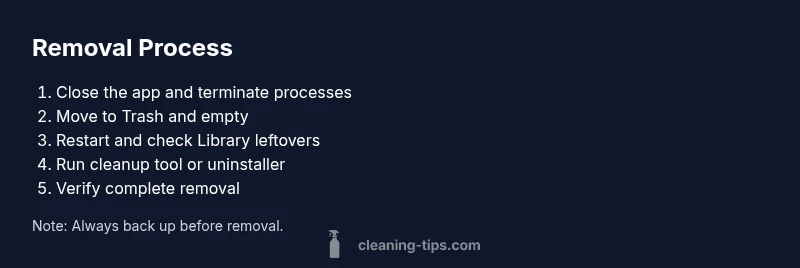
This section expands the removal steps with practical actions and rationale. Start by quitting CleanMyMac and all related processes from Activity Monitor to avoid locking files. Then move the application to the Trash and empty it. Restart your Mac to ensure all temporary files are refreshed. After rebooting, search the Library folders for leftover files and folders typically associated with cleaners (such as Application Support, LaunchAgents, and Preferences). Removing these ensures there aren’t orphaned items that can slow down future cleanups or trigger startup checks,
Remove supporting files and caches
Leftover files are the main reason a removal feels incomplete. Look for remnants in these common locations: ~/Library/Application Support/, ~/Library/LaunchAgents/, ~/Library/Preferences/, /Library/Application Support/, and /Library/LaunchDaemons. Delete or move only items clearly tied to CleanMyMac (be cautious with system-wide folders). Use Finder with the Go to Folder function (Go > Go to Folder…) and paste the paths to locate hidden items. If you’re unsure, search for “CleanMyMac” or vendor-specific bundle names and verify before deleting. This careful sweep prevents orphaned caches and startup items from resurfacing later.
Verify cleanup and monitor for issues
After removing leftovers, run a lightweight cleanup or antivirus tool to confirm no debris remains. Reboot again and observe system behavior for a day or two: watch for unexpected prompts, unusual disk activity, or slower boot. If you notice anything off, rerun a targeted search for related files and review login items (System Settings > Users & Groups > Login Items). Regularly scanning for unwanted launch items is a good preventative habit. Cleaning Tips notes that consistent verification reduces the chance of hidden remnants causing intermittent issues.
Best practices to prevent reinstallation
To minimize chances of reinstallation or duplicate clutter, disable automatic app updates for cleaners you don’t plan to keep, and avoid installing unnecessary maintenance tools. Consider using macOS-native Maintenance scripts or trusted, reputable uninstallers when provided by developers. Keep a clean, minimal startup list and occasionally audit your Applications folder for apps you no longer use. Establish a routine: quarterly checks for unused software, followed by a quick cleanup if something feels off. Maintaining discipline around installations helps keep your Mac fast and secure.
AUTHORITY SOURCES
- Apple Support: https://support.apple.com/guide/mac-help/delete-or-remove-apps-mac
- Macworld: https://www.macworld.com/article/671225/how-to-uninstall-cleanmymac.html
- ZDNet: https://www.zdnet.com/article/how-to-uninstall-cleanmymac/
Tools & Materials
- Time Machine backup or external backup drive(Create a full backup before removing CleanMyMac to prevent data loss.)
- Administrator password(You may need admin rights to delete apps and modify system folders.)
- Finder access to Library folders (temporary)(Enable viewing hidden files temporarily to locate leftovers.)
- Uninstaller or cleanup tool (optional)(Some vendors provide an uninstaller; use it if available.)
- Trash bin and empty action(Move the app to Trash, then empty securely.)
Steps
Estimated time: 20-40 minutes
- 1
Close CleanMyMac and terminate related processes
Quit the app and ensure no related processes are running in the background. Use Activity Monitor to verify there are no active CleanMyMac processes, which helps avoid partial deletions and corrupted preferences.
Tip: Open Activity Monitor (Applications > Utilities) and quit all CleanMyMac processes before proceeding. - 2
Move the app to Trash
Drag CleanMyMac from the Applications folder to Trash, or right-click and select Move to Trash. This removes the primary executable but not the associated files elsewhere.
Tip: If you’re unsure about the exact app name, search for CleanMyMac in the Applications folder and look for related bundles. - 3
Empty Trash and restart
Empty the Trash to remove the primary files completely, then restart your Mac to clear temporary caches and finalise the uninstall.
Tip: After restart, avoid using the app’s updater or reinstallation until you’ve completed the full cleanup. - 4
Search for leftovers in Library folders
Library folders often hold leftovers: ~/Library/Application Support/, ~/Library/LaunchAgents/, ~/Library/Preferences/, /Library/Application Support/, /Library/LaunchDaemons. Delete items clearly tied to CleanMyMac.
Tip: Use Go to Folder (Finder > Go > Go to Folder…) and paste paths to locate hidden items. - 5
Run a cleanup tool or use an uninstaller (if available)
If CleanMyMac included its own uninstaller, run it now to purge any residual components. Alternatively, run a trusted cleanup utility to remove orphaned items safely.
Tip: Only use trusted tools from reputable sources to avoid introducing new software. - 6
Verify removal and monitor
Reboot again and verify there are no traces. Check login items and system behavior; if anything seems off, run another targeted search for CleanMyMac artifacts.
Tip: Keep an eye on startup performance for the next few boots to confirm full cleanup.
Questions & Answers
Is it safe to remove CleanMyMac?
Yes. Removing CleanMyMac is generally safe when you follow a careful removal process and avoid deleting unrelated system files. Always back up first.
Yes—it's safe if you follow the steps and back up your data first.
Will removing CleanMyMac delete my data?
No, removing the application typically does not delete your personal files. It may remove application preferences or settings, which you can reconfigure if needed after reinstallation.
No, your personal data should remain intact, though preferences may be reset.
What leftovers should I look for after uninstalling?
Common leftovers live in Library folders such as Application Support, LaunchAgents, and Preferences. You should search for items named CleanMyMac or vendor bundle names and remove them if you’re certain they’re related.
Look in Library folders for CleanMyMac items, and delete only those you’re sure belong to the app.
Can I use a cleanup tool to help with removal?
Yes, a reputable cleanup tool can help remove residuals. Ensure you use a trusted product and follow its instructions to avoid removing other necessary files.
A trusted cleanup tool can help, just follow the vendor’s guidance.
What if I still see traces after removal?
If traces persist, perform a targeted search for related plist or cache files, and repeat the cleanup steps. Consider a second reboot and re-scan to ensure a clean state.
If traces show up, re-scan and redo the cleanup steps; a second reboot often helps.
Watch Video
The Essentials
- Back up before removal and follow steps precisely
- Quitting the app is not enough—check for leftovers in Library folders
- Remove hidden files in Library/Application Support and Preferences
- Verify cleanup by rebooting and monitoring system behavior