How to Keep a Clean House with ADHD: A Practical Guide
Discover ADHD-friendly cleaning strategies that fit real life. Build simple routines, use visual cues, and maintain a healthier home with practical, proven steps.


You can keep a clean house with ADHD by building simple, repeatable routines and ADHD-friendly tools. This guide outlines a practical plan: create quick daily 10-minute tidy slots, set up visible reminders, and adopt one-touch cleaning methods to prevent clutter from building. By focusing on small, doable steps, you’ll reduce overwhelm and sustain lasting habits.
Understanding ADHD and Cleaning: What Changes in Your Brain Mean for Chores
ADHD can complicate traditional cleaning routines because executive function, working memory, and sustained attention affect planning, initiation, and follow-through. The brain may keep you hyper-focused on a single task, then lose momentum when the next task shows up. According to Cleaning Tips, external structure and clearly defined steps help bridge the gap between intention and action. Visual cues, predictable timers, and chunked tasks reduce decision fatigue and make cleaning feel doable rather than overwhelming. In this section, we’ll explore how to reframe cleaning as a series of small, repeatable actions rather than a single marathon. This mindset shift is the foundation for ADHD-friendly strategies that actually stick.
Build a Simple, ADHD-Friendly Cleaning Schedule
A workable schedule for ADHD is not a rigid timetable; it’s a map of short, repeatable actions you can perform with minimal friction. Start by carving out three daily 10-minute tidy sessions, placed at consistent times (for example, before breakfast, after work, and before bed). Pair each slot with a single, concrete task (surface wipe, trash grab, or quick sweep) so you can complete it before your brain protests. Use a visible calendar or a digital reminder that triggers the routine rather than relying on motivation. Cleaning Tips’s approach emphasizes consistency over intensity, so the aim is steady, achievable progress rather than perfect results.
The 10-Minute Daily Reset: Fast Wins Every Day
The 10-minute reset is a tiny, high-impact ritual that prevents clutter from creeping back. Start by selecting small zones (a countertop, a coffee table, a single shelf) and setting a timer for 10 minutes. Work quickly and complete a complete pass: clear, wipe, and return items to their places. When the timer ends, stop and note what worked; if something remains undone, schedule a precise next step rather than leaving it as a vague to-do. This habit creates momentum and reduces the feeling of being overwhelmed.
Visual Cues That Drive Consistent Habits
Visual cues help ADHD brains remember what to do and where to do it. Implement color-coded labels for bins, a simple wall chart listing daily tasks, and clear “done” markers. Use sticky notes in high-traffic areas with one directive per note (e.g., “Wipe counters,” “Take out trash”). A whiteboard or digital checklist kept in a central location serves as a single source of truth. The key is accessibility: cues should be hard to miss and easy to act on, minimizing the number of steps between intention and action.
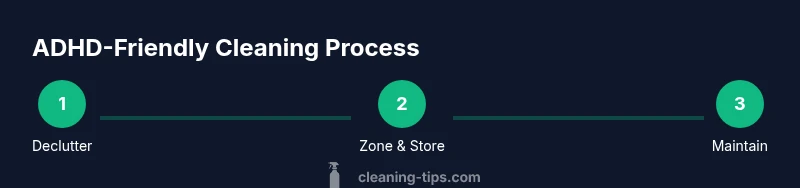
Storage and Zoning: Make It Obvious Where Things Belong
Organize by zones: kitchen, living spaces, and bedrooms, each with clearly labeled groups of tools and supplies. In a kitchen, place cleaning supplies under the sink in a labeled caddy and keep a microfiber cloth in sight for quick wipe-downs. In the living area, use wall-mounted organizers or floating shelves to keep remotes, chargers, and papers off surfaces. When objects have a designated home and a visible label, it is easier to put them away immediately, reducing the chance of creeping mess.
Task Chunks: Break Down Cleaning into Small Steps
Rather than tackling an entire room, break tasks into microsteps: pick up items one by one, wipe the next surface, return items to their places. This approach lowers resistance and makes progress measurable. For example, a compact 4-step sequence in a bedroom could be: pick up clutter, dust surfaces, vacuum or sweep, make the bed. Use a timer to limit each microstep to 1–2 minutes during quick sessions. The ADHD-friendly technique is to celebrate every completed step.
Must-Have Tools for an ADHD-Friendly Home
Having the right tools reduces friction and makes quick wins possible. Essentials include: a small cleaning caddy with all-purpose spray, microfiber cloths, a timer or phone with a dedicated 10-minute reminder, labeled storage bins, a compact vacuum or broom for rapid spot-cleaning, and a laundry hamper with sectioned laundry sorting. Optional but useful: a whiteboard or wall chart for daily tasks. Investing in accessible tools pays off with consistency.
Laundry and Laundry-Related Routines
A simple laundry routine prevents laundry from piling up and creating chaos in living spaces. Use a dedicated hamper or baskets per family member and a weekly wash plan aligned with your schedule. Create quick checks: sort by color, start a load at a fixed time, and fold and put away as soon as dry. With ADHD-friendly planning, even the laundry routine becomes a short, predictable ritual rather than a tedious project.
Kitchen Hygiene Without Overwhelm
Keep a light, daily wipe-down ritual for countertops, a quick sink-scrub before bed, and a weekly deeper clean plan. Use a single spray bottle, microfiber cloth, and a timer to keep you on track. The key to kitchen hygiene for ADHD is to reduce decision fatigue: pre-assemble a routine and keep it visible, so you don’t reinvent steps every day.
Living Room and Surfaces: Quick Declutter Methods
In common living areas, clutter tends to accumulate on surfaces. A one-touch rule—when you pick up something, return it or relocate it in a dedicated bin—keeps surfaces clear. Rotate a small “drop zone” basket for miscellaneous items and perform a quick 5-minute reset before guests arrive. Regularly clearing visible surfaces helps the space feel orderly, which in turn supports calmer attention and easier maintenance.
Maintenance Mindset: Preventing Rebuilds and Relapses
Maintaining progress with ADHD means scheduling periodic reviews, adjusting zones, and celebrating small wins. Set a weekly 20-minute check-in to assess what’s working and what isn’t, and adapt your routine to seasonal changes or new clutter patterns. Keep a simple mental model: small steps repeated consistently beat bursts of effort. The Cleaning Tips team recommends creating a sustainable plan that fits your life, not forcing a perfect home.
Tools & Materials
- 20- minute timer or timer app(Set for 10-minute blocks; keep handy in kitchen or living area)
- Cleaning caddies(One per floor/zone with spray, cloths, and a spare sponge)
- Label maker or pre-printed labels(Clear labels for bins and zones)
- Clear storage bins and shelves(Translucent bins help visibility and quick decisions)
- Microfiber cloths (assorted colors)(Soft, durable, and reusable)
- Compact vacuum or broom(Fast spot-clean capability for high-traffic areas)
- Laundry hampers with sections(Separate colors and whites; label sections)
- Notebook or digital checklist(Track progress and adjustments)
Steps
Estimated time: 60-90 minutes for setup; ongoing 10-20 minutes daily
- 1
Assess spaces and priorities
Take 20 minutes to walk through each major room and note the top clutter hotspots. Prioritize tasks by impact on daily living (kitchen counters, entryway, and living room surfaces). This context informs zones and routines.
Tip: Write down 3 concrete priorities to tackle first; keep it visible. - 2
Define zones
Allocate each room into functional zones (cooking, cleaning, relaxing). Place dedicated supplies in each zone to minimize trips and decision fatigue when starting a task.
Tip: Label zones with bold adhesive labels for quick reference. - 3
Choose three daily 10-minute tasks
Select three quick actions you can finish in 10 minutes, every day, at set times. Examples: wipe 3 surfaces, sort mail, and sweep a high-traffic area.
Tip: Pair each task with a specific zone to reduce thinking time. - 4
Set up visual reminders
Create a simple checklist or wall chart showing your three daily tasks and their order. Place it where you’ll see it before starting.
Tip: Use a durable whiteboard or laminated cards that wipe clean. - 5
Assemble your ADHD-friendly cleaning kit
Bring together essential tools in a portable caddy so you’re ready to start without hunting for supplies.
Tip: Keep a spare kit in the car or entryway for on-the-go quick cleans. - 6
Establish one-touch rule
If you pick up something, put it away or place it in a designated bin immediately rather than letting it linger.
Tip: Create a ‘drop zone’ basket for items in transition. - 7
Set up a laundry routine
Choose a fixed laundry time, separate baskets, and a quick fold-and-store ritual to avoid pileups.
Tip: Fold right after drying to prevent wrinkling and extra steps. - 8
Create a kitchen wipe-down ritual
As soon as cooking ends, wipe counters and the sink with a single spray and cloth. A brief routine prevents buildup.
Tip: Associate with finishing a meal so it becomes automatic. - 9
Plan weekly deep-clean
Schedule a longer cleaning session once a week to hit tasks that don’t fit in 10-minute blocks.
Tip: Tackle one room per week to avoid overwhelm. - 10
Use timers and rewards
Set a timer and reward yourself after completing a block—this reinforces positive behavior.
Tip: Rewards can be a 5-minute break or a favorite podcast episode. - 11
Review and adjust weekly
Reflect on what worked, what didn’t, and adjust zones, tasks, or timing accordingly.
Tip: Document one change you’ll try next week. - 12
Maintain with a monthly reset
Each month, reassess zones and supplies to prevent regression and simplify routines.
Tip: Remove or relocate items that no longer serve the space.
Questions & Answers
Why is cleaning harder with ADHD?
ADHD affects executive function, memory, and sustained attention, making planning and initiating chores challenging. External structure, routine cues, and chunking tasks help translate intent into action.
ADHD makes planning chores tough, but structure and small steps can make it doable.
How can I stay motivated to clean daily?
Set tiny, specific goals tied to times of day, use timers, and reward yourself after completing each 10-minute session. Consistency beats big, sporadic efforts.
Set small goals, use timers, and reward yourself after each quick cleaning session.
What should I do first when cleaning a cluttered room?
Start with a quick 2-minute purge to remove obvious trash, then define the top 2-3 priorities and begin the first microtask. This creates immediate momentum.
Quickly remove trash, pick two priorities, then start a microtask.
Are these routines workable in small apartments?
Yes. Focus on micro-stations, compact tools, and shared zones to minimize movement. Short, repeated tasks fit tiny spaces without overwhelming you.
Absolutely—use small zones and quick tasks for compact spaces.
Do these methods require expensive products?
No. The plan relies on basic, affordable cleaning tools and eco-friendly solutions. Simplicity and consistency trump cost here.
Not at all—basic tools and simple products work best.
Can these strategies help families with kids?
Absolutely. Involve family members in zone setup and 10-minute routines. Clear roles reduce friction and teach habits to children over time.
Yes—make it a family routine with clear roles.
Watch Video
The Essentials
- Implement 10-minute daily resets for momentum.
- Use visible cues to guide actions and reduce decision fatigue.
- Zone your home to simplify cleaning paths.
- Break tasks into microsteps and celebrate small wins.
- Review and adapt weekly to sustain progress.