How to Make Clean Water: A Practical Home Guide
Learn practical, step-by-step methods to make clean water at home using boiling, filtration, disinfection, and safe storage. A practical guide from Cleaning Tips for homeowners and renters.


This guide helps you learn how to make clean water safely at home using simple steps: boil to kill pathogens, filter to remove particulates, disinfect with safe chemicals, and store water properly. You’ll understand when each method is appropriate, what supplies you need, and how to avoid common mistakes in everyday settings.
Why making clean water matters
Water quality influences health, energy, and daily routines. Understanding how to make clean water is a foundational skill for households, travelers, and DIY enthusiasts. The central goal is to remove pathogens, particulates, and contaminants while preserving essential minerals whenever safe. In practice, this means applying reliable, repeatable methods rather than relying on luck or shallow filtration. According to Cleaning Tips, trustworthy water treatment begins with recognizing your water source, selecting an appropriate method, and maintaining the equipment you use. Even when municipal supply is available, emergencies or temporary outages can create gaps. By learning a solid set of options—boiling, filtration, chemical disinfection, and safe storage—you can adapt to many situations without guesswork. This section lays the foundation for practical steps you can perform with common household items. We’ll cover when to boil, how to filter with affordable materials, and how to store water safely so it remains usable for drinking, cooking, and sanitation. The aim is to give you confidence to act quickly and responsibly when clean water is essential.
Water sources and safety basics
Your water source determines the treatment pathway you choose. Tap water from a municipal system often arrives pre-treated, but quality can vary with infrastructure events. Rainwater, wells, streams, or collected condensation may require more deliberate purification. Start by assessing taste, odor, and clarity; if anything seems off, treat the water before use. In all cases, plan for a layered approach: remove debris with a simple filter, then sanitize, then store safely. The Cleaning Tips team stresses that safety starts with source awareness and clean handling practices. Use clean utensils, avoid recontaminating containers, and keep treatment steps separate from foods if possible. This foundation helps you decide which method to apply in different contexts, from a kitchen sink to a camping trip. Remember: safe water is not just clear—it’s free from harmful microbes and unnecessary chemicals.
Boiling water: simple, effective method
Boiling water is one of the oldest and simplest forms of disinfection. When heat reaches a vigorous state, most pathogens are inactivated, making the water safer for drinking, cooking, and cleaning. If you don’t have a filter handy, boiling alone can be enough for many situations. Start by bringing water to a rolling boil, then maintain the boil for a period appropriate to your altitude and the expected contaminants. After boiling, allow the water to cool in a clean container before use. If you don’t need to flavor the water, you can store it directly in clean, sealed containers to minimize contamination risks. The best practice is to use a dedicated pot or kettle that is cleaned regularly and reserved for drinking water. The Cleaning Tips guidance emphasizes repetition and safety, not shortcuts, so develop a routine you can repeat in emergencies or routine health practices.
Filtration options: DIY and store-bought
Filtration reduces particulates and some chemicals while improving taste and clarity. A simple DIY approach uses layers of clean cloth, sand or fine gravel, activated carbon, and a clean bottle or jar. More advanced options include ceramic filters and commercial pitcher filters designed for home use. If you choose a DIY stack, ensure each layer is dry and evenly packed to avoid bypassing the filtration media. Store-bought filters provide convenience and, in many cases, validated performance with minimal assembly. Always follow the manufacturer’s directions for installation and replacement. Filtering should be done after initial debris removal and before disinfection where applicable, as particulates can hinder chemical contact and sanitizer effectiveness. The goal is to create a practical, repeatable filtration step that improves clarity without removing essential minerals indiscriminately. The Cleaning Tips approach favors simple, safe, and maintainable filtration as part of everyday water handling.
Solar stills and alternative methods
A solar still uses sunlight to evaporate water, leaving many contaminants behind as it condenses. While the concept is elegant and relies on minimal inputs, it requires space and time, and results may vary with weather. A basic still can be built with a transparent surface to collect condensation and a collection container. This method is especially useful in outdoor settings or off-grid situations where other options are unavailable. Solar distillation should be viewed as a supplementary technique rather than a primary solution for daily needs. For many households, combining a solar still with a reliable filtration system and boiling step provides flexibility during outages or travel. The Cleaning Tips team notes that experimenting with safe, low-cost approaches can increase resilience without introducing new hazards.
Disinfection with chemicals: chlorine and alternatives
Chemical disinfection adds another layer of safety when other methods leave some pathogens or chemicals behind. Chlorine-based products and iodine can be effective, but they require careful adherence to product labels and appropriate contact times. If you opt for chemical disinfection, start with small batches of water and follow the recommended dosage to avoid overuse or under-treatment. Alternatives like safe, ready-to-use sanitizers exist for emergency kits, but again, rely on manufacturer guidance. It’s crucial to test or ensure that the treated water meets your safety expectations before consuming. The Cleaning Tips guidance highlights that chemical disinfection is a powerful tool when used correctly. Always practice good hygiene, use clean storage containers, and limit recontamination after treatment.
Water storage and maintenance tips
Storage matters as much as treatment. Use clean, food-grade containers with tight-sealing lids to minimize exposure to air and sunlight. Store water away from heat sources and keep containers in a cool, dry place. Label each container with the treatment method and date of processing, then rotate supplies so older water is used first. When you don’t know the source or the method used, treat water before storage and recirculate through a safe use cycle. Clean the containers regularly and avoid cross-contamination with other household items. The Cleaning Tips team recommends keeping a small, dedicated water reserve in your pantry or closet so you’re prepared for short-term disruptions without relying on a single source.
Practical scenarios: emergency prep and everyday use
In daily life, you may be faced with treated municipal water, rainwater harvesting, or camping streams. For emergencies, having a simple plan—gather materials, choose a method, and follow steps consistently—helps reduce decision fatigue. For everyday use, think about taste preferences, ease of use, and the space you have for storage. A combined approach, using filtration, boiling or disinfection, and good storage, often works well for households. This section offers a practical framework you can adapt to your own home, apartment, or travel bag. The Cleaning Tips guidelines emphasize preparedness and sensible routines that protect health without overcomplicating the process.
Choosing the right method for your home
Choose based on source, space, and routine. In small spaces, a compact filtration method plus boiling during outages often suffices. In larger homes, combine a robust filtration system with boiling or disinfection and a safe storage plan. Consider taste, maintenance, and cost of replacements, then practice the steps until confident. The Cleaning Tips guidance emphasizes simple, scalable solutions you can perform regularly.
Tools & Materials
- Kettle or pot for boiling(Use a dedicated pot reserved for drinking water to avoid contamination)
- Clean, food-grade water container(Seal tightly; BPA-free is preferred)
- Fine cloth or coffee filter(For initial debris removal; use a clean material)
- Activated carbon or charcoal (optional)(Can improve taste and odor when using filtration)
- Sand and gravel (optional)(DIY filtration layers; ensure materials are clean)
- Ceramic water filter or store-bought pitcher filter(Validated filtration option with manufacturer guidance)
- Boiling source (stove, hot plate, or fire)(Provide steady heat and ventilation)
- Measuring cup or dosing bottle (for chemicals)(Follow product labels precisely)
- Water purification tablets or liquid sanitizer (optional)(Useful in emergencies; ensure proper usage)
Steps
Estimated time: 60-120 minutes
- 1
Gather materials and choose method
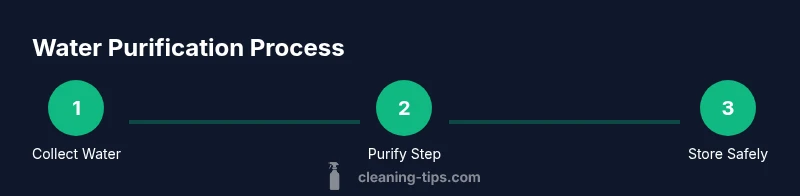
Collect your pot, container, clean cloth, a filtration option, and any disinfectant you plan to use. Decide whether you will boil, filter, or disinfect based on your water source and storage needs. This planning reduces mid-task confusion and ensures you follow safe, repeatable steps.
Tip: Create a dedicated prep kit so you can act quickly in emergencies. - 2
Pre-filter water to remove debris
Pour water through a clean cloth or filter to remove visible debris before treating it. Debris can clog filters and hinder disinfection, so pre-filtering improves efficiency and safety.
Tip: Use a clean, dry cloth and avoid reusing dirty fabrics. - 3
Boil water to disinfect
Transfer the pre-filtered water to a pot and bring to a rolling boil. Maintain the boil for several minutes if possible. Let the water cool in a clean container after boiling before drinking or cooking.
Tip: Keep a dedicated kettle for drinking water to prevent cross-contamination. - 4
Optionally filter after boiling
If you are using a filtration system, run the boiled water through it to improve taste and clarity. This step is optional but often beneficial for micro-particulate removal and mineral balance.
Tip: Rinse filters with clean water according to manufacturer guidance. - 5
Disinfect if needed
Apply a safe chemical disinfectant following product instructions. Use the minimum effective dose and allow adequate contact time as directed. This adds a final safety layer when other methods leave residual pathogens.
Tip: Never mix chemicals or use unlabeled products; always follow instructions. - 6
Cool and store safely
Cool the treated water in a clean container with a tight lid. Store away from heat and direct sunlight to prevent recontamination and algae growth. Label containers with the method and date so you can rotate stock.
Tip: If possible, keep a small reserve separate from everyday usage. - 7
Maintain and rotate supplies
Regularly wash storage containers and replace water when you can. A simple rotation plan helps ensure water remains fresh and safe for consumption or sanitation.
Tip: Set a reminder to check and rotate water every season.
Questions & Answers
Is boiling water enough to make it safe for drinking?
Boiling can kill many pathogens, but it may not remove chemical contaminants. For waters with unknown chemical exposure, consider filtration or chemical disinfection alongside boiling.
Boiling helps, but it may not remove every chemical. Use filtration or disinfection if you suspect chemicals.
Can I use sunlight to purify water?
Solar methods can reduce microbes but are unreliable on their own. Do not depend on sun alone for critical drinking water.
Sunlight can help, but it's not always reliable—use it with other methods.
What about taste and odor after treatment?
Filtration and proper storage improve taste and smell. Some disinfection methods can leave a slight taste; rinse containers well.
Filtration helps taste; chemicals can leave taste, but follow directions.
How long can purified water be stored safely?
Store water in clean containers away from heat, and rotate supplies so older water is used first. Label with date and method.
Keep water in clean containers and rotate it to stay fresh.
Can I purify water with just a cloth filter?
A cloth filter removes debris but does not reliably remove microbes. Use a proper filter or boil after filtering for safety.
Cloth alone isn’t enough; pair with boiling or a certified filter.
Is rainwater safe after treatment?
Rainwater can be made safe with proper treatment and clean collection surfaces. Ensure you follow purification steps.
With the right steps, rainwater can be made safe to drink.
The Essentials
- Choose methods based on source and space.
- Boiling is simple, reliable, and fast.
- Filtration improves taste and clarity while removing particulates.
- Store water in clean containers and rotate supplies.
- Follow product instructions for any chemical disinfection.