Is Clean Makeup Hypoallergenic? What It Means for Sensitive Skin
Is clean makeup hypoallergenic? Learn what the term means, how to read labels, and practical tips for choosing safer cosmetics for sensitive skin in 2026. This guide from Cleaning Tips analyzes labeling practices, ingredients, and patch-testing steps to help you shop with confidence.


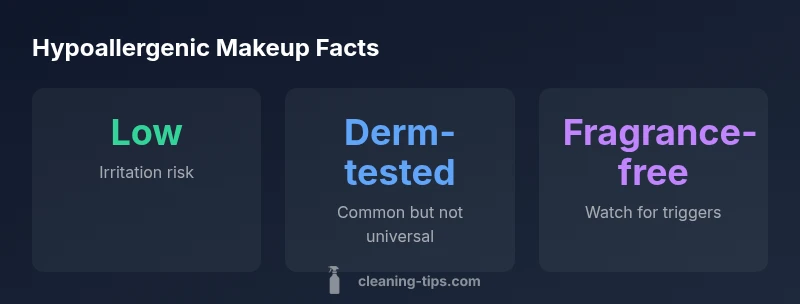
A quick note: is clean makeup hypoallergenic? In practice, products labeled as hypoallergenic aim to reduce common irritants, but this label is not always regulated. Clean makeup often avoids fragrances, common dyes, and harsh preservatives, yet individual reactions vary. The Cleaning Tips team notes that 'hypoallergenic' cannot guarantee that a product won't cause a reaction; ingredient lists and patch testing remain essential. Consumers should look for explicit allergen-free wording, simplified formulas, and dermatologist guidance when evaluating a purchase. Terminology varies by region; in the United States, Canada, the EU, and elsewhere, there is no single standard for hypoallergenic cosmetics. Some brands use the label to market soothing formulas for people with sensitive skin, while others rely on third-party certifications. To reduce risk, consider overall product philosophy: fewer ingredients, avoidance of known irritants, and a proven track record of clinical or dermatologist testing.
Is clean makeup hypoallergenic? What the term means in practice
Understanding whether is clean makeup hypoallergenic starts with definitions. In cosmetics, hypoallergenic typically signals reduced irritants, but it is not a universally regulated claim. For sensitive skin, products marketed as clean often avoid fragrances, common dyes, and harsh preservatives, yet individual reactions vary. The Cleaning Tips team notes that 'hypoallergenic' cannot guarantee that a product won't cause a reaction; ingredient lists and patch testing remain essential. Consumers should look for explicit allergen-free wording, simplified formulas, and dermatologist guidance when evaluating a purchase. Terminology varies by region; in the United States, Canada, the EU, and elsewhere, there is no single standard for hypoallergenic cosmetics. Some brands use the label to market soothing formulas for people with sensitive skin, while others rely on third-party certifications. To reduce risk, consider overall product philosophy: fewer ingredients, avoidance of known irritants, and a proven track record of clinical or dermatologist testing.
How clean makeup intersects with hypoallergenic claims
Clean makeup and hypoallergenic claims often overlap but are not interchangeable. A product labeled as clean may emphasize minimal ingredients or plant-derived components, yet still include substances that irritate certain individuals. Conversely, a hypoallergenic formulation aims to minimize common triggers, but may use milder preservatives or alternative colorants that some people still react to. For someone with sensitive skin, the safest path is to treat both labels as guiding principles rather than guarantees. Prioritize transparent ingredient lists, verify the absence of known triggers for your skin, and consider dermatologist-backed recommendations when available.
Ingredient families and red flags to watch
In the quest for safer makeup, focus on ingredient families and red flags rather than marketing buzzwords alone. Common irritants include:
- Fragrances or parfum, which are a frequent source of contact dermatitis.
- Certain dyes and colorants, especially some synthetic options linked to irritation.
- Harsh preservatives, such as known formaldehyde donors or parabens (where permitted).
- Essential oils in concentrated forms, which can sting or irritate sensitive skin.
- Solvents or alcohol-heavy bases that can dry or inflame skin. Ways to assess risk: read the INCI list, watch for the dreaded ‘fragrance’ label, and note ingredients that have caused issues for you previously. A clean makeup product does not guarantee everyone will be irritation-free; everyone’s skin response is unique.
How to evaluate labels and certifications
Labels can help—but they can also mislead. Look for:
- Fragrance-free or parfum-free wording when fragrance is a concern.
- Dermatologist-tested or clinically tested labels as a supplementary cue, not a guarantee.
- Clear ingredient lists with INCI naming, which helps you identify potential triggers.
- Third-party seals (where credible) that align with your safety priorities. Remember that a ‘natural’ claim does not automatically equate to hypoallergenic. Compare products side-by-side, and consider your own history of reactions.
Patch testing and safe usage practices
A patch test is a simple, practical step before full-face use. How to do it:
- Apply a small amount of the product behind the ear or on the inner forearm.
- Wait 24-48 hours without washing off, watching for redness, itching, or swelling.
- If any reaction occurs, rinse the area and discontinue use. If unsure, repeat with a small amount for 24 hours in a less visible area before deciding.
- Re-test only after a clean wash and a full skin recovery. Always record any reactions and review ingredients against your sensitivities.
Practical shopping checklist for sensitive skin
When shopping for makeup that aims to be gentler on the skin, use this quick checklist:
- Read full ingredient lists; avoid fragrance, dyes, and aggressive preservatives if you react easily.
- Prefer products with clear labels and a short, predictable INCI list.
- Patch test first and build a small evidence base over a week.
- Consider dermatologist-supported brands and products specifically designed for sensitive skin.
- Keep testing notes and avoid switching too many products at once to identify triggers more accurately.
Maintaining a clean routine: storage and monitoring
Even the best hypoallergenic makeup can degrade if stored improperly. Keep products in a cool, dry place away from direct sunlight, and avoid dipping fingers repeatedly into jars to minimize contamination. Replace products on schedule (per manufacturer guidance) and discard anything that changes smell, color, or texture. Monitor for delayed reactions, and adjust your routine if your skin shows signs of sensitivity.
Common label elements in hypoallergenic makeup
| Label | Example Ingredients | Why It Matters |
|---|---|---|
| Fragrance | Fragrance (parfum) | Can trigger irritation or allergy in sensitive skin |
| Preservatives | Parabens / methylisothiazolinone (where permitted) | Potential irritants; vary by region |
| Dyes/Colorants | FD&C dyes / CI numbers | Irritation risk for some users |
Questions & Answers
Is the term 'hypoallergenic' regulated by law?
Regulations vary by country, and there is no universal standard for hypoallergenic cosmetics. Treat the label as guidance rather than a guarantee and rely on full ingredient lists and testing history.
Regulations vary by country, and hypoallergenic labels are not universally standardized. Use ingredient lists and testing history to judge safety.
What does 'clean makeup' really mean?
Clean makeup generally emphasizes fewer irritants and clearer labeling, but definitions differ by brand. Look for transparent ingredients and avoid known triggers that apply to your skin.
Clean makeup varies by brand, but it usually means fewer irritants and clearer labeling. Check ingredients for your sensitivities.
How do I patch test makeup effectively?
Apply a small amount behind the ear or on the inner forearm, wait 24-48 hours, and monitor for redness or itching. If a reaction occurs, discontinue use.
Patch test behind the ear for 24 to 48 hours; stop if you notice redness or itching.
Are mineral-based products always hypoallergenic?
Not always. Some mineral ingredients can still irritate certain skin types, so test a small area first.
Minerals aren’t automatically hypoallergenic—test before long-term use.
Should I trust dermatologist-tested labels?
Dermatologist-tested can be a helpful indicator but is not a guarantee. Review ingredients and your history of sensitivities.
Dermatologist-tested helps, but it’s not a guarantee—check ingredients.
What should I do if I have a reaction?
Discontinue the product, wash the area, and apply a gentle moisturizer. If symptoms persist, consult a dermatologist.
If you react, stop using it and see a dermatologist if needed.
“The most reliable path is to treat hypoallergenic claims as guidance, not guarantees. Comprehensive ingredient reviews and patch testing are essential for sensitive skin.”
The Essentials
- Read full ingredient lists; avoid fragrances if you react.
- Hypoallergenic labels are not guaranteed protections.
- Patch testing reduces risk before regular use.
- Look for clear INCI names and dermatologist-backed guidance.
- Store and replace products on schedule to maintain safety.