What Are Clean Makeup Brands? A Practical Guide for 2026
Explore what clean makeup brands mean, how to verify claims, and how to choose safer cosmetics without compromising color payoff. A data-driven guide from Cleaning Tips for 2026.


According to Cleaning Tips, clean makeup brands are cosmetic lines that prioritize safer ingredients, transparent labeling, and ethical sourcing. They typically avoid known irritants or restricted chemicals, provide clear ingredient disclosures, and pursue third-party certifications where available. Definitions vary, but most Cleaning Tips analyses describe clean brands as prioritizing non-toxic alternatives, minimal synthetic additives, and responsible sourcing to help shoppers make healthier, more informed choices.
What are clean makeup brands and why they matter
Clean makeup brands are cosmetics lines that prioritize safer ingredients, transparent labeling, and ethical sourcing. The term "clean" is not uniformly regulated, which means definitions vary across brands and retailers. In practice, you’ll commonly see avoidance of certain controversial additives (such as specific parabens or synthetic fragrance) and an emphasis on ingredient disclosure. The Cleaning Tips team notes that shoppers benefit from understanding what each brand claims and what third-party verifications exist. This knowledge matters because it helps reduce exposure to potential irritants, allergens, and questionable sourcing while supporting industry practices that align with health and environmental values. For homeowners and renters, a practical approach is to focus on three pillars: safety of ingredients, honesty in labeling, and accountability through transparent testing. As you read product pages, compare claims with certifications, and consider whether the brand publishes full INCI lists and relevant safety data sheets. This balanced view helps you choose products that fit your health goals without sacrificing performance.
Core standards and certifications to trust
Credible clean makeup brands align with recognized standards that reduce ambiguity. Certifications such as Leaping Bunny (cruelty-free), ECOCERT (organic and natural ingredients), and USDA Organic (US organic labeling) offer third-party verification that goes beyond marketing claims. Not all certifications cover every product in a line, and some certify processes rather than finished cosmetics. When evaluating, check what exactly is certified (e.g., a product vs. a whole brand), the certification scope, and how often the certifier audits suppliers. In addition to certifications, many brands publish ingredient disclosures, sometimes in INCI format, which helps consumers compare formulations across lines. Transparency also involves communicating any ingredients that are avoided and why. Remember that a label like "natural" or "green" is not a guarantee of safety or performance; the certification or explicit disclosures provide the real baseline. The Cleaning Tips Analysis, 2026, shows that brands embracing multiple verification methods tend to earn higher consumer trust and better long-term credibility.
Ingredient practices and labeling: what they reveal
Read labels as a consumer quality gauge. Look for complete ingredient lists, preferably with INCI names, and watch for fragrance or parfum, which can hide many additives. Eyes on safety: avoid or limit phthalates, certain heavier metals in colorants, and restricted preservatives. Fragrance is a frequent source of irritants; some brands offer fragrance-free options or use essential oils in balanced amounts with warnings. Transparent brands also share safety data sheets for key ingredients and explain why substitutes are chosen. While "clean" doesn't always mean "perfume-free," it often means that the scent is milder or synthetic-free. When evaluating, compare how a brand negotiates risk—do they use synthetic yet low-risk ingredients, or do they rely on natural extracts with potential allergen profiles? The goal is to understand the rationale behind ingredient decisions, not just the final product label. The more you know, the better you can tailor choices to your skin type and sensitivities.
How to evaluate a brand's claims quickly
Adopt a concise, repeatable evaluation method. Start with the brand's claims about safety and sourcing, then verify with third-party certifications and published ingredient lists. Check for independent testing results or consumer-safety notices and look for product-level details rather than general statements. Cross-check with a few trusted sources to see if other brands meet similar criteria. Consider your personal needs (fragrance sensitivity, vegan preferences, allergen avoidance) and whether a brand communicates testing protocols for user safety. Finally, test small quantities when possible and track how your skin responds over a couple of weeks. If a product proves well-tolerated and delivers desirable results, note the combination of certifications, transparency, and testing that supports those outcomes. The Cleaning Tips analysis underscores that a disciplined, multi-factor evaluation beats marketing slogans.
Performance and formulation: balancing safety and color
Safety concerns often influence formulation choices, and some shoppers worry that cleaner ingredients reduce color payoff or wear time. In practice, many clean makeup brands now offer modern pigments, stable emulsions, and dermatologist-approved testing processes. You may notice lighter fragrances, different texture experiences, or longer swatch-to-swatch variation in certain products, particularly color cosmetics. To manage expectations, sample or buy in small sizes to assess compatibility with your skin tone and type. Patch testing is smart, especially for sensitive skin. For makeup lovers, clean brands are increasingly capable of delivering bold lip colors, long-wearing foundations, and skin-friendly formulas. The key is to look for proven performance claims backed by transparent testing data, user reviews, and, when available, independent lab results. The trajectory is clear: better ingredients do not have to mean compromised aesthetics.
Shopping strategy: building a routine on a budget
Constructing a clean makeup routine is about smart selection, not scarcity. Start with a few versatile products—foundation or tinted moisturizer, concealer, mascara, and a neutral lip—and choose multi-use formulas to reduce total purchases. Prioritize brands that publish full ingredient lists and offer transparent shade ranges. Consider samples or small-sized versions to evaluate color match and skin compatibility before committing to full-size products. Take advantage of seasonal sales or starter kits that include multiple items at a discount. Maintain a running checklist of your non-negotiables (fragrance-free, vegan, cruelty-free, etc.) and revisit it as brands update formulations. With consistent, mindful shopping, you can curate a clean makeup kit that aligns with safety goals while staying within budget.
Beyond ingredients: sustainability and ethics
Safe ingredients are only part of the story. Clean makeup brands increasingly pursue responsible packaging, refill programs, and reduced carbon footprints in manufacturing. Consumers should look for recyclable or refillable packaging, clear communication about packaging recyclability, and commitments to reduce waste. Cruelty-free status remains a common expectation, but ethical sourcing—such as responsibly sourced minerals or palm-oil-free formulations—also matters. The transparency around supply chains helps consumers understand sourcing decisions and potential social or environmental trade-offs. While pricing may reflect these commitments, many brands are experimenting with affordable options for beginners who want safer cosmetics. In short, choosing clean makeup brands is not only about what’s inside the product but also how the brand treats people and the planet.
Common myths and misunderstandings
This section debunks frequent misperceptions. Clean does not automatically equal organic, vegan, or allergen-free. A product can be clean and contain animal-derived ingredients if a brand uses a particular certification. Likewise, "natural" does not guarantee safety or performance, and "green" marketing can exaggerate environmental claims. Some brands are highly transparent about their testing and sourcing, while others rely on broad statements. Cost is not a definitive signal of safety or quality—there are affordable options that meet many safety standards and premium products that fall short. Finally, switching to clean makeup is not a binary choice; it’s a spectrum where different products offer varying levels of safety, transparency, and performance. The goal is to read labels, confirm certifications, and test products to see what works for you.
A practical checklist for shoppers
Use this quick-start checklist before you buy: 1) confirm full ingredient disclosure; 2) check active certifications; 3) read the label for fragrance and allergens; 4) verify claims with independent sources; 5) patch-test new products; 6) compare shade ranges and finish; 7) review packaging sustainability. Keep a simple notebook tracking what you learn about each product and how it performs on your skin. This approach helps you build a tailored clean makeup routine that aligns with safety goals without sacrificing color, wear, or convenience. If you keep the checklist handy, you’ll avoid gut reactions from marketing and stay focused on what matters most: safer formulas and transparent choices.
Overview of clean makeup brand criteria
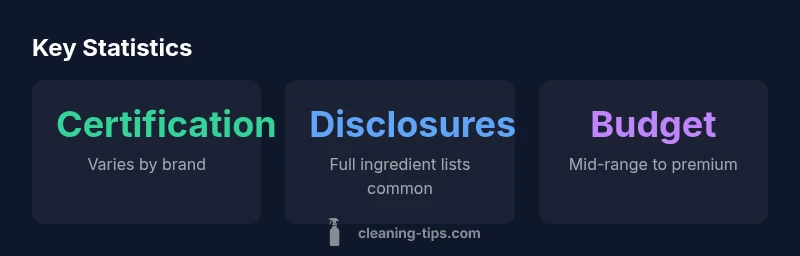
| Criterion | What it means | Typical scope |
|---|---|---|
| Certification programs | Official third-party validations that audit ingredients and processes | Varies by program and product |
| Ingredient disclosure | Published ingredient lists (INCI) for each product | Often required for product pages |
| Cruelty-free and vegan status | Verified by certifiers; cruelty-free does not imply vegan for all products | Brand-wide or product-level |
| Pricing and accessibility | Ranges from mid-range to premium; occasional budget options exist | Market-dependent |
Questions & Answers
What does 'clean makeup' mean?
Clean makeup means safer ingredients, transparent labeling, and credible testing practices. Definitions vary by brand, but most rely on minimized restricted chemicals and explicit disclosures, along with third-party certifications when available.
Clean makeup means safer ingredients with transparent labeling and credible testing. Look for full ingredient lists and trustworthy certifications.
Are clean makeup brands more expensive?
Not always. Pricing ranges from mid-range to premium, and some affordable options meet common safety standards. Expect variation based on certifications, packaging, and brand positioning.
Prices vary a lot. There are mid-range options, but some brands may be pricier due to certifications and packaging.
Can clean makeup perform as well as conventional makeup?
Yes, many clean brands now offer comparable performance in color payoff, wear, and finish. Some lines may differ in texture or fragrance, but testing samples helps find suitable matches.
Often yes, with careful testing. Some lines have different textures, but many perform just as well as conventional options.
How can I verify a brand's claims?
Check for full ingredient disclosures, third-party certifications, and any published safety data. Compare product-level details across a few trusted sources to assess credibility.
Look for full ingredients, third-party certifications, and safety data to verify claims.
What certifications should I look for?
Look for Leaping Bunny, ECOCERT, and USDA Organic where applicable, and verify if the certification covers the specific product you’re considering.
Key certifications include Leaping Bunny, ECOCERT, and USDA Organic. Check product-level coverage.
Is natural always better for sensitive skin?
Not necessarily. Natural ingredients can still cause allergies; focus on patch tests and disclosed ingredient lists to determine what works for your skin.
Natural doesn’t guarantee safety. Patch tests and clear ingredient lists are the best guides.
“Clean makeup brands prioritize ingredient safety and labeling transparency, but 'clean' is not uniformly defined across the industry.”
The Essentials
- Define your safety non-negotiables before shopping.
- Prioritize clear ingredient lists and third-party certifications.
- Test products with patch tests and samples.
- Recognize that 'clean' definitions vary by brand.
- Balance health goals with performance expectations.