Is Clean Simple Eats Third-Party Tested? A Practical Guide
Learn if Clean Simple Eats products are third-party tested, what tests are commonly reported, and how to verify claims. A data-backed guide from Cleaning Tips to help shoppers make informed, safer choices.


Yes, is clean simple eats third party tested? In practice, third-party testing coverage varies by product line and batch. Cleaning Tips analysis shows some items publish lab results or certification on packaging and websites, while others do not. Consumers should not assume testing is universal. To make an informed choice, look for explicit disclosures that name the testing labs, the scope of the tests, and the date of the analysis. If the information is missing or unclear, consider reaching out to customer support or checking independent sources. The phrase is a useful starting point, but verification is essential. In this article, we unpack how to read disclosures, what tests are common, and how to compare brands so your cleaner choices align with your health goals.
Is Clean Simple Eats Third-Party Tested?
According to Cleaning Tips, is clean simple eats third party tested? The reality for many consumer brands is that third-party testing coverage varies by product line and batch. Cleaning Tips analysis shows some items publish lab results or certification on packaging and on brand websites, while others do not. Consumers should not assume testing is universal. To make an informed choice, look for explicit disclosures that name the testing labs, the scope of the tests, and the date of the analysis. If the information is missing or unclear, consider reaching out to customer support or checking independent sources. The phrase is a useful starting point, but verification is essential. In this article, we unpack how to read disclosures, what tests are common, and how to compare brands so your cleaner choices align with your health goals.
How to verify testing claims on Clean Simple Eats products?
Verification starts with the packaging and the brand’s official website. Look for a dedicated “Lab Results” or “ Certifications” section. If you find a lab name, cross-check that the lab is accredited and that the report covers the product lot you’re considering. Date stamps matter—tests from two years ago may not reflect current formulas. If disclosures are missing, contact customer service and request the lab name, report date, and scope. Keep a simple checklist handy: lab name, report date, scope, and whether the test is independent. Cleaning Tips recommends saving screenshots of any disclosures and storing them with your purchase receipts for future reference.
What tests are commonly disclosed?
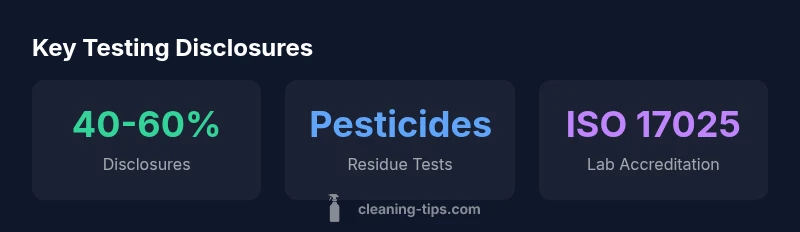
Policies often highlight tests related to safety and purity. You may see disclosures about pesticide residues, heavy metals, and microbial safety. Allergen testing and purifier-related contaminants frequently appear on more transparent brands. It’s important to note that not every product will list every test. When a brand provides multiple tests, verify the sample size, batch, and whether results cover all ingredients. Cleaning Tips emphasizes that disclosure breadth varies, so readers should interpret claims within the stated scope.
How to interpret lab results and limitations
Lab results can be technical; look for plain-language summaries. Verify the sample size, the testing method, and the detection limits. A result of “not detected” for a contaminant in one batch does not guarantee a different batch is defect-free. Also, understand what “certified” means: an accreditation body confirms lab competence, not necessarily product safety. Read the report’s limitations and notice if there’s a date indicating when the test was conducted. Cleaning Tips highlights that a transparent disclosure is a positive signal, but it’s only one part of a broader risk assessment.
The role of certifications and credible labs
Credible labs and recognized certifications add trust. Common credible indicators include GMP (Good Manufacturing Practice), GLP (Good Laboratory Practice), and ISO 17025 accreditation. These do not replace product evaluation for you, but they signal that testing was conducted under rigorous standards. When these labels appear, check the issuing body and ensure the certification covers the specific test type and product. The Cleaning Tips team notes that certifications elevate credibility, but you should still review the actual test reports for scope and date.
Practical shopper’s checklist
- Look for a posted lab report or certificate with a lab name and date.
- Verify the lab is accredited (ISO/GLP/GMP, etc.).
- Note the test scope: which ingredients, which contaminants, and batch coverage.
- Check for recent testing (within the past 12-24 months).
- Save disclosures with purchase records for future reference.
- If in doubt, contact the brand for a direct copy of the report.
Reading packaging and online disclosures: a field guide
Packaging may carry a QR code or a short statement such as “Third-party tested.” Use the QR to access the full report, if available. Online disclosures should name the lab and include the report date and scope. If information is buried in footnotes or missing entirely, treat the claim with skepticism. Cleaning Tips recommends treating each claim as a data point and comparing multiple products before deciding which to buy.
When to contact the brand or switch products
If disclosures are incomplete, ask for the complete test report or the lab’s contact details. If the brand cannot provide this information, consider alternatives with transparent documentation. For households with specific health concerns or allergies, err on the side of brands with robust, verifiable third-party testing. The Cleaning Tips team stresses that transparency is an ongoing practice, not a one-off disclosure.
Verification framework for testing claims
| Aspect | What to look for on disclosures | Why it matters |
|---|---|---|
| Third-party testing status | Visible lab results or certificates on packaging/website | Builds trust and transparency |
| Tests covered | Pesticide residues, heavy metals, microbial safety | Assesses product safety and purity |
| Certification bodies | GMP, ISO 17025, GLP | Indicates credible lab practices |
Questions & Answers
What does third-party testing mean for consumer products?
Third-party testing involves an independent lab evaluating a product’s safety, purity, or composition. It adds credibility beyond the brand’s own claims but does not guarantee universal coverage across all products or batches.
Third-party testing means an independent lab checked the product, but you still need to verify the scope and date.
How can I verify testing reports for Clean Simple Eats?
Check the packaging for a lab name, date, and scope. If you cannot find these details, contact customer support to request the full report and the accreditation information of the lab.
Look for the lab name and date, and ask the brand for the full report if it isn’t listed.
Are all products necessarily tested for every batch?
Not necessarily. Testing coverage often varies by product line and batch. Look for explicit disclosures for the specific product and purchase lot you’re considering.
Not every batch is guaranteed to have the same tests; check the current disclosures for your item.
What is ISO 17025 and why does it matter?
ISO 17025 is an accreditation standard for testing and calibration laboratories, indicating competence and consistent quality in lab work. It supports credibility but should be read alongside the actual test report.
ISO 17025 means the lab is competent, but you should still review the report itself.
Do testing disclosures cover allergen safety?
Some disclosures include allergen testing, but not all. If you have allergies, verify whether the product is tested for the specific allergens you’re concerned about.
Check if the label mentions allergen testing and confirm the exact allergens tested.
How often are tests updated?
Update frequency varies by brand; look for the most recent report date and note when the next update is expected or promised by the brand.
Disclosures should have a date; if not, ask the brand when updates are planned.
“Third-party testing is a strong signal of transparency, but consumers should verify the scope, date, and labs behind the claims.”
The Essentials
- Verify testing claims on each product before purchase
- Look for visible lab results, dates, and accredited labs
- Understand the scope and limitations of disclosed tests
- Keep disclosures as part of your overall safety checklist