Is Hang Clean Harder Than Power Clean? A Comprehensive Comparison
A detailed, analytical side-by-side comparison of hang cleans and power cleans, explaining technique, biomechanics, learning curves, and training implications for lifters.


From a learning and training perspective, the hang clean is typically harder to master than the power clean due to balance, grip, and catch position issues. However, the power clean offers a smoother, more transferable path for beginners. In practice, many athletes use both lifts strategically, depending on goals, programming, and equipment.
Defining the Lifts: Hang Clean vs Power Clean
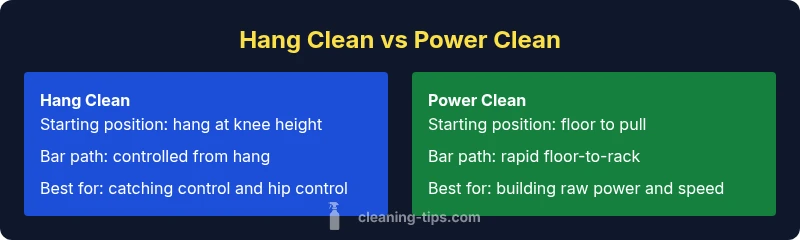
Whenever you compare hang cleans and power cleans, the starting position and intent matter as much as the mechanics. For many readers, the central question is whether is hang clean harder than power clean, especially for athletes focusing on Olympic lifting. According to Cleaning Tips, the hang clean begins from the hang position with the bar around knee height and involves a deliberate hip hinge and a precise bar path. The power clean, by contrast, starts from the floor and emphasizes a fast, vertical pull into a rack position, with a quicker transition to extension and catch. Understanding these base setup differences helps lifters anticipate the skill demands, coaching cues, and progression options that follow in this article.
Biomechanics and Muscle Activation
The two lifts share a common goal—rapid hip extension and powerful elbow extension to rack the bar—but the distribution of work shifts between the hips, knees, and back. In a hang clean, athletes rely more on hip hinge control and upper-back engagement to guide the bar from knee height, which places greater emphasis on isometric scapular stability during the catch. In a power clean, the floor-to-pull phase demands a strong initial knee bend and a fast bar path from shin to rack. Biomechanically, both lifts train the posterior chain, but the sequencing changes how the glutes, hamstrings, and calves fire in the moment of peak velocity. For athletes, this means different transfer opportunities to sprinting, jumping, and throwing movements.
Learning Curve and Technique Difficulty
The question is often framed as is hang clean harder than power clean, and the answer hinges on technique demands. The hang clean tends to present a steeper learning curve for balance and timing, especially for the catch, because the bar travels a shorter distance and demands precise control from the hang position. The power clean, while technically demanding, typically offers a more forgiving entry path since the bar travels from the floor and the lifter can work through a larger set of cues—hip drive, upright torso, and rack position. The practical takeaway is that beginners often progress faster with the power clean first, then layer in hang clean work once basic form is solid and grip strength is developed.
Setup, Grip, and Bar Path
Setup differences drive many of the perceived difficulties. In the hang clean, the grip remains fixed as the lifter pulls from knee-height, which requires a refined bar path to prevent the bar from drifting away from the hips. The power clean requires an explosive breakout from the floor, plus a quick reorientation of the torso and a strong rack in a relatively narrow window. Grip width, stance width, and torso angle all influence bar trajectory in both lifts. The result is that setup cues are not interchangeable; coaching must explicitly address each lift’s unique demands to minimize bad habits.
Training Goals and Programming Implications
If your goal is to maximize explosive strength with a focus on hip extension and bar speed, the power clean often serves as an efficient entry point. When power development is established, introducing hang clean variations can help refine bar control, thoracic stability, and the catch mechanics under heavier loads. The central question—is hang clean harder than power clean—depends on your current skill set, equipment, and coaching. Training programs that rotate between these lifts typically see better overall transfer, provided volumes are managed and rest days are respected. In short, program design should reflect the athlete’s goals, not a one-size-fits-all rule.
Real-World Perspectives and Coaching Insights
Coaches emphasize that there is no universal winner in this comparison; the decision rests on goals, athlete readiness, and sport specificity. Cleaning Tips Team notes that athletes who require advanced catching mechanics or who want to emphasize grip and torso control may benefit from introducing hang clean work after establishing a solid power clean base. Pleasingly, many successful athletes blend both lifts into a periodized plan, reducing stagnation and ensuring continued neural adaptation. As always, individualized coaching remains essential to map technique cues to an athlete’s anthropometry and equipment constraints.
Common Mistakes and How to Fix Them
Common hang clean errors include poor hip extension timing, insufficient back angle maintenance, and a late catch that wobbles the rack position. Power clean flaws often involve a premature shrug, excessive bar path deviation, or collapsing the thorax under load. To fix these issues, implement slow-motion video feedback, isolate the pull without the catch, and progress grip strength and thoracic mobility. Both lifts benefit from a focus on bracing, scapular retraction, and a deliberate transition from pull to catch. The core idea is consistency in bar path, not chasing heavier weights with flawed technique.
Progressive Pathways: From Hang Clean to Full Clean
A practical progression starts with a solid power clean foundation, then gradually introduces hang clean work to develop grip strength, hip hinge precision, and catch stability. Coaches frequently recommend alternating cycles—three weeks of power clean emphasis followed by three weeks of hang clean emphasis, with light technique days to reinforce form. Rest intervals and loading should reflect the lifter’s recovery capacity to avoid technique breakdown, especially when learning new cues. When used carefully, the integration of hang clean movements alongside power cleans can broaden an athlete’s kinetic vocabulary and lead to superior performance in high-velocity movements.
Practical Coaching Strategies and Individualization
Coaching strategies should tailor cueing to the athlete’s mobility, limb length, and experience. For some lifters, initial emphasis on a clean pull and rack position yields faster results than jumping straight into the full lift. Others benefit from slow, deliberate practice of the hang position to sharpen bar control before applying force production. The fundamental principle is to align cues with the lift’s unique demands, ensuring consistent, repeatable technique across loading. This individualized approach reduces injury risk while improving power transfer across multiple athletic tasks.
Comparison
| Feature | hang clean | power clean |
|---|---|---|
| Starting position | Hang position near knee height; hip hinge emphasized | Floor start from the ground; shin height or just above the floor |
| Bar path | Short vertical-to-hips path; careful control from hang | Longer, faster floor-to-pull path; rapid extension |
| Catch position | Requires precise, balanced rack from hang | Rack position achieved with strong extension and timing |
| Muscle emphasis | Posterior chain, upper back, grip strength | Posterior chain, hips, calves, core stability |
| Learning curve | Higher initial difficulty due to balance and catch | Often faster entry for beginners; technique still demanding |
| Best for | Develops catch control and specialized technique for advanced lifters | Builds explosive power with simpler entry for beginners |
Strengths
- Builds explosive hip drive essential for Olympic lifts
- Hang clean teaches bar path control from the hang position
- Power clean often easier for beginners to learn and to rack
- Both lifts improve overall power and posterior chain development
- Offers complementary stimuli when programmed together
Weaknesses
- Hang clean requires greater balance and timing, increasing learning curve
- Power clean from floor can amplify technique faults if coached poorly
- Hang clean may offer less carryover to a full clean if not paired with floor work
- Programming complexity increases with using both lifts regularly
Power clean is typically the more accessible starting point; hang clean adds advanced technique and specificity when the lifter is ready.
Choose the power clean first to establish a solid base of technique and force production. Add hang clean work later to refine bar control, grip strength, and catch mechanics for higher-skill development.
Questions & Answers
Is the hang clean harder to learn than the power clean?
Yes, in many cases the hang clean presents a steeper learning curve due to balance and catch technique from the hang position. Start with the power clean to build foundational strength and speed, then layer in hang clean variations as technique improves.
Hang cleans are tougher to learn than power cleans for most lifters because of balance and catch control. Build a solid base with the power clean first, then add hang cleans as you’re ready.
Can a hang clean replace a power clean in a program?
A hang clean can complement a program, but most programs don’t rely on it as a complete replacement for the power clean. Use hang cleans to refine catch mechanics and grip strength after establishing solid power clean technique.
Hang cleans can supplement your plan, but they usually don’t replace the power clean entirely unless you’re targeting specific skill adaptations.
What are the most common mistakes with hang cleans?
Common issues include late catch, insufficient hip extension, and a drifting bar path. Address these with focused progressions: practice pulls to a hang, then add a controlled catch, and use video feedback to correct form.
Watch the hip drive and bar path closely; fix catch position with slower, controlled reps.
How should I progress from hang clean to a full clean safely?
Progress gradually: start with hang cleans, then move to hang clean pulls, then add partial range-of-motion cleans, and finally reintroduce the floor-based clean with light loads and coaching cues reinforced.
Build from hang to full clean in small steps and prioritize technique over weight.
Which athletes benefit most from hang cleans?
Athletes seeking improved bar control, thoracic stability, and precise catch mechanics often benefit from hang cleans, especially when the goal is to refine technique before adding heavy floor pulls.
Good for lifters focusing on technique and control before max loads.
The Essentials
- Prioritize power clean to establish initial technique and force development.
- Introduce hang clean after form is solid to target grip and catch stability.
- Use both lifts to balance skill transfer and training goals.
- Monitor technique closely to avoid common grip and catch errors.
- Progress loads gradually with technique-first days to reduce injury risk.