Pressure Washer to Clean Driveway: Step-by-Step Guide
Learn how to use a pressure washer to clean your driveway safely and effectively. This guide covers equipment selection, surface prep, detergents, washing techniques, and finishing care for a refreshed, durable driveway.


With a pressure washer, homeowners can restore a stained driveway to near-new condition. This guide shows how to choose the right unit, prepare the surface, apply safe cleaning solutions, and finish with a rinse and protective seal. You’ll learn practical tips to avoid damage, conserve water, and get lasting results using a pressure washer to clean driveway.
Why a pressure washer is a game changer for driveways
A clean driveway makes a strong first impression and can extend the life of your concrete by removing contaminants that promote wear. A pressure washer offers more control and efficiency than a garden hose and stiff brush, allowing you to tackle oil stains, algae, tire marks, and built-up dirt in a fraction of the time. This is especially useful for homeowners who want a durable, long-lasting result without harsh scrubbing. According to Cleaning Tips, selecting the right equipment and technique matters as much as the machine itself. The Cleaning Tips team found that using adjustable pressure, appropriate nozzle tips, and a surface cleaner attachment minimizes damage while maximizing surface lift. In practice, your approach should prioritize safety, surface preservation, and environmental responsibility. Start with a plan, test a small patch, and gradually expand to the entire driveway. By treating the surface gently at first and increasing intensity only where necessary, you can restore color and texture without creating pitting or erosion. Finally, consider finishing with a sealant once the surface is completely dry to lock in the results and reduce future staining. The goal is not just to remove dirt but to create a uniform, refreshed appearance that lasts through seasons of weather and traffic. Cleaning Tips emphasizes that a methodical, well-prepared process yields the best long-term outcome for any driveway project. Using the right technique with a pressure washer to clean driveway helps restore color evenly and minimizes the need for repeated scrubbing.
Key considerations before you start
Before you attach hoses and start spraying, take a moment to map out the project. Driveways vary—concrete, asphalt, or paver patterns each respond differently to pressure and cleaning agents. Start by identifying stains: oil and gasoline require different approaches than tire marks or algae. Choose a machine with adjustable pressure and a range of tips, and use a surface cleaner when possible to avoid liney streaks. Water supply and drainage are also important: ensure you have a reliable outdoor faucet or supply hose, and plan to collect or divert runoff away from garden beds. Environmental responsibility matters, since wash water can carry contaminants into soil and storm drains. Always sweep the area for leaves and debris so they don’t get sprayed into the air or embedded in fresh cleaner. Pre-wet the surface with a quick rinse to loosen loose dirt, then apply a gentle cleaner in a test patch to confirm colorfastness. Read the detergent label for safety guidelines and rinse-off instructions. If you’re unsure about the surface’s tolerance, test on a small inconspicuous area first and observe for 5–10 minutes. This approach reduces risk of etching, splintering, or color loss, and it sets you up for a uniform result that looks good from the curb.
Choosing the right equipment
There are two broad categories of machines used for driveway cleaning: electric and gas-powered. Electric pressure washers are quieter, lighter, and ideal for small to medium driveways with standard concrete or pavers, while gas-powered units deliver more sustained power for larger, heavily stained surfaces. Look for adjustable PSI, a decent GPM (gallons per minute), and compatibility with a surface cleaner attachment. A dedicated spray nozzle kit with interchangeable tips helps tailor the spray to your surface: a wider fan for rinsing and a narrow stream for stubborn stains. If possible, pair the washer with a surface cleaner to minimize streaks and shave time off the job. Detergent compatibility is essential; choose biodegradable cleaners labeled for concrete and outdoor use. Carry extra hoses, a long power cord or an outdoor-rated extension cord, and a sturdy ladder or platform if you’ll be spraying in hard-to-reach spots. Finally, prioritize safety accessories: eye protection, gloves, non-slip shoes, and a drainage plan to prevent overspray from reaching plants or siding. Taking time to select the right equipment dramatically improves results and reduces the risk of permanent damage.
Surface prep and cleaning solutions
Surface prep makes a bigger difference than you might expect. Start by sweeping away loose debris, then pre-wet the area to help detergents spread evenly. Apply a concrete-safe cleaner or a biodegradable detergent directly to stains, following label directions; allow dwell time so the solution penetrates oil, grease, and organic growth. For stubborn marks, apply a second coat and use a soft-bristle brush to loosen residues before washing. Use a low-pressure rinse around delicate edges to avoid driving dirt into cracks. If you encounter tough oil stains, a specialized degreaser or a vinegar-baking-soda combo can loosen grime without harsh chemicals; test first on a small area. Avoid bleach or acidic products on painted surfaces or colored concrete, as they can dull color or etch the surface. After applying cleaner, rinse from clean to dirty, keeping the spray pattern consistent to avoid new streaks. Consider environmental impact: collect runoff where possible or redirect it away from gardens. When you’re satisfied with the result, give the surface a final rinse with clean water to remove residual cleaner and prevent new staining before drying occurs.
Common mistakes and how to avoid them
Mistakes are easy to make when you’re excited to reclaim a dirty driveway. Avoid blasting at full power directly at mortar joints or seams, which can cause chipping or pitting. Don’t forget to test a small patch before committing to the entire surface; different batches of concrete can react differently to cleaners. Over-wetting the surface can push water into cracks or cause efflorescence; apply mist-like passes and rinse as you go. Use a straight high-pressure spray on smooth areas only if you know the material can tolerate it. Do not allow cleaners to sit in place longer than recommended on the label, especially when dealing with aluminum or painted sections. Never mix cleaners with bleach or chlorine, as dangerous fumes can form. Finally, avoid letting water pool in one spot for long; keep the wand moving in even, overlapping strokes to minimize streaks and ensure a uniform clean.
Finishing touches: sealing and maintenance
Once the surface is dry and clean, many homeowners choose to seal the driveway to protect against future staining and weathering. Sealants are available for various concrete types; follow product instructions, including application temperature, cure time, and re-application intervals. Clean the equipment thoroughly after use and store it in a dry, sheltered area to prevent rust and nozzle clogging. Inspect the driveway for remaining stains and repeat the cleaning if needed before applying sealant. If you notice new cracks or spalling, address those issues before sealing to avoid trapping moisture behind the seal. Regular maintenance—seasonal cleaning, prompt stain removal, and resealing every few years—extends surface life and keeps your curb appeal high. Be mindful of runoff and environmental impact, and follow local regulations for disposing of used cleaning solutions and rinse water.
Maintenance and safety reminders
Safety should be the cornerstone of any power-washing project. Wear eye protection, gloves, and sturdy footwear, and never aim the wand at people, pets, or windows. Point the spray away from electrical outlets and avoid spraying on fragile surfaces like historic masonry. Check hoses and connections for leaks before you begin, and never run the unit indoors. Keep bystanders at a safe distance and use a lower pressure setting on new or delicate areas. After finishing, drain and store the equipment securely, rinse nozzles, and flush the hose to prevent clogs. Finally, respect the environment by collecting or redirecting wastewater and disposing of used cleaners properly. If you’re unsure, consult the pressure washer’s user manual or contact a local professional for advice.
Tools & Materials
- Pressure washer(Choose adjustable pressure and include a surface cleaner attachment if possible.)
- Detergent or biodegradable cleaner(Concrete-safe; follow label directions.)
- Interchangeable nozzle tips (0°, 15°, 25°, 40°)(For targeted cleaning and wide rinses.)
- Surface cleaner attachment(Optional but reduces streaks.)
- Garden hose and outdoor faucet(Lifesource for water supply.)
- Safety gear (eye protection, gloves, closed-toe shoes)(Protect from spray and debris.)
- Plastic tarps or painter's drop cloths(Protect plants and nearby surfaces.)
- Stiff-bristled brush(For stubborn spots.)
Steps
Estimated time: 60-90 minutes
- 1
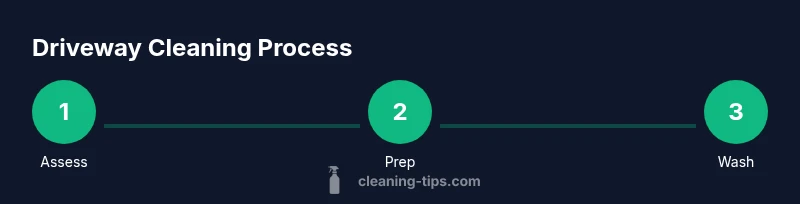
Assess and plan
Walk the driveway, note stains, and identify fragile areas. Map a wash path that minimizes re-soiling and directs runoff away from plants.
Tip: Test a tiny patch first to gauge surface tolerance. - 2
Assemble and test
Connect the water supply, attach a nozzle, and run a quick test on a discrete area to verify spray distance and cleanliness without damage.
Tip: Check hoses for leaks and keep extension cords rated for outdoor use. - 3
Apply cleaner and dwell
Treat stains with an appropriate cleaner and allow it to dwell per label instructions before washing.
Tip: Do not let cleaner dry; re-apply if necessary. - 4
Wash with overlapping passes
Start at the highest point and rinse downward with broad, overlapping sweeps to prevent streaks.
Tip: Keep the spray at a consistent distance from the surface. - 5
Rinse and inspect
Rinse thoroughly and inspect for missed spots; re-clean as needed, focusing on stubborn areas.
Tip: Switch to a wider nozzle for rinse to reduce streaks. - 6
Dry and prep for sealing
Allow the surface to dry completely and prepare for sealing if desired, following product instructions.
Tip: Do not seal until fully dry to avoid trapping moisture. - 7
Clean up and store
Power down, detach hoses, clean nozzles, and store equipment in a dry place away from chemicals.
Tip: Rinse out detergents and drain water away from plants.
Questions & Answers
Is it safe to use a pressure washer on a concrete driveway?
Yes, it is generally safe when you use the right pressure, nozzle, and technique. Always test a small patch first and keep the wand moving to avoid etching or pitting.
Yes, it’s safe if you test first and keep the wand moving.
Can I use detergent with a pressure washer?
Absolutely. Use biodegradable, concrete-safe cleaners and follow the label directions. Rinse thoroughly after dwell time to prevent residue.
Yes—use a biodegradable concrete cleaner and rinse well.
How long does a driveway cleaning project take?
Time varies with driveway size and stain severity. Plan for a few hours if you’re doing prep, washing, and possible sealing.
It varies, but plan for a few hours for prep, wash, and seal.
What should I do about oil stains before washing?
Pre-treat with a degreaser or specialized cleaner, allow some dwell time, then wash as usual. If needed, repeat the treatment on stubborn areas.
Pre-treat stains with a degreaser and recheck after washing.
Can I seal the driveway after washing?
Yes, but only after the surface is completely dry and free of cleaner residue. Follow the sealer’s instructions for curing.
Yes, but wait until it’s fully dry before sealing.
Electric or gas power washer—which is better for driveways?
Electric models are quieter and easier for small-to-medium jobs; gas models offer more sustained power for heavy staining and large areas. Choose based on driveway size, noise tolerance, and stain level.
Electric is great for small jobs; gas for heavy stains.
Watch Video
The Essentials
- Plan a top-to-bottom wash path
- Use appropriate nozzle and detergent
- Rinse thoroughly and let dry before sealing
- Store equipment properly after use