Trash Clean Up Community Service: A Practical How-To Guide
Learn to organize a trash clean up community service that engages neighbors, ensures safety, and achieves meaningful waste disposal. This step-by-step guide covers planning, recruitment, safety, disposal, reporting, and sustaining momentum for healthier neighborhoods.


Learn how to organize a trash clean up community service event that engages neighbors, follows safety and legal guidelines, and ensures proper disposal. This quick answer points you to essential steps, tools, and roles so your cleanup runs smoothly and makes a visible local impact. From volunteer roles to post-event reporting, this guide covers it all.
Why trash clean up community service matters
According to Cleaning Tips, community trash clean up efforts empower neighbors to protect their environment, reduce stigma around litter, and build civic pride. When organized as a service project, these events teach participants about waste streams, recycling opportunities, and the power of local action. Cleaning Tips analysis shows that well-structured cleanups improve environmental outcomes and foster long-term stewardship, without requiring specialized expertise. For homeowners and renters, these efforts can transform a curbside or park into a safer, more inviting space. By engaging schools, faith groups, and local businesses, a cleanup becomes a tangible demonstration of community resilience. The goal is not just to fill bags, but to educate participants about litter prevention, proper disposal, and the value of teamwork. This guide will help you plan a trash clean up community service that is inclusive, safe, and impactful for your neighborhood today, while building a culture of care for tomorrow.
Planning your event: goals, scope, and timeline
A clear plan is the backbone of any successful trash clean up community service. Start by defining the event's goals (e.g., improve a local park, remove cigarette butts from a storefront corridor, or clean a trail). Scope determines how many volunteers you need, how many bags you expect to fill, and what areas will be covered. Create a simple timeline with key milestones: date selection, volunteer recruitment, safety briefing, day-of logistics, and post-event reporting. Engage stakeholders early: park services, neighborhood associations, and local schools can offer access, guidance, and volunteers. A well-scoped event reduces last-minute chaos and helps you secure permits, if needed. Remember to balance ambition with practicality: a modest, well-executed cleanup can have a bigger impact than a large, disorganized one. This approach keeps participants motivated and improves long-term involvement.
Legalities and safety considerations
Safety and compliance are non-negotiable for trash clean up activities. Check with local authorities for any permits required to use public spaces and to access recycling or trash disposal streams. Prepare waivers for adults and parental consent forms for minors, if applicable. Purchase or confirm insurance coverage for volunteer activities if your jurisdiction requires it. Provide a safety briefing that covers road awareness, wildlife interactions, and proper lifting techniques. Establish a buddy system so no one works alone in a high-risk area. Ensure you have a first aid kit, clean water, sun protection, and a plan for extreme weather. Document all compliance steps so your event remains a model for future cleanups.
Partnerships and recruitment strategies
Partnerships dramatically increase the reach and effectiveness of trash clean up community service projects. Partner with local youth organizations, universities, religious groups, and neighborhood associations to recruit volunteers and gain legitimacy. Offer co-branding opportunities for sponsors who provide gloves, bags, or refreshments. Create accessible recruitment messages that emphasize tangible outcomes (cleaner streets, safer playgrounds) and the social benefits of volunteering. Use multiple channels: social media, school announcements, local newsletters, and door-to-door outreach in high-traffic areas. A well-rounded recruitment plan ensures diverse participation, broader community buy-in, and sustainable momentum between events.
Tools, safety gear, and disposal planning
Prepare a kit list that covers everything you need for a safe cleanup day. Essential items include heavy-duty gloves, high-visibility vests, sturdy trash bags, litter grabbers, first-aid supplies, water, sunscreen, and a map of the area. Bring spare batteries for any devices, clipboards, and sign-in sheets to track volunteer hours. Before starting, confirm disposal options with the local waste management authority: identify which bags go to recycling, which require special handling, and where to drop off collected items. If hazardous materials are found, pause collection and contact the appropriate authorities. A well-stocked kit reduces friction and keeps volunteers focused on the task.
Site assessment and route planning
Conduct a quick site assessment before the cleanup begins. Note entry points, kid-safe zones, high-traffic areas, and potential hazards such as broken glass or contaminated debris. Plan a route that minimizes backtracking and ensures volunteers can access rest areas and water. Create color-coded zones or team assignments to simplify coordination and safety oversight. Ensure you have a communication plan (walkie-talkies or group messaging) so volunteers can report hazards or request support. A thoughtful site plan improves efficiency and reduces risk of injuries or missed trash hotspots.
Day-of workflow: roles and communication
Define clear roles for the day, including a site lead, volunteer captains, safety lead, and disposal liaison. Begin with a brief safety and task briefing, then assign volunteers to specific zones. Use a simple chain of command so decisions can be made quickly. Establish a command post where supplies are kept, and maintain an open line of communication with your volunteers throughout the event. After check-in, start the collection process, ensure bags are properly sealed, and relocate to the drop-off point as needed. Clear roles maintain momentum and reduce confusion.
Disposal, sorting, and reporting
Sort collected material into recyclables, compostables, and waste according to your local guidelines. Keep a tally of bags by type to help measure impact and inform future efforts. Coordinate with the local waste hauler to schedule pickup and verify any special handling requirements for certain materials. After disposal, prepare a concise post-event report detailing volunteers, bags collected, areas cleaned, and any challenges. Share this report with sponsors, partners, and the community to reinforce the value of the effort and to build trust for next time.
Safety and environmental best practices
Protect volunteers by enforcing proper lifting techniques, encouraging frequent breaks, and staying hydrated. Dress in layers and provide shade if the event stretches into hot weather. Be mindful of wildlife and avoid disturbing habitats. When encountering sharp or hazardous materials, do not pick them up; notify the disposal liaison for safe handling. Keep a waste hierarchy mindset: prioritize recycling and donation where possible, and minimize overall waste generated by the cleanup. By modeling responsible behavior, you set a positive example for participants and the broader community.
Post-event follow-up: gratitude, documentation, and re-engagement
Thank volunteers publicly and privately, and highlight the impact with photos and a brief report. Distribute appreciation certificates or small tokens of thanks as appropriate. Archive photos and the post-event data to inform future cleanups and to attract new sponsors. Host a debrief with partners to discuss what worked well and what could be improved. Re-engage participants by sharing opportunities for future events and inviting them to join a planning committee. The momentum you build now will translate into more sustainable, ongoing community engagement.
Case study: sample plan and lessons learned
Imagine a mid-sized urban park cleanup organized by a neighborhood association with support from a local high school and a small business sponsor. The team defines goals: reduce litter along three park corridors and improve overall park safety. They recruit volunteers through a multi-channel outreach plan and host a pre-event safety training. On the day, volunteers operate in zones, maintain a buddy system, and efficiently sort trash from recyclables. They coordinate disposal with the city’s waste services and publish a post-event report with photos and data. Lessons learned include the importance of a clear site plan, early partner engagement, and transparent communication with all participants. The Cleaning Tips team recommends sustaining momentum by forming recurring, smaller cleanups and sharing learnings with the community to foster long-term engagement.
Tools & Materials
- Gloves (heavy-duty work gloves)(Opt for puncture-resistant options; bring spare pairs)
- Trash bags (heavy-duty, 30-50 gallon)(Have a mix of black and clear bags for sorted waste)
- Litter grabbers/pickers(Long-reach tools to minimize bending and kneeling)
- Safety vests(High-visibility for street or park cleanup zones)
- First aid kit(Include basic supplies and a sharps container if applicable)
- Water and snacks(Hydration stations and light nutrition help maintain energy)
- Maps/site plan(Printed copies for volunteers and a digital version)
- Waste disposal information(Contact numbers and drop-off locations for city facilities)
- Waivers/permissions(Parental consent forms if minors participate)
Steps
Estimated time: 4-6 hours
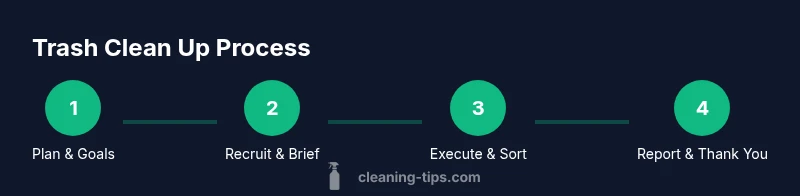
- 1
Define goals and select a site
Clarify the cleanup’s purpose, identify the area to be cleaned, and set measurable objectives (e.g., target a specific park or corridor). Confirm access and permissions if the site is public or requires oversight. Having a clear scope reduces ambiguity for volunteers and partners.
Tip: Document the site boundaries on a map and share with all team leads. - 2
Assemble a planning team
Recruit a core group to handle logistics, safety, recruitment, and partnerships. Assign roles with clear responsibilities and a backup plan in case someone cannot attend. Regular check-ins keep the plan aligned.
Tip: Create a simple org chart so everyone knows who to contact for each task. - 3
Notify neighbors and recruit volunteers
Develop a concise outreach plan that explains the event’s purpose, date, time, parking, and what volunteers should bring. Leverage schools, local businesses, and social media to maximize reach. Ensure inclusive messaging to encourage diverse participation.
Tip: Offer a small incentive or recognition to boost sign-ups. - 4
Prepare safety briefing and supplies
Create a quick safety briefing covering hazards, PPE, hydration, and buddy systems. Pack kits with gloves, bags, grabbers, and a first-aid kit. Assign a safety lead to address any issues during the cleanup.
Tip: Do a 5-minute demo on proper lifting and bag sealing. - 5
Execute cleanup with assigned roles
Lead volunteers through the zones, monitor progress, and maintain communication with the safety lead. Keep rest breaks and hydration available. Seal bags properly and keep a log of bags per zone for later reporting.
Tip: Take photos at key moments to document impact. - 6
Wrap up, sort, dispose, and report
Transport collected waste to drop-off or schedule pickup with the city. Sort materials for recycling, compost, and trash. Compile a brief post-event report including hours, volunteers, and learnings for sponsors and participants.
Tip: Share a short recap within 48 hours to maintain momentum.
Questions & Answers
Who can organize a trash clean up community service?
Anyone can start a cleanup with a core planning team. Reach out to neighbors, schools, and local groups to recruit volunteers and secure access to the site.
Anyone can start a cleanup with a planning team and community partners.
Do I need permits or permission from local authorities?
Permit requirements vary by location. Check with city or park authorities before using public spaces and arrange any necessary permissions.
Check with local authorities about permits before you start.
What about safety and PPE for volunteers?
Provide gloves, high-visibility vests, and safety briefings. Establish a buddy system and keep a first-aid kit on hand to handle minor injuries.
Give everyone gloves and a buddy system, plus a quick safety briefing.
How should we handle waste and disposal?
Sort waste into recyclables and trash, and arrange pickup with local waste services. Do not mix contaminants or hazardous items with general trash.
Sort materials and coordinate with waste services for disposal.
How can we recruit volunteers effectively?
Use social media, school clubs, faith groups, and local organizations. Emphasize community impact and opportunities to meet neighbors.
Post on social media and partner with local groups to recruit.
How do we measure impact and share results?
Count bags collected, take before/after photos, and document volunteer hours. Share a short report with sponsors and participants.
Track bags and hours, then share the results with the group.
What if the weather is bad?
Have a backup date and clearly communicate changes to all participants. Safety comes first—cancel if conditions are unsafe.
If weather is unsafe, postpone and inform everyone quickly.
Watch Video
The Essentials
- Plan with clear goals and a practical scope
- Prioritize safety, permits, and partner coordination
- Sort waste effectively and dispose responsibly
- Document and share outcomes to sustain momentum
- Engage diverse volunteers for long-term community impact