How to Clean Sterling Silver: Safe Methods, Tips, and Care
Learn safe, proven methods to clean sterling silver without scratching or dulling its shine. This step-by-step guide covers gentle cleaners, tarnish prevention, and storage tips for jewelry, flatware, and heirloom pieces.


Learn how to clean sterling silver safely without scratching or dulling its finish. This guide covers gentle cleaners, step-by-step methods, and storage tips to keep jewelry, flatware, and heirlooms bright. You’ll discover when to skip polish, how to avoid tarnish with everyday items, and how to restore shine without harsh chemicals.
What clean sterling silver means
The phrase 'what clean sterling silver' refers to maintaining the metal’s bright, reflective surface while preserving engravings, engravings, or stones. Cleanliness involves removing oils, fingerprints, and tarnish without altering the material or finishes. According to Cleaning Tips, proper care reduces tarnish buildup and preserves luster. The goal is to balance gentle cleansing with effective tarnish control, especially for pieces that are worn often. Start by assessing the piece: is it hollowware, jewelry, or a decorative object? The cleaning approach should align with composition, plating, and any attached stones. This first step helps you choose a method that won’t damage delicate components, coatings, or settings while restoring maximum shine.
Tarnish chemistry and why silver tarnishes
Silver tarnish is a surface layer of silver sulfide that forms when silver reacts with sulfur-containing compounds in air, cosmetics, or foods. The result is a dull, yellowish or blackish film that hides the original luster. The rate of tarnish depends on environmental factors like humidity, temperature, and exposure to sulfur-containing materials. Understanding this helps you tailor cleaning: high-humidity environments will often require more frequent but gentle maintenance, while sealed storage reduces tarnish activity. By knowing what triggers tarnish, you can plan preventive steps such as proper storage and avoiding harsh or acidic cleaners that can strip a finish.
Safe cleaners and what to avoid
Safe cleaners include mild dish soap mixed with warm water, plain water for rinsing, and soft polishing cloths designed for precious metals. Avoid abrasive pads that can scratch, and avoid household bleach, ammonia, or acidic solutions that can damage plating or stones. Never soak heirloom pieces with glued-in stones for long periods, and always test any new cleaner on a hidden area first. For items with intricate engravings, a soft brush can reach crevices without harming the metal. Remember: safety first means using gentle, controlled motions and stopping if any piece shows signs of loosened stones or dulling of finishes.
Everyday cleaning methods: soap and water, polishing cloth
A simple, effective routine starts with warm water and a few drops of mild dish soap. Dip a soft cloth or a microfiber towel, then gently wipe the surface in small circles to lift oils and fingerprints. Rinse with clean water and pat dry with a lint-free cloth to prevent water spots. For a brighter finish, finish with a silver polishing cloth using light, back-and-forth strokes along the grain of the metal. This routine keeps most pieces safe for daily wear and reduces the need for aggressive cleaning.
The baking soda and aluminum foil method explained
The baking soda and aluminum foil approach can remove tarnish from several pieces at once. Line a non-metallic dish with aluminum foil, shiny side up, and add hot water. Add a couple of tablespoons of baking soda (and a pinch of salt if desired), then place silver items in the solution, ensuring contact with the foil. The chemical reaction transfers tarnish away from the silver and onto the foil. Remove items after a few minutes, rinse thoroughly, and dry completely. This method is effective for many types of silver, but avoid using it on pieces with glued stones or delicate enamel.
When to use commercial silvers polishes
Commercial silver polishes are designed for more stubborn tarnish or heavily tarnished pieces. They often come as a paste or liquid that you apply with a soft cloth, then buff to a shine. Read the label carefully to ensure compatibility with gemstones, enamel, or coatings. Apply sparingly and test on a hidden area first. For pieces with texture or intricate detail, use a soft brush to work the polish into crevices, then wipe away residue with a clean cloth. Remember, gentler methods first will extend the life of your silver collection.
Cleaning different forms: jewelry vs flatware vs heirloom pieces
Jewelry often carries stones, settings, or plating that require cautious cleaning. Flatware can tolerate mild cleaners but may have engraved handles or antique finishes requiring gentler treatment. Heirloom pieces may be more delicate and prone to patina or historic finishes that you’ll want to preserve. Always inspect for loose stones or brittle settings, skip soaking jewelry with stones, and apply cleaners with a light touch. Tailor your method to the piece’s construction, finish, and any embellishments to maintain both beauty and value over time.
Rinsing, drying, and preventing future tarnish
Rinse thoroughly to remove all cleaner residue, then dry completely with a soft, lint-free cloth. Air-drying can leave spots, so a thorough wipe-down is best. To prevent future tarnish, store pieces in a cool, dry place away from sulfur-containing foods and cosmetics. Consider anti-tarnish cloths or sealable bags with desiccants, especially for jewelry. Regular light cleaning will maintain shine and reduce the need for aggressive polishing.
Troubleshooting stubborn tarnish and damaged pieces
If tarnish resists gentle cleaning, avoid forceful scrubbing that may scratch or remove plating. Reassess the piece’s finish—some items are silver-plated rather than solid sterling silver and may wear more quickly with aggressive cleaning. For items with stones or enamel, use specialized jewelry cleaners or seek professional cleaning to prevent damage. If you notice discoloration, pitting, or loose stones, stop cleaning and consult a professional to avoid irreversible harm.
Long-term care and storage tips
Develop a routine to prevent tarnish by cleaning lightly after use and storing properly. Wear gloves when handling cleaners to minimize skin oils on metal. Rotate storage locations to prevent humidity buildup and check seals on bags or boxes periodically. Regular maintenance not only preserves luster but also extends the life of your pieces, especially heirlooms with sentimental value. By integrating prevention with gentle cleaning, you keep sterling silver looking bright for years.
Tools & Materials
- Mild dish soap(A few drops in warm water for gentle cleaning)
- Warm water(Cleans without thermal shock; avoid hot water on delicate pieces)
- Soft cloth or microfiber towel(Non-abrasive; used for wiping and buffing)
- Soft-bristled brush(Gently reaches crevices; optional for intricate designs)
- Silver polishing cloth(For final buffing to restore shine)
- Baking soda(Used in the aluminum foil method; handle with care)
- Aluminum foil(For tarnish removal via chemical reaction)
- Commercial silver polish(Follow label; suitable for stubborn tarnish or heavily tarnished pieces)
Steps
Estimated time: 30-60 minutes
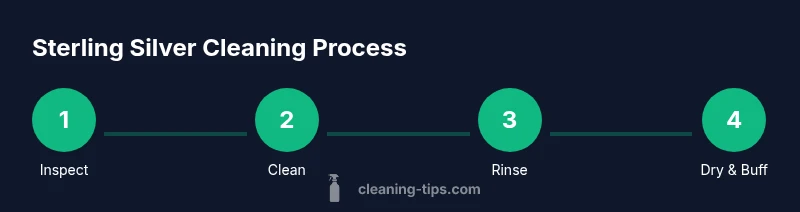
- 1
Gather materials and inspect
Collect all cleaning supplies and examine each piece for stones, loose settings, or coatings. This helps you choose the safest method and prevents accidental damage during cleaning. If a piece looks fragile, skip aggressive cleaners and choose gentler options.
Tip: Lay out a clean workspace and separate jewelry from flatware to avoid cross-contamination. - 2
Test a hidden area with cleaner
Test any cleaner on a small, inconspicuous area to check for discoloration or coating damage. This step protects delicate finishes such as plating or enamel from unexpected reactions. If there is any change, discontinue that product and switch to milder methods.
Tip: Always use the gentlest method first before moving to stronger products. - 3
Choose a cleaning method
Decide between soap and water, baking soda/aluminum foil, or a commercial polish based on the piece and tarnish level. For routine cleaning, soap and water is often sufficient; for heavier tarnish, the foil method can help.
Tip: Avoid applying polish directly to stones or enamel without checking compatibility. - 4
Clean with chosen method
Perform the cleaning with gentle, circular motions and minimal pressure. For the foil method, ensure contact with the foil and avoid soaking for long periods on pieces with stones. Keep pieces moving to avoid uneven results.
Tip: If using a liquid polish, use a small amount and remove residue promptly to prevent film buildup. - 5
Rinse and dry thoroughly
Rinse all residues with clean water and dry completely with a soft cloth. Any moisture left can promote spots or future tarnish. Buff gently to bring out the shine without scratching.
Tip: Dry with a fresh microfiber cloth to minimize lint and streaks. - 6
Store properly and plan maintenance
Store pieces in a dry, low-humidity environment, ideally in anti-tarnish bags or lined compartments. Schedule light cleanings regularly to prevent heavy tarnish buildup. Consider rotating storage locations to minimize exposure to air and humidity.
Tip: Include a desiccant pack in storage to control moisture.
Questions & Answers
What is the safest way to clean sterling silver?
The safest method starts with warm water and mild dish soap, using a soft cloth. For tougher tarnish, try the baking soda/aluminum foil method or a commercial silver polish, but test first on a hidden area and avoid stones or enamel.
Start with soap and water and a soft cloth. For heavier tarnish, try foil and baking soda, or a specialized polish, testing first on a hidden spot.
Can I use toothpaste to clean sterling silver?
Toothpaste is not recommended for most sterling silver pieces. It can be abrasive and may scratch delicate finishes or remove plating. Stick with gentler cleaners designed for silver.
Toothpaste isn’t ideal for silver; it can scratch or wear down delicate finishes. Use gentler silver-specific cleaners instead.
Does lemon juice or vinegar harm silver?
Acids such as lemon juice or vinegar can damage silver coatings or stones and may cause discoloration. If you must use them, dilute and apply briefly to avoid adverse effects, and never soak stones or enamel.
Acid cleaners can harm silver; if used, dilute and limit contact time, especially on stones or enamel.
How should I care for silver with gemstones?
Be cautious with gemstones; many are sensitive to cleaners. Clean the metal around stones with a damp cloth and avoid soaking. For best results, use jewelry-specific cleaners advised for the particular stone.
Care for stones by avoiding soaking and using mild, stone-safe cleaners when needed.
How often should I clean sterling silver?
Frequency depends on use and environment. Jewelry worn daily may need more frequent light cleanings, while less-used pieces can be cleaned quarterly. Use quick wipe-downs to maintain shine between deeper cleans.
Clean as needed based on use and humidity; quick wipe between deeper cleanings helps.
What if tarnish is stubborn or the piece is damaged?
If tarnish remains after gentle cleaning or a piece shows cracks or loose stones, seek professional cleaning. Heavy tarnish or structural issues may require specialist services to avoid further damage.
For stubborn tarnish or damage, consult a professional jeweler to avoid harming the piece.
Watch Video
The Essentials
- Test cleaners on hidden areas first
- Use the gentlest method possible
- Dry thoroughly after cleaning
- Store properly to prevent tarnish