What Cleaner for Vinyl Plank Flooring: A Practical Guide
Learn which cleaner to use on vinyl plank flooring, why pH-neutral formulas protect the finish, and follow a practical step-by-step routine for everyday cleaning, spot treatment, and periodic deep cleaning.


According to Cleaning Tips, use a mild, pH-neutral cleaner designed for vinyl floors. Avoid ammonia, bleach, wax-based products, soap films, and vinegar. This guide provides a safe, step-by-step approach for routine cleaning, spot treatment, and periodic deep cleaning, plus tips to protect your floor finish and extend its life.
Why the cleaner choice matters
Choosing the right cleaner for vinyl plank flooring matters because it protects the floor finish, prevents dulling, and minimizes residue. A poor choice can leave sticky films or promote moisture-related wear at seams. According to Cleaning Tips, using a mild cleaner labeled for vinyl floors helps maintain shine and longevity. In 2026, Cleaning Tips analysis suggests that pH-neutral formulas designed specifically for vinyl plank flooring yield the best long-term results with minimal residue. Reading labels for safety and efficacy is essential, and the cleaner you select should align with warranties and manufacturer recommendations.
Types of cleaners that work well on vinyl plank flooring
The best cleaners for vinyl plank flooring fall into a few reliable categories. First, pH-neutral vinyl floor cleaners specifically formulated for vinyl planks are safe for regular use and won’t leave sticky residues. Second, diluted mild detergents can be effective if you use only a small drop per gallon of water and wipe with a damp microfiber mop. Third, some manufacturers offer concentrate cleaners that are designed to be diluted per label instructions. Avoid cleaners with ammonia, bleach, wax residues, or petroleum solvents, as these can strip protection and dull the surface. Always choose products labeled for vinyl plank flooring and follow the manufacturer’s dilution guidelines.
Cleaners to avoid on vinyl plank floors
It is crucial to avoid certain cleaners on vinyl plank flooring. Do not use ammonia-based cleaners, which can cause fading and streaks. Bleach can degrade coatings and lead to discoloration over time. Wax-based products create a slippery surface and buildup that is hard to remove. Avoid vinegar and other acidic cleaners in high concentrations, as they can soften the finish. Do not use steam cleaners or any cleaners that promote high moisture exposure. Finally, abstain from solvent-heavy products that can warp or lift edges. When in doubt, test a small area first and consult the flooring manufacturer’s care guidelines.
Routine cleaning schedule for vinyl plank flooring
Establish a regular cleaning cadence to keep vinyl plank floors looking their best. For daily maintenance, sweep or vacuum to remove grit that can scratch the surface. Weekly, mop with a diluted pH-neutral cleaner, working in small sections to avoid pooling. Monthly, perform a light deep clean that includes a more thorough wipe-down of edges and corners. After heavy use or in households with pets and kids, a spot-clean between full moppings helps prevent concentrated grime buildup. Always allow the floor to dry completely before walking on it. This routine minimizes residue and preserves the finish over time.
Deep cleaning and stain treatment for stubborn grime
Deep cleaning helps restore appearance when regular cleaning isn’t enough. Use a spray bottle with a diluted vinyl floor cleaner and lightly mist a small area, then wipe with a microfiber pad until clean. For stubborn stains, apply a tiny drop of cleaner directly to the spot, let it sit briefly, and gently rub with a non-abrasive cloth. Avoid scrubbing hard or using abrasive pads that can scratch the surface. If you’re dealing with tough soils, consider a dedicated vinyl floor cleaner or a manufacturer-approved penetrating cleaner, then rinse with a clean damp cloth to remove any residue. Always dry the area thoroughly after treatment.
Spot cleaning guide for common messes
Spills happen in kitchens and living areas. For liquid spills, blot first with a dry microfiber cloth to absorb as much as possible, then clean with a damp cloth and a small amount of cleaner. For sticky residues like gum or syrup, gently lift with a plastic scraper and follow with a damp mop. If ink or marker marks appear, test a small area with a vinyl-safe cleaner before applying widely. Always dry the spot after cleaning to prevent moisture from seeping into seams.
Protecting and maintaining vinyl plank flooring
Protection is the best maintenance strategy. Place doormats at entrances to reduce tracked-in grit and place felt pads under furniture legs to prevent scratches. Use area rugs in high-traffic zones and avoid dragging heavy objects. Clean up spills promptly to prevent staining. Keep humidity levels steady to minimize expansion and contraction; if possible, maintain a stable climate and avoid excessive moisture near seams. Regular vacuuming and prompt spill response extend the floor’s life and keep it looking fresh.
Testing a cleaner and monitoring floor health
Before applying any new product broadly, test it in an inconspicuous area of the floor for colorfastness and residue. If you notice dulling, discoloration, or increased residue after cleaning, switch to a milder product or consult the flooring manufacturer’s guidelines. Keep a log of cleaners used and results to identify products that work best with your specific vinyl plank brand and finish. For extra assurance, refer to authoritative sources and follow their recommendations to ensure ongoing warranty compliance.
Tools & Materials
- Mild, pH-neutral vinyl floor cleaner(Choose a cleaner labeled for vinyl plank flooring; avoid wax-based or solvent-based products.)
- Microfiber mop(Use a flat microfiber pad to prevent residue build-up and streaks.)
- Bucket or spray bottle(For dilution or controlled misting as directed by the cleaner label.)
- Soft cloths or towels(For drying and spot wiping; use lint-free cloths.)
- Water source(Clean water for rinsing if the cleaner guidelines call for it.)
- Soft brush (optional)(For stubborn grime in corners; use gently to avoid abrasion.)
- Plastic scraper (optional)(For lifting sticky residues before mopping; avoid metal tools.)
Steps
Estimated time: 60-90 minutes
- 1
Prep the space
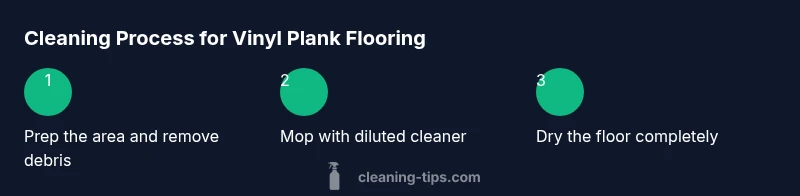
Remove all furniture and obstacles, and dry sweep or vacuum to collect loose dirt. This prevents gritty particles from scratching the vinyl during mopping. Clear the area to ensure you can clean in full straight runs.
Tip: Move in a systematic pattern to avoid missing spots. - 2
Dilute the cleaner correctly
Read the label and dilute the cleaner according to manufacturer instructions. Avoid using straight concentrate as it can leave residues or affect the finish. If using a spray bottle, mix and label it clearly.
Tip: Never mix cleaners with ammonia or other incompatible products. - 3
Mop in sections
Mop the floor in small, manageable sections to prevent puddling and ensure even cleaning. Work from one end of the room to the other, avoiding long, continuous stretches that can trap moisture.
Tip: Keep the mop damp, not soaking wet, to minimize moisture near seams. - 4
Rinse or wipe as needed
If your cleaner instructions require rinsing, wipe the floor with a clean damp cloth to remove any residue. For most pH-neutral cleaners, a damp wipe is enough and rinsing is optional.
Tip: Check for visible residues after the last section and touch up if needed. - 5
Dry the floor thoroughly
Finish by drying with a clean microfiber cloth or allow air drying in a well-ventilated space. Moisture left on vinyl plank can seep into seams over time.
Tip: Use a dry towel to absorb moisture from edges and seams first. - 6
Spot treat stubborn stains
Apply cleaner sparingly to the stained area, let it sit briefly, then gently rub with a soft cloth. Avoid abrasive scrubbers that can scratch the surface.
Tip: For particularly tough spots, reapply cleaner and give it a little more time before wiping. - 7
Deep clean on a schedule
Schedule a more thorough cleaning every few months or as needed based on wear. Use a slightly stronger dilution if the manufacturer allows, then rinse and dry completely.
Tip: Keep a log of deep cleaning dates for consistency. - 8
Protect floor during daily life
Place doormats at entrances, use felt pads under furniture, and avoid dragging heavy objects across the floor. Regular cleaning plus protective measures reduces wear.
Tip: Check furniture pads quarterly for wear and replace as needed. - 9
Store and maintain tools
Rinse and dry tools after use and store in a dry place. Proper storage prevents mold growth and keeps tools ready for the next cleaning.
Tip: Label any diluted cleaners and keep out of reach of children.
Questions & Answers
What kind of cleaner should I use for vinyl plank flooring?
Use a mild, pH-neutral cleaner formulated for vinyl plank flooring. This protects the finish and minimizes residue. Avoid cleaners with wax or solvents that can dull the surface.
Use a mild pH-neutral vinyl cleaner to protect the finish and avoid residue.
Can I use vinegar on vinyl plank floors?
Vinegar is generally not recommended for vinyl plank flooring because acidic solutions can dull the finish over time. If you must try, dilute heavily and test first in a hidden area.
Vinegar isn't recommended for vinyl plank floors; test a little if you must.
Is it safe to use a steam mop on vinyl plank flooring?
Steam mops introduce excess moisture that can seep into seams and cause damage. Stick to a damp mop with a vinyl-safe cleaner and dry promptly.
Steam mops can damage vinyl plank flooring; use a damp mop instead.
How often should I deep clean vinyl plank floors?
Deep cleaning is typically done every few months or when visible grime accumulates beyond routine cleaning. Follow manufacturer guidance and use a diluted cleaner for the deep clean.
Deep clean every few months or when grime builds up, following the product label.
Should I rinse after mopping vinyl plank floors?
Rinsing is not always required if you use a high-quality pH-neutral cleaner and follow the label directions. If you notice residue, wipe with a clean damp cloth to remove it.
Rinse only if you see cleaner residue; otherwise a damp wipe works.
Watch Video
The Essentials
- Choose a pH-neutral cleaner for vinyl plank flooring
- Avoid ammonia, wax, and abrasive cleaners
- Mop in sections and dry thoroughly
- Protect floors with mats and furniture felt pads