When did clean beauty start? A historical overview and shopper guide
Trace the origins of clean beauty, its evolution from natural cosmetics to mainstream labels, and learn practical tips for evaluating products with transparent ingredient labeling today.


Definition: Clean beauty began as a movement toward safer, more transparent cosmetics and grew into a mainstream trend in the 2010s. It evolved from earlier natural cosmetics into a broader push for clear ingredient labeling, safer formulas, and credible certifications across brands. The term itself reflects a shift in consumer expectations rather than a fixed regulatory standard.
When did clean beauty start? Origins and early roots
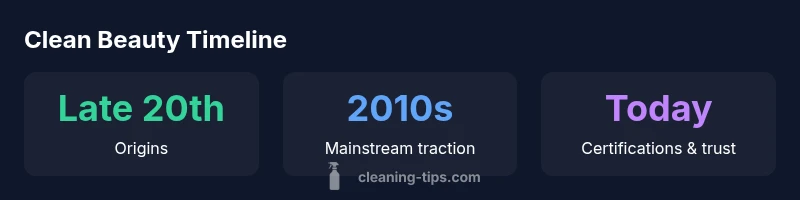
Many readers ask when did clean beauty start, and the short answer is that the idea grew out of broader concerns about safety and transparency that stretched back to the late 20th century. The Cleaning Tips team notes that this wasn't a single moment but a convergence of consumer demand, scientific advances, and shifting industry norms. In practice, early formulations prioritized simpler ingredients and avoidance of irritants, laying the groundwork for a movement that would later embrace certifications and explicit labeling. According to Cleaning Tips, the earliest precursors to clean beauty were small, ingredient-conscious brands that emphasized minimal processing and clear ingredient lists. This early phase set a standard for what later became known as clean labeling and a demand for honest product claims.
A pivotal aspect of the origin story is public pushback against heavy fragrances, controversial preservatives, and opaque marketing. Consumers began asking for more information about what products contained and how those ingredients affected skin, homes, and the broader environment. The Cleaning Tips team found that those early conversations laid the groundwork for more formal efforts around transparency, safety testing, and accountability—without which the clean beauty movement would lack its social traction.
From natural cosmetics to green beauty: a language shift
Over time, the vocabulary around cosmetic safety shifted from generic notions of “natural” to specific, testable concepts like “clean,” “green,” or “transparent.” This linguistic evolution mattered because it changed consumer expectations and brand strategy. Early labels emphasized single ingredients or simple recipes; later, brands adopted broader narratives about overall product quality, ethical sourcing, and low-tox alternatives. The shift also reflected broader environmental movements that influenced shoppers to consider not just personal safety but planetary impact. As terms evolved, so did standards for proof: more brands began sharing ingredient declarations, sourcing stories, and third-party testing. This language expansion helped consumers compare products more consistently, even as definitions varied by company. The result is a more nuanced landscape where a product may be marketed as “clean” while still using certain ingredients that some consumers avoid for personal reasons.
Regulatory landscape and ingredient transparency
Regulation of cosmetics varies by region, but the overarching trend in recent decades has been toward greater ingredient transparency and stricter safety expectations. In the United States, the FDA oversees cosmetic products but does not require pre-market approval for most cosmetics; manufacturers are responsible for ensuring safety and accurate labeling. In many parts of the world, including parts of the European Union, there are stricter ingredient controls and lists of prohibited substances. This regulatory backdrop has influenced how brands present their products: more brands publish detailed ingredient lists, describe sourcing practices, and offer safety data sheets where applicable. For shoppers, this means there is a growing, if imperfect, framework supporting safer consumer decisions, rather than a single universal standard. The trend toward standardized disclosures has been reinforced by consumer demand for clearer, more accessible information about what goes into each product.
The rise of brands and certifications
As consumer interest in safety and transparency grew, brands began creating formal certifications and clear labeling strategies. Credible third-party programs—where available—help shoppers distinguish marketing claims from verified practices. Certifications such as cruelty-free, organic, or clean-label credentials serve as signposts that a product has undergone independent validation. While not universal, these labels offer a way to compare products beyond marketing puffery. Brand stories increasingly center on ingredient sourcing, ethical commitments, and regulatory compliance. The result is a marketplace where shoppers can assess claims against independent standards and decide which certifications align with their values and skin needs. The Cleaning Tips team emphasizes patience and due diligence as key steps for consumers navigating this evolving landscape.
Consumer mindset and product development in the 2010s and beyond
A broader consumer segment began prioritizing not only the safety of ingredients but also ethical production, packaging sustainability, and cruelty-free practices. This shift influenced product development: brands expanded clean formulations to fragrance-free options, allergy considerations, and sensitive-skin offerings. The modern clean beauty consumer tends to scrutinize ingredients, equipment, and supply chains as a matter of trust, rather than simply chasing trends. This consumer demand drove a wider array of products across categories—from skincare to color cosmetics—each claiming improved transparency, fewer irritants, and more robust testing. The result is a marketplace where product development and consumer trust move in tandem, with label clarity taking center stage and brands that cannot demonstrate credibility facing increased scrutiny.
Debates and challenges: greenwashing, accessibility, and science
As the movement matured, debates about greenwashing and the real-world impact of clean beauty intensified. Some brands use broad, vague statements that are difficult to verify, while others fail to deliver on promised safety or sustainability outcomes. Accessibility remains a challenge: higher costs and limited availability can exclude certain consumer groups from accessing truly clean products. Science, too, plays a role: independent testing, ingredient-by-ingredient risk assessment, and long-term product studies help separate dubious claims from substantiated benefits. Consumers and researchers alike call for rigorous, transparent science to guide decisions, supported by clear regulatory standards and independent verification.
Practical takeaways for shoppers today
For today’s consumer, a practical approach to clean beauty involves a few core steps. Start with clear ingredient listings, and look for third-party certifications that align with your values. Read labels carefully for terms that imply safety and transparency, but beware vague marketing language. Patch-test new products, especially if you have sensitive skin, and monitor for any adverse reactions. Consider packaging and supply chain ethics as factors in your decision-making. Finally, consult trusted sources and store-brand guidance from reputable outlets like Cleaning Tips to filter marketing claims from evidence-based information.
Timeline of clean beauty milestones
| Era | Key Characteristics | Representative Practices |
|---|---|---|
| Pre-2000s | Natural cosmetics, minimal processing | Ingredient lists and simple formulations |
| 2000s–2010s | Emergence of clean-label language | Some certifications and more transparency |
| 2010s–present | Mainstream attention to safety and sustainability | Expanded third-party verifications and broader product ranges |
| Current landscape | Diverse definitions of 'clean' | Cross-regional standards and ongoing scrutiny |
| Future outlook | Increased emphasis on data-backed claims | Continued push for credible certifications |
Questions & Answers
What defines clean beauty?
Clean beauty generally refers to cosmetics formulated with safer ingredients and transparent labeling. Definitions vary by brand and region, but the core idea is reducing risky ingredients and communicating clearly about what’s in a product.
Clean beauty focuses on safer ingredients and clear labeling. Definitions differ, so check labels to verify claims.
Is natural the same as clean?
Not always. Natural ingredients are not inherently safer or better. Clean beauty emphasizes safety and transparency, which may involve synthetic ingredients that are well-tested and non-irritating.
Natural isn’t always safer. Clean beauty prioritizes safety and transparency, regardless of whether ingredients are natural or synthetic.
Are there regulatory standards for clean beauty?
Regulations vary by country. Some regions require ingredient disclosure and safety testing, while others rely on voluntary certifications. Always look for independent labels when possible.
Regulations differ by country; look for independent certifications to verify claims.
How can I avoid greenwashing?
Read ingredient lists, verify claims with third-party certifications, and beware vague terms that lack specifics. Cross-check with independent reviews for evidence.
Check labels, verify claims with third-party certifications, and beware vague marketing terms.
What should I consider when buying cleansers?
Look for safe, well-tested ingredients, fragrance-free options if sensitive, clear packaging, and evidence of tested safety. Patch-test new products and consider ecological packaging.
Choose safe ingredients, avoid irritants if sensitive, and patch-test before full use.
“Clean beauty is more than a label; it is a framework for evaluating safety, transparency, and impact in everyday products.”
The Essentials
- Track how the term evolved from natural to clean labeling
- Prioritize transparent ingredient lists and credible certifications
- Be wary of vague marketing terms and greenwashing
- Compare products on evidence, not slogans
- Use trusted sources for guidance, like Cleaning Tips