When to Clean Fuel Injectors: A Practical Guide
Learn when to clean fuel injectors, the signs they need attention, and step-by-step methods for safe, effective maintenance. Practical tips, DIY options, and expert guidance from Cleaning Tips.


If your vehicle shows reduced power, rough idle, hesitation, or decreased fuel economy, it’s a good time to consider cleaning the fuel injectors. This guide explains the signs, how to diagnose the need, and the common DIY and professional cleaning approaches. According to Cleaning Tips, regular injector maintenance supports engine efficiency and prevents costly repairs.
Why timing matters for fuel injectors
Fuel injectors are precision components that deliver a fine spray of gasoline into each cylinder. Over time, deposits from gasoline, oil, or poor-quality fuel can build up on injector tips and in the intake ports. This can alter spray patterns, reduce atomization, and cause uneven combustion. Knowing when to clean fuel injectors helps protect engine power, throttle response, and fuel economy. According to Cleaning Tips, proactive maintenance minimizes the risk of clogged injectors and keeps your engine running smoothly. Cleaning Tips analysis also notes that keeping the fuel system clean contributes to longer component life and steadier emissions, especially in modern, high-efficiency engines.
Signs it might be time to clean
- Rough idle or misfires, especially at low speeds
- Hesitation or stumble when accelerating
- Decreased throttle response and noticeable loss of power
- Reduced fuel economy or lingering emissions smells
- Engine pinging or surging under load
- Check engine light with misfire codes can appear, though codes vary by vehicle
These signs don’t always mean injectors are dirty; they can also indicate ignition, vacuum, or fuel delivery problems. However, persistent symptoms warrant a closer look at the fuel injectors as part of a comprehensive diagnostic.
Based on Cleaning Tips research, a layered approach—starting with a fuel system cleaner and progressing to professional cleaning if needed—often restores performance without unnecessary work. The goal is to verify the injector’s spray pattern and ensure clean, even distribution of fuel across all cylinders.
How injectors get dirty and why it matters
Deposits form from contaminants in fuel, oil vapor, and combustion byproducts. These deposits can change spray geometry, increase flow resistance, and cause cylinders to run rich or lean. When injectors don’t atomize correctly, combustion becomes less efficient, producing rough running engines, higher exhaust emissions, and reduced power. Cleaning injectors removes stubborn varnish and mineral deposits so the spray remains uniform. This helps recover mid-range torque and overall driveability, particularly in engines with higher fuel pressures or direct injection systems where deposits are more impactful.
DIY vs professional cleaning: a quick framework
DIY cleaning uses a fuel injector cleaner additive added to a near-empty fuel tank and run through the system. This method is cost-efficient and can correct mild deposits. Professional cleaning typically involves ultrasonic soaking of the injectors or specialized cleaning equipment to restore spray patterns precisely. The choice depends on symptoms, vehicle type, and your comfort level with fuel-system work. According to Cleaning Tips, many drivers start with a cleaning additive before moving to a professional service if symptoms persist.
Planning a maintenance approach
A practical maintenance plan pairs troubleshooting with scheduled care. Before introducing cleaners, check the maintenance schedule in your owner’s manual and consider fuel quality in your region. If you drive irregularly, short trips can promote varnish formation, making injector cleaning more frequent than long-distance drivers. Cleanliness in the fuel system may also interact with other components such as the intake valves in direct-injection engines. Cleaning Tips recommends documenting any changes in performance after treatment to guide future decisions.
Evaluating the results: what to expect after cleaning
After a successful cleaning, you should notice smoother idle, improved acceleration, and steadier fuel economy. Some gains can be immediate, while others unfold after several driving cycles. If symptoms persist after a single treatment, more intensive cleaning or a professional service may be necessary. Remember that deposits can redeposit over time if fuel quality remains poor, so combine cleaning with good maintenance habits and high-quality fuel.
Safety and best practices for DIY cleanings
Always work in a well-ventilated area and avoid open flames when handling fuel-related products. Read and follow the product label directions carefully, use appropriate PPE, and never exceed recommended cleaner quantities. If you’re uncertain about your vehicle’s fuel system type (port injection vs direct injection), consult the owner’s manual or a technician. The quickest path to a reliable outcome often starts with a simple cleaner additive and a controlled test drive to assess changes.
How this fits into a broader maintenance plan
Injector cleaning is one part of a broader approach to engine cleanliness that includes air filter maintenance, PCV system checks, and fuel-quality considerations. Regular maintenance reduces long-term costs and preserves performance. Cleaning Tips notes that a proactive approach—paired with diagnostic checks—helps prevent issues before they escalate, reinforcing the value of routine inspections and informed decisions about cleaning intervals.
Authority sources and references
For deeper reading on injector maintenance and fuel-system care, consult authoritative sources such as government guidance and trusted automotive publications. This section provides references to help you verify details and understand the broader context of fuel-system maintenance.
Tools & Materials
- Fuel injector cleaning additive (gasoline)(Follow label directions; choose a product compatible with your engine type.)
- Safety glasses(Protect eyes from splashes during handling.)
- Mechanic's gloves(Keep hands clean and protected from solvents.)
- Owner’s manual(Refer to model-specific guidance and cautions.)
- Rags and disposable containers(Catch drips; ensure proper disposal per local rules.)
Steps
Estimated time: 2-3 hours
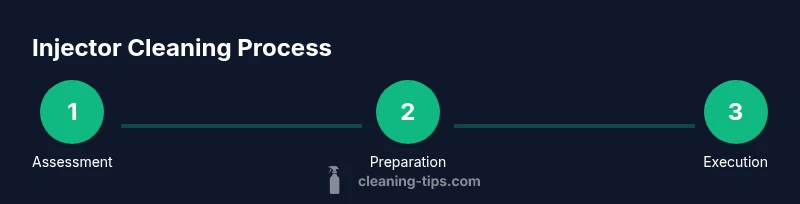
- 1
Assess symptoms and confirm need
Document the symptoms you’re experiencing (rough idle, hesitation, power loss) and review recent fuel quality and maintenance. Perform a basic diagnostic check if possible to rule out ignition or vacuum issues before assuming injector deposits are the cause.
Tip: Take note of when symptoms occur (idle, acceleration, at highway speed) to identify patterns. - 2
Choose a cleaning approach
Decide between an in-tank fuel additive and a more thorough professional cleaning method based on symptoms, vehicle type, and comfort with DIY tasks. Start with a supported cleaner and observe for changes over a short driving cycle.
Tip: If you have direct-injection engines, deposits can be harder to remove; plan for potential professional service if needed. - 3
Prepare the vehicle and materials
Park on level ground, engage the parking brake, and gather PPE and the cleaner. Ensure you have the correct fuel grade and a nearly empty tank to maximize cleaner circulation during the test run.
Tip: Keep a fire extinguisher nearby and work away from ignition sources while handling fuel products. - 4
Apply injector cleaner and run the engine
Add the cleaner to a nearly empty tank following the product’s instructions, then start the engine and let it idle as prescribed. Drive normally for 15–30 minutes to allow the cleaner to circulate and contact injector surfaces.
Tip: Avoid heavy loads during the test drive to reduce-stress on the system while cleaning occurs. - 5
Evaluate performance and plan next steps
After the drive, reassess idle quality, acceleration, and fuel economy. If improvement is noticeable, maintain a regular cleaning cycle per your maintenance plan. If symptoms persist, consider a professional cleaning or more thorough diagnostic.
Tip: If a check engine light remains on, stop and seek professional diagnostics to prevent potential damage. - 6
Consider professional cleaning if needed
When DIY cleaning fails to resolve symptoms or if you own a modern direct-injection engine, a professional cleaning may use ultrasonic methods to restore injector spray patterns precisely. This often yields better long-term reliability.
Tip: Ask for a spray-pattern test and flow-check after cleaning to verify injector performance.
Questions & Answers
When should I consider cleaning my fuel injectors?
Consider cleaning when you notice rough idling, hesitation, or reduced fuel economy. Start with an approved fuel injector cleaner additive and assess improvement before pursuing more invasive options.
Clean injectors when you notice rough running, poor acceleration, or lower mileage. Start with a safe cleaner and reassess.
Can I clean fuel injectors myself at home?
Yes, for many vehicles you can use a fuel injector cleaner additive in the tank and follow the product instructions. For direct-injection or persistent symptoms, consider a professional service.
DIY cleaning is possible with additives, but consult a professional if issues persist.
What are common signs that cleaning is needed?
Common signs include rough idle, misfires, reduced power, hesitation, and lower fuel economy. These symptoms warrant a diagnostic check to confirm injector deposits as the cause.
Rough idle and sluggish acceleration often point to dirty injectors.
Will cleaning injectors improve gas mileage?
Cleaning can improve mileage if deposits were limiting fuel efficiency. Results vary by vehicle and driving conditions; don’t expect a full fix in all cases.
Cleaner injectors can help mileage when deposits were the culprit, but results vary.
When is professional cleaning required?
If symptoms persist after DIY cleaning, if you have a high-mileage direct-injection engine, or if you’re unsure about handling fuel system work, a professional service is recommended.
If DIY cleaning doesn’t help, seek a professional service.
Are there risks to injector cleaning?
Risks include fuel leaks, improper chemical use, and potential damage if cleaners are not compatible with your engine. Always follow product guidelines and safety precautions.
There are risks if you don’t follow the product directions; safety first.
How often should I plan injector maintenance?
Frequency depends on fuel quality and driving habits. Use your owner's manual as a baseline and reassess when you notice symptoms or after any cleaning.
Follow the manual and adapt the schedule based on symptoms.
Watch Video
The Essentials
- Identify symptoms early to time injector cleaning.
- Choose DIY cleaner first, escalate if needed.
- Follow safety guidelines and manufacturer directions.
- Regular maintenance supports efficiency and longevity.