Which Cleaning Chemicals Not to Mix: A Practical Guide
Learn which cleaning chemicals should never be combined, why dangerous reactions occur, and safe, practical alternatives for a healthier home. This expert guide from Cleaning Tips covers common hazards, step-by-step safety practices, and how to read labels and store products properly.


According to Cleaning Tips, you will learn which cleaning chemicals not to mix and why dangerous reactions occur. This guide covers common combos to avoid, safe, rule-of-thumb practices, and a one-product-at-a-time approach for home cleaning. Gather PPE, read label warnings, and keep bleach, ammonia, acids, and solvents separate. You’ll finish with clear steps for safe cleaning.
Why mixing cleaning chemicals is risky and common myths
When you reach for a bottle to tackle a stubborn stain, it’s tempting to combine products to save time. However, understanding which cleaning chemicals not to mix is essential for a safe, effective clean. The risk is not limited to strong fumes; improper combinations can produce toxic gases, irritants, or even explosive reactions in enclosed spaces. The Cleaning Tips team has observed that many households underestimate these hazards, especially when attempting quick multitask cleaning on busy days. In this guide, we’ll unpack the science in plain language, highlight the most dangerous pairings, and offer practical, safe alternatives. Expect concrete rules, simple checklists, and a clear path to cleaner homes without compromising safety. By the end, you’ll know how to plan your cleaning routine so you never mix chemicals by mistake, and you’ll understand why “one product at a time” is the most reliable approach when you’re juggling multiple surfaces in a single space. Remember, prevention starts with awareness of which cleaning chemicals not to mix and a deliberate, stepwise workflow for everyday chores.
This article keeps the focus on practical steps homeowners can take, rather than on abstract chemistry. We’ll include real-world examples, common-sense safety measures, and simple ways to verify before you clean. The aim is to reduce accidents and keep living spaces healthy for everyone in the home. When you’re unsure, default to using a single product and plenty of ventilation, and consult product labels for any special warnings. This is how you translate knowledge about which cleaning chemicals not to mix into safer, more effective cleaning routines.
The chemistry behind common cleaners
Not all cleaning products react badly when mixed with others, but several combinations are explicitly dangerous. A classic example is bleach mixed with ammonia. Bleach (sodium hypochlorite) can form chloramines and, in some conditions, chlorine gas, which irritates the eyes, throat, and lungs. Another well-known hazard occurs when bleach is combined with acids, such as toilet cleaners containing hydrofluoric or hydrochloric acids. The reaction releases chlorine gas, a potent respiratory irritant. Ammonia mixed with acids can release irritating vapors and, in enclosed spaces, exacerbate breathing difficulties. Hydrogen peroxide can react with acids to form peracids that are unstable and irritating. These risks are why it’s essential to avoid mixing most household cleaners and to follow the label warnings on every product. In short, if you’re unsure, don’t mix.
A less obvious but equally important point is that some products are designed to work with specific chemistry. Two cleaners may appear to “help” each other, but their interaction can create hazardous byproducts. The key takeaway is simple: knowing which cleaning chemicals not to mix protects your health and minimizes chemical exposure in living spaces. The guidance above mirrors what Cleaning Tips Analysis, 2026 highlights about home cleaning safety and the importance of conservative product use when performing routine maintenance tasks.
Labeling and storage practices also influence safety. When cleaners sit next to each other or share storage, the risk of mixing increases—especially if a spill happens or packaging is damaged. Properly storing products in their original containers, with caps tight and away from children or pets, reduces accidental combinations. The next sections translate this chemistry into actionable steps you can apply today.
What not to mix: a practical checklist
There are several combinations you should never mix in a household setting. The most dangerous are bleach with ammonia, bleach with acids (like vinegar or certain toilet cleaners), and ammonia with bleach. Hydrogen peroxide should not be mixed with vinegar or any strong acids. Rubbing alcohol (isopropyl alcohol) should not be mixed with bleach due to potential toxic gases. In addition, never combine drain cleaners with other cleaners or with lemon juice or vinegar, as this can trigger hazardous reactions. These cautions illustrate which cleaning chemicals not to mix and provide a practical checklist you can reference before you start any cleaning task.
Always check product labels for cautionary statements. If labels advise not to mix or to use in a ventilated area, follow them to the letter. When in doubt, perform a test on a small, inconspicuous area using only one product at a time. That practice—using one product at a time—reduces the risk of unintended chemical reactions and offers a reliable path to a safe outcome. The emphasis on one product at a time aligns with Cleaning Tips Analysis, 2026 recommendations for reducing indoor chemical hazards.
Safe practices: how to clean safely without mixing
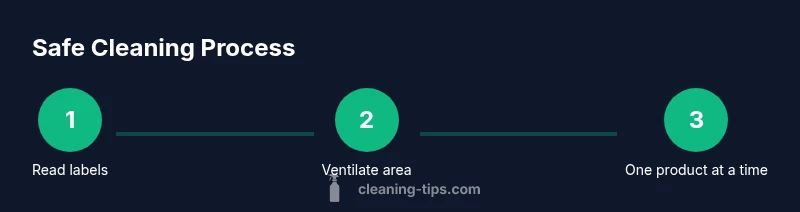
If you want to stay within safe boundaries while cleaning, adopt a one-product-at-a-time workflow. Start by selecting the strongest product appropriate for the surface, apply it, and wait for the recommended dwell time as per the label. Then rinse or wipe thoroughly with water before using another product. Adequate ventilation is critical: open windows, turn on exhaust fans, or use a portable fan to move air away from your cleaning zone. By keeping products separate, you preserve their intended chemistry and avoid creating hidden hazards. A practical routine is to designate a dedicated area for each product and never cross-contaminate bottles during use. In general, always avoid mixing any product with another unless the label explicitly confirms it is safe to do so. This principle—stick to one product, ensure ventilation, and follow timing guidelines—embodies the core guidance on which cleaning chemicals not to mix and how to maintain safer cleaning practices across your home.
Another safer approach is to substitute premixed “multi-cleaner” products that are designed to work alone, rather than combining separate cleaners. While these consolidated formulas can reduce the risk of reactive byproducts, you should still avoid applying two different cleaners on the same spot and always perform a small test in an inconspicuous area first. The goal is consistency, not clever shortcuts; theft of time is acceptable if it means lower risk when dealing with which cleaning chemicals not to mix.
Real-world scenarios and solutions
Consider a kitchen cleanup scenario where you’re tackling a greasy stove top. You might reach for a degreaser and then think to add a spray of vinegar to cut through mineral buildup. This is a classic example of trying to rush the process without considering which cleaning chemicals not to mix. In reality, use a single, purpose-built product for that task, or apply water to rinse between products. If you must use more than one product, perform the first step fully, rinse thoroughly with water, and allow surfaces to dry before applying a second product, ensuring you are not mixing products directly on the surface. In bathrooms, where limescale and soap scum pose challenges, avoid combining bleach with ammonia-based cleaners to prevent harmful gas formation. A safer strategy is to rinse surfaces with plain water between applications and use a single, appropriate cleaner for each task. These scenarios illustrate the practical application of the guideline on which cleaning chemicals not to mix and help you translate safety concepts into daily routines.
For households with pets or children, extra caution is warranted. Store products securely, remove residual liquids from spray bottles, and never leave chemical containers open or accessible. It’s common to see quick: “one more spray” moments that tempt mixing—resist this impulse. In the end, the simplest, most reliable solution is to follow the safety rules and avoid mixing any chemicals unless the product label explicitly states otherwise. This approach aligns with the cautious stance recommended by Cleaning Tips in promoting safer homes.
Reading labels, storage, and disposal
The most practical way to know which cleaning chemicals not to mix isn’t guesswork—it’s label literacy. Always read warnings and directions before combining products. If a label says “do not mix with other cleaners,” adhere strictly. Store products in their original containers with clear labeling, away from heat and direct sunlight, and out of reach of children and pets. Separating products by category (bleach, acids, ammonia-based cleaners, solvents) minimizes the chance of accidental mixing. When disposing of empty containers, rinse according to local guidelines and ensure lids are replaced before recycling or trash disposal. Understanding how to read labels and store products properly is a foundational skill in maintaining a safe home environment and a practical demonstration of which cleaning chemicals not to mix. Remember, even common household items like vinegar and hydrogen peroxide can be hazardous in certain combinations, so treat each product as potentially reactive unless the label confirms safety in mixing.
This section emphasizes safe practices and provides a clear discipline for ongoing cleaning routines—play it safe by designing a one-product-at-a-time workflow, keeping items organized, and following disposal guidelines. Cleaning Tips Analysis, 2026 supports these practices as core to reducing risk when dealing with household cleaners.
Quick decision guide: do I mix or not?
To avoid guessing about which cleaning chemicals not to mix, use a simple decision framework. First, read the label for each product; if it says not to mix, do not combine it with anything else. Second, if you’re unsure, do not mix—use one product at a time and rinse surfaces in between applications. Third, ensure proper ventilation whenever you are cleaning with chemicals; this reduces exposure to any byproducts that may form. Fourth, when dealing with multiple surfaces, assign a dedicated product for each surface type and avoid cross-use on the same area. Finally, store products safely and never transfer cleaners to unmarked containers. This decision guide provides a quick, repeatable method for avoiding hazardous mixes and supports the core message of which cleaning chemicals not to mix and how to maintain a healthy home environment.
Conclusion: practical habits for safer cleaning
In summary, the critical habit is discipline: never mix cleaners unless a product label explicitly says it’s safe to do so. Develop a routine that centers on one product at a time, thorough ventilation, and proper storage. By training yourself to follow these practices, you minimize risk and maximize effectiveness across all your cleaning tasks. The consistent message across every section is clear: to avoid dangerous reactions and ensure safer cleaning, you must understand which cleaning chemicals not to mix and implement safe, simple workflows that you can rely on every day. The Cleaning Tips team reinforces this approach as the path to a healthier, safer home.
Tools & Materials
- Nitrile gloves(Size medium or large; chemical-resistant)
- Safety goggles(SA-rated or ANSI-rated for chemical splash)
- Ventilation(Open windows or use exhaust fan)
- Non-slip towels or mats(Place under cleaning area)
- Measuring spoons/cups(Use for precise dosing if needed)
- Spray bottles (labeled)(Keep each product in its original container)
- Waste bag or container(For disposal of disposable wipes or rags)
- Water for rinsing(Accessible, cool running water)
- Face mask (optional)(For poorly ventilated spaces or sensitive individuals)
Steps
Estimated time: 45-60 minutes
- 1
Read product labels before use
Inspect each cleaner’s label for warnings about mixing with other products. Confirm there are no explicit instructions about compatibility with other cleaners. If you are unsure, do not mix and instead use separate applications with thorough rinsing between steps.
Tip: Always keep product labels visible in your cleaning area to remind you of any mixing prohibitions. - 2
Ventilate the cleaning area
Open windows or run an exhaust fan before you begin. Adequate airflow reduces inhalation exposure to any fumes from cleaners, especially when you’re testing a new product on a surface.
Tip: If you smell strong fumes, stop immediately and increase ventilation or step outside briefly. - 3
Apply one product at a time
Choose the appropriate cleaner for the task and apply it directly to the surface. Do not mix with other cleaners on the same surface. Wait the recommended dwell time, then rinse thoroughly with water before applying another product if needed.
Tip: Label the surface if you re-enter the area later to remind yourself not to mix products there. - 4
Rinse and dry between applications
After using a product, rinse the area with clean water to remove residues. Dry the surface before applying a second product if necessary to avoid unintended reactions.
Tip: Use clean cloths or towels for rinsing to prevent cross-contamination. - 5
Store products securely
Return cleaners to their original containers, cap tightly, and store in a cool, dry place away from children and pets. Do not transfer cleaners to unlabeled containers or mix storage areas.
Tip: Keep a simple inventory or labeling system to prevent accidental mixing later. - 6
Dispose of waste properly
Follow local guidelines for disposing of used wipes, rags, and empty containers. Do not pour cleaners down the drain when they are mixed with other substances and always avoid disposal of mixed residues.
Tip: Rinse and wipe containers before disposal to reduce the chance of residues coming into contact with other cleaners.
Questions & Answers
What happens if you mix bleach and ammonia?
Bleach and ammonia produce chloramines and can release chlorine gas, which irritates the eyes, nose, and lungs. This combination is dangerous and should be avoided entirely.
Bleach plus ammonia creates toxic gases called chloramines, which can irritate your lungs. Do not mix these products.
Is it safe to mix bleach with vinegar?
No. Mixing bleach with vinegar releases chlorine gas, a hazardous respiratory irritant. Always keep these two products separate.
Bleach and vinegar together release chlorine gas. Do not mix them.
Can hydrogen peroxide be mixed with vinegar?
No. Mixing hydrogen peroxide with vinegar can form peracetic acid, which is corrosive and irritating. Use them separately with proper rinsing.
Hydrogen peroxide and vinegar can form a corrosive chemical. Use them apart.
Are there any safe combinations for cleaning grout or tiles?
Generally, use a single product per cleaning pass and avoid mixing with other cleaners on the same surface. For grout, a dedicated tile cleaner is best; rinse well between passes.
Stick to one cleaner at a time for grout and rinse between applications.
What should I do if I accidentally mix cleaners?
Stop, ventilate, and move to fresh air. If you experience irritation, rinse skin or eyes with clean water and seek medical advice if symptoms persist. Do not re-enter the area until it’s safe.
Ventilate the area, rinse exposed areas, and seek help if irritation continues.
How can I clean safely without learning every chemical’s interactions?
Follow the ‘one product at a time’ rule, read all labels, and store products separately. Use plain water between applications and ensure good ventilation.
Use one product at a time, read labels, and ventilate well.
Watch Video
The Essentials
- Never mix bleach with ammonia or acids.
- Use one cleaner at a time, with ventilation and rinsing between applications.
- Read labels and store products separately to prevent accidental mixing.
- Ventilate well and test on hidden areas before broader use.
- If in doubt, default to non-mixing and seek guidance from product labels.