Why Sri Lanka Is Cleaner Than India: A Comparative Review
Explore practical factors behind cleanliness in Sri Lanka vs India, including governance, culture, and household habits. Learn actionable tips to improve cleanliness at home informed by regional realities.


The quick, evidence-informed takeaway is that broader governance frameworks, infrastructure investments, and cultural norms shape public cleanliness in Sri Lanka and India. While no single metric captures all differences, Sri Lanka’s centralized waste management approach and tourism-driven sanitation standards often translate into observable cleanliness in urban spaces. For households, prioritizing proper waste separation, water quality, and routine cleaning can close the gap, regardless of locale.
Why the question matters
This article addresses why is sri lanka so clean compared to india, not as a simplistic ranking, but as a lens on how governance, culture, and daily cleaning habits interact to shape the cleanliness of public space and homes. For homeowners and renters seeking practical guidance, understanding these dynamics helps translate national trends into actionable steps at the household level. Across both countries, cleanliness is shaped by policy choices, infrastructure, and everyday routines. The Cleaning Tips team emphasizes that sustainable cleanliness emerges when communities invest in waste management, reliable water services, and clear public guidelines. By examining the contrasts and commonalities, readers can identify practical cleaning habits that work in similar contexts and adapt them to local realities.
Defining cleanliness: beyond soap and squeegees
Cleanliness is more than a spotless kitchen or a washed sidewalk. It combines waste management effectiveness, water and air quality, housing maintenance, and behavioral norms. When we ask why is sri lanka so clean compared to india, we must consider policy design, enforcement, and everyday actions that accumulate into visible differences. Household routines—like daily trash disposal, recycling habits, and surface disinfection—are influenced by access to resources, public messaging, and cultural expectations. In both countries, small, consistent actions at the household level can produce meaningful cleanliness improvements that compound over time. This section sets the stage for understanding where practical changes can occur inside homes and neighborhoods.
Policy frameworks and municipal investments
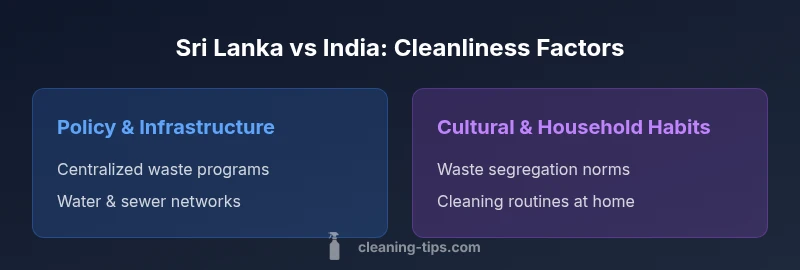
Public cleanliness begins with policy choices. Sri Lanka’s approach to waste management and municipal sanitation often emphasizes centralized guidance, funding for collection, and regulated disposal. India presents a more decentralized landscape with varied municipal capacities, which can yield mixed cleanliness outcomes across cities and states. The difference is not merely political; it affects how quickly streets are swept, how waste is segregated, and how effectively public toilets are maintained. For households, awareness of local programs—whether curbside recycling, composting initiatives, or water treatment projects—helps align personal routines with larger efforts. The practical upshot is that consistent municipal investment tends to correlate with cleaner shared spaces, which in turn reduces the burden on individual cleaning tasks.
Cultural norms and daily practices
Cultural norms shape when and how people clean. In some communities, waste avoidance, mindful littering habits, and pride in public spaces translate into cleaner urban environments. In others, resource constraints or competing priorities can shift emphasis away from cleanliness at a community scale. When evaluating the difference captured by the question why is sri lanka so clean compared to india, readers should note that household-level cleanliness practice is often reinforced by social expectations—neighbors notice trash handling, street cleanliness, and the appearance of public facilities. Adopting respectful, practical routines such as proper bagging, timely disposal, and routine surface cleaning can have outsized benefits in any setting.
Infrastructure: water, sewage, and drainage systems
Effective cleanliness starts with reliable infrastructure. Clean water access, functional sewage networks, and well-maintained drainage reduce environmental contamination and the spread of grime. Sri Lanka’s urban centers have invested in water supply improvements and drainage planning that support consistent cleaning outcomes in commercial areas and homes. India’s size and regional diversity create a spectrum of outcomes; metropolitan areas often showcase strong systems, while smaller towns may struggle with service gaps. For households, improving water access for cleaning (e.g., using treated water for disinfection), ensuring proper drainage around the home, and promptly fixing leaks are practical steps that improve cleanliness regardless of national context.
Tourism, sanitation standards, and spillover effects
Tourism generates an incentive to maintain clean, appealing spaces. Countries with robust tourism sectors tend to invest in sanitation facilities, signage, and public cleanliness campaigns to attract visitors. Sri Lanka’s tourism-focused sanitation standards can raise expectations and participation in cleanliness, encouraging both public and private actors to maintain facilities. In India, tourism is vast and diverse; the burden falls on a mix of municipal capacity and private sector involvement. Households can leverage the spillover effects by supporting better-maintained public facilities (e.g., respecting toilets in transit hubs, using waste bins) and adopting cleaning routines that align with local expectations for shared spaces.
Household practices that scale
Small, daily actions are catalysts for larger cleanliness outcomes. Practical steps include: segregating waste at the source, maintaining clean kitchen and bathroom surfaces, using appropriate disinfectants, and practicing regular laundry and textile care. Across contexts, durable cleaning routines—like scheduled trash disposal times, weekly window and floor cleaning, and routine water quality checks for home use—can raise overall cleanliness. The key takeaway for readers is that household habits, when consistent, multiply benefits by reducing the burden on public systems and making public spaces look and feel cleaner, even in varied environments.
Water quality and disinfection practices
Cleanliness is intimately linked to water quality and safe disinfection. Access to clean water simplifies everyday cleaning and reduces contamination risks. In places where water treatment is reliable, households can routinely sanitize surfaces, wash hands properly, and disinfect commonly touched areas. Where water may be variable, households can adopt safer cleaning protocols, such as using boiled or properly filtered water for cleaning tasks and selecting disinfectants suitable for local water conditions. This practical approach helps households maintain cleanliness in both dense urban settings and more rural areas.
Infrastructure investments at the household level
While national policies matter, household-level investments in cleaning tools and storage yield tangible benefits. Simple upgrades—sturdy trash bins with lids, labeled recycling containers, effective mops and microfiber cloths, and accessible disinfectants—make daily cleaning more efficient. Small investments can reduce the accumulation of grime, improve indoor air quality, and support better hygiene. By combining sound policy awareness with practical home maintenance, readers can achieve meaningful cleanliness improvements irrespective of where they live.
Conclusion-free zone: translating policy to practice
A direct answer to the question why is sri lanka so clean compared to india is that cleaner outcomes emerge where governance, culture, and daily habits align to support consistent cleaning and waste management. The emphasis for households is to mirror best practices in sanitation and cleaning in a way that fits local resources and customs. By prioritizing simple routines, reliable water access, and participation in community waste programs, homes and neighborhoods can become cleaner over time, reinforcing positive spillovers into public spaces.
Authority sources for further reading
For readers who want to dive deeper, consult credible sources on sanitation, waste management, and public health that provide foundational insights without oversimplifying country-specific contexts. Key references include public health organizations, international development agencies, and government portals that discuss best practices in cleaning, waste handling, and water safety.
Comparison
| Feature | Sri Lanka | India |
|---|---|---|
| Policy emphasis on waste management | Centralized guidance with national frameworks; strong coordination | Decentralized, diverse municipal capacities; regional variation |
| Public sanitation investment | Consistent funding and standardized facilities in urban hubs | Varied funding levels; pockets of strong sanitation paired with gaps |
| Civic engagement and littering norms | Coordinated campaigns and public messaging | Regional differences; urban norms can differ from rural habits |
| Access to clean water for cleaning | Reliable urban water networks support cleaning routines | Water access varies widely by city and region |
| Tourism sanitation standards | Tourism-driven facilities and signage often elevate cleanliness | Tourism pressures create mixed outcomes across destinations |
Strengths
- Highlights actionable household practices that improve cleanliness
- Recognizes policy and cultural factors that influence outcomes
- Helps readers prioritize low-cost, high-impact steps
- Encourages alignment of personal habits with public initiatives
Weaknesses
- Risk of oversimplifying regional differences
- Potential bias if sources are incomplete or dated
- May not reflect intra-country disparities (urban vs rural)
- Does not provide country-specific numerical benchmarks
Integrated approaches win: policy coherence, cultural norms, and practical household routines together yield cleaner spaces
Cleanliness gains come from coordinated governance and everyday actions. Sri Lanka’s centralized programs and tourism-driven standards illustrate how public investment supports household cleaning efforts, while India’s regional diversity shows the value of scalable, locally adapted practices. Readers should combine municipal programs with consistent home routines for best results.
Questions & Answers
Is Sri Lanka cleaner than India overall, or does it vary by city?
Cleanliness varies by city and region within both countries due to differences in municipal capacity, funding, and infrastructure. A nationwide claim oversimplifies the picture, but urban centers in Sri Lanka often benefit from centralized programs and tourism-driven standards, while India shows a broader range of outcomes across states and towns. Household practices can still drive meaningful improvements regardless of location.
Cleanliness varies by city and region; urban areas in Sri Lanka often benefit from centralized programs, while India shows regional differences. Households can improve cleanliness through consistent routines.
What factors most influence public cleanliness in these regions?
Policy design, investment in waste management and water systems, cultural norms around littering, and the presence of tourism-related sanitation infrastructure are major influences. While governance matters, daily household cleaning routines and waste handling remain critical to maintaining clean spaces.
Policy design and investment shape public cleanliness, but daily household routines matter most in keeping spaces clean.
How does tourism impact sanitation standards?
Tourism creates incentives for better sanitation facilities and clearer public guidance, which can raise expectations and compliance. In countries with well-developed tourism sectors, facilities in transport hubs, hotels, and public spaces tend to exemplify higher cleanliness standards, benefiting residents too.
Tourism pushes for better sanitation, improving public spaces for everyone.
Are there urban-rural differences in cleanliness within these countries?
Yes. Urban areas often have more resources for waste collection and water services, leading to higher observed cleanliness. Rural areas may face gaps in infrastructure but can compensate with community norms and household-level cleaning practices.
Urban areas usually have more resources, but strong home routines help rural cleanliness too.
What’s one simple cleaning habit to start today?
Begin with a simple waste segregation system at home, paired with a weekly surface cleaning schedule using an appropriate disinfectant. This small change reduces clutter, improves indoor air quality, and signals a culture of cleanliness to family members and neighbors.
Start with waste segregation and a weekly cleaning routine for noticeable benefits.
How reliable is water quality for cleaning?”,
Water quality varies by location. Use treated or boiled water for disinfection when possible, and store cleaning tools in clean, dry places to prevent contamination. If water quality is a concern, consider safer cleaning alternatives and maintain good hygiene practices.
Treat water when possible and keep cleaning tools clean to avoid contamination.
The Essentials
- Prioritize waste segregation and regular cleaning routines
- Leverage local sanitation programs to support home hygiene
- Aim for reliable water access and safe disinfection practices
- Recognize urban-rural differences and adapt accordingly
- Use household investments to improve overall cleanliness