Clean Whey Protein Powder: How to Choose Wisely
A comprehensive, actionable guide to selecting clean whey protein powder—from understanding labels and sourcing to third-party testing and practical usage—so you can fuel workouts and daily nutrition with confidence.


Learn how to identify clean whey protein powder, compare common labels, and choose a product with minimal additives. This quick guide covers building blocks, protein sourcing, processing methods, and common red flags to avoid. By the end, you'll select a whey powder that aligns with your health goals and diet.
What clean whey protein powder really means
According to Cleaning Tips, the term clean whey protein powder describes a product made with minimal, recognizable ingredients and without unnecessary additives. In practice, it means a whey product that provides protein with as few fillers, artificial flavors, or sweeteners as possible. The goal is to support a balanced diet without overloading on processed components. When you search for clean whey protein powder, you should pay attention to the ingredient list, the sourcing, and any certifications the brand earns. The keyword itself signals a focus on quality over hype, and it should appear alongside clear labeling and transparent processing. By prioritizing clean labels and straightforward formulation, you can trust that the powder supports your fitness or nutrition plan rather than complicating it. The results you want come from consistency: high-quality protein, simple ingredients, and honest communication from brands.
Reading ingredient labels: what to look for
A clean whey protein powder starts with a clean ingredient list. Look for a short, straightforward set of components, preferably with whey protein as the primary ingredient and minimal additives. Avoid powders that rely on filler ingredients, artificial sweeteners, or vague “natural flavors” that can mask synthetic components. Check for soy, gluten, or dairy derivatives you wish to avoid, and consider whether the product uses third-party certifications. Transparency is a hallmark of a trustworthy label. When in doubt, compare labels side by side and note any differences in sweetness, texture enhancers, or thickening agents. Remember: the cleaner the label, the easier it is to align with a healthy diet. This is a core principle in choosing clean whey protein powder.
Sourcing and processing: whey concentrate vs isolate, grass-fed, and more
Whey protein powder comes in several forms, with concentrate and isolate being the most common. Concentrates typically contain more carbohydrates and fats, while isolates are more filtered to increase protein percentage per serving. Hydrolyzed or pre-digested forms exist for quicker absorption. Beyond processing, many buyers care about the milk source. Grass-fed or pasture-raised milk often aligns with broader sustainability goals, though it’s not a guaranteed indicator of “cleanliness.” Consider how the powder is made, including filtration methods and how much processing is involved. A cleaner product often uses modern filtration to remove impurities without stripping essential nutrients. Reading the product’s description of processing can help you weigh convenience against purity in the final selection.
Common red flags on labels
Certain phrases on labels can signal potential distractions from real ingredient quality. Beware powders that use vague terms like “natural flavors,” “maltodextrin,” or “caramel color” without specifics. Beware also of excessive sweeteners, sugar alcohols, or proprietary blends that hide the exact amount of each component. If a brand touts “superfood blends” but includes cheap fillers, that’s a red flag. Also, watch for inconsistent serving sizes or missing allergen statements. A clean label should provide a clear ingredient list, a defined serving size, and easy-to-find allergen information. These indicators help you avoid over-processed products that don’t align with a clean whey protein powder standard.
Certifications and third-party testing to trust
Third-party testing and certifications are strong signals of label integrity. Look for certifications from independent bodies that test macronutrient accuracy and the absence/presence of contaminants. A product with transparent batch testing results or a link to a certificate of analysis (COA) demonstrates commitment to quality. In our Cleaning Tips analysis, powders with clear third-party verification tend to publish results and provide easy access to COAs. While certifications are not a guarantee of perfection, they offer a meaningful level of assurance beyond brand claims. Always verify the date on COAs to ensure current testing aligns with your purchase date.
How to compare brands for transparency
To compare brands effectively, create a simple scoring framework. Start with the ingredient list: is it short, clear, and free of vague terms? Then check for third-party testing and accessible COAs. Compare protein content per serving against the declared protein source and consider the presence of any fillers or artificial sweeteners. Price and serving size should be weighed against quality indicators rather than treated as the sole decision factor. Read the brand’s about-us page for sourcing and manufacturing details. A transparent brand will speak plainly about where milk comes from, how the whey is processed, and why certain ingredients were chosen. This approach makes the choice easier and helps you select a powder that truly aligns with clean whey protein powder standards.
Digestibility and protein quality explained
Digestibility and quality are essential when evaluating whey protein powder. Quality is often linked to how completely the amino acids are represented and how well the body can absorb them. While exact numbers vary, many reputable powders aim for complete amino acid profiles comparable to whole-food sources. Look for terms like “complete protein” and references to accepted protein quality metrics, such as PDCAAS or DIAAS concepts. A product that emphasizes minimal processing and clean protein sources will generally support better digestion for most people. If you notice bloating or intolerance after trying a powder, consider trying a different isolate or a product with fermented or hydrolyzed proteins. Your body’s response is a critical signal in determining whether a particular clean whey protein powder is the right fit for you.
Practical use: mixing, timing, and serving
Using clean whey protein powder effectively involves timing around workouts and meals. For many, a post-workout shake provides convenient protein, while others integrate it into smoothies or breakfasts for steady daily intake. Start with the recommended serving size on the label, and adjust based on your protein goals, body weight, and activity level. Pair the powder with a mix of fiber, healthy fats, and carbohydrates to optimize absorption and satiety. Keep track of how you feel after different brands and flavors to identify what works best for your routine. Hydration matters—drink water with shakes to support digestion and overall hydration.
Storage, shelf life, and safety tips
Store whey protein powder in a cool, dry place away from direct sunlight. Keep the container tightly closed to prevent moisture and clumping. Avoid contamination by using clean scoops and pouring only as much as you will use in a short period. If you notice changes in aroma, color, or texture, discard the product and check the COA for batch-specific safety data. Regularly inspecting your pantry and rotating stock helps ensure you’re always using fresh, high-quality protein powder. Proper storage protects flavor, texture, and nutritional value over time.
Dairy sensitivity and lactose considerations
If you have dairy sensitivity or lactose intolerance, choose whey protein isolate rather than concentrate, as isolates typically have lower lactose content. However, even isolates may contain trace amounts of lactose or dairy-derived enzymes. If you’re highly sensitive, consider non-dairy alternatives or tests in small amounts before committing to a larger purchase. It’s also worth reviewing the brand’s manufacturing practices to assess cross-contamination risk. Reading COAs and allergen statements is essential when managing dairy-related concerns while still pursuing a clean whey protein powder.
Budget-friendly shopping strategies
Budget-conscious buyers can still pursue clean whey protein powder by focusing on value without sacrificing quality. Compare price per gram of protein across brands and consider larger containers if the per-serving cost is lower and the product maintains its quality. Watch for seasonal discounts, subscribe-and-save options, or sample sizes that let you test multiple powders before buying a full container. Remember that the cheapest option isn’t always the cleanest; balance cost with label clarity, third-party verification, and ingredient simplicity to maximize value without compromising your standards.
Quick-start shopping checklist
- Short, transparent ingredient list
- Clear protein source (whey isolate/concentrate) and minimal additives
- Access to COA or third-party testing
- Detailed allergen and sourcing information
- Reasonable serving size and protein per serving that meets your goals
The Cleaning Tips verdict: choosing clean whey protein powder for your health
The Cleaning Tips team recommends prioritizing transparency, minimal ingredients, and third-party verification when selecting any whey powder. By focusing on clean labels and verifiable testing, you can confidently fuel workouts and daily nutrition without compromising your health goals. If you’re unsure where to start, re-check the COA, compare a few top options, and favor brands that communicate clearly about sourcing and processing. Your long-term success with whey protein powder comes from consistent, informed choices that align with your values and dietary needs.
Tools & Materials
- Nutrition labels from candidate powders(Have 3-5 products to compare side-by-side)
- Measuring scoop(Standardized scoop (provided by brand) for consistency)
- Shaker bottle or blender(For testing texture and mixability)
- Glass of water or milk alternative(With the shake for immediate evaluation)
- Notebook or app for notes(Record labels, ingredients, and reactions)
Steps
Estimated time: 60-120 minutes
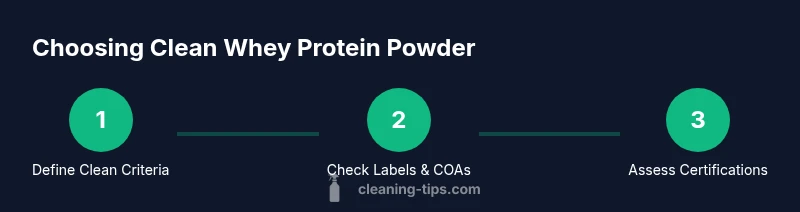
- 1
Define clean criteria
Decide what “clean” means for you (minimal ingredients, no artificial additives, transparent sourcing). Write down your must-haves and nice-to-haves to guide your search.
Tip: Document your non-negotiables to avoid switching goals mid-search. - 2
Gather candidate products
Choose 3-6 whey protein powders that appear to meet your criteria, ideally isolates or blends with simple ingredients and clear COAs.
Tip: Prioritize products with explicit grades for protein quality. - 3
Read labels and COAs
Review ingredient lists and COAs. Note any artificial sweeteners, fillers, or vague terms like ‘natural flavors’. Compare protein percentages and serving sizes.
Tip: If COAs aren’t readily accessible, deprioritize the brand. - 4
Assess sourcing and processing
Check for milk source details, filtration method, and processing level (concentrate vs isolate). Consider sustainability and safety claims.
Tip: Green-lit sources and modern filtration often accompany clearer labels. - 5
Check certifications
See if the product has third-party testing or certifications and verify the date of last testing.
Tip: A recent COA published by a reputable lab adds credibility. - 6
Test digestibility and taste
Take notes on mixability, texture, and post-ingestive comfort over a 1-2 week trial period.
Tip: If you experience bloating, try a different isolate or brand with fermented processing.
Questions & Answers
What defines a 'clean' whey protein powder?
A clean whey powder features a short ingredient list, minimal additives, transparent sourcing, and independent testing. It avoids artificial sweeteners and vague terms like ‘natural flavors’ without detail.
A clean whey powder uses simple ingredients, clear sourcing, and third-party testing, with few or no artificial additives.
Is whey protein isolate cleaner than concentrate?
Isolate generally has less lactose and fewer fillers than concentrate, but not all isolates are automatically clean. Check the COA and ingredients to confirm. The clean standard depends on processing and labeling, not the form alone.
Isolate can be cleaner, but always check the COA and ingredients rather than assuming based on the form.
Are artificial sweeteners acceptable in clean whey powders?
Some clean powders use natural sweeteners like stevia or monk fruit, while others avoid sweeteners altogether. Avoid powders that rely heavily on artificial sweeteners or ambiguous terms.
Some clean powders use natural sweeteners; avoid heavy reliance on artificial ones.
Can I use whey protein powder if I’m lactose intolerant?
If you’re lactose intolerant, choose whey protein isolate or try non-dairy alternatives. Always verify lactose content on the COA and allergen statements.
If you’re lactose intolerant, choose an isolate or a non-dairy option and check the labels carefully.
How do I know if a brand is trustworthy?
Look for transparent labeling, third-party testing, accessible COAs, and a clear brand story about sourcing and manufacturing. Reputable brands share verification details publicly.
Trustworthy brands publish COAs and explain their sourcing and processing clearly.
What should I do if I don’t digest a powder well?
If you experience discomfort, pause use and try a different brand or formulation (isolate or fermented options). Keep notes on symptoms to help identify triggers.
If you don’t digest it well, switch brands or try a different formulation and track symptoms.
Watch Video
The Essentials
- Learn to read labels for transparency
- Prioritize third-party testing and COAs
- Choose whey forms with minimal processing
- Test tolerance and digestion with 1-2 week trials
- Store properly to maintain quality