Drain Cleaning with Baking Soda: A Safe DIY Guide
Learn how to safely use drain clean baking soda to clear slow drains. This guide covers safe techniques, step-by-step actions, and maintenance tips for a healthier home.


You can clear a slow drain with a simple, safe approach using drain clean baking soda. The method relies on baking soda mixed with hot water (and a brief follow-up flush) to loosen minor clogs and neutralize odors. For best results, avoid chemical rivals and use gentle agitation. This guide covers prep, steps, safety, and maintenance.
Drain Clean Baking Soda Explained
According to Cleaning Tips, many homeowners choose a simple, safe approach to addressing slow drains using common kitchen staples like drain clean baking soda. This method relies on the gentle abrasive action of baking soda combined with hot water to help loosen organic buildup, hair, and soap scum in situ. It's not a miracle cure for severe clogs or hard mineral deposits, but for light to moderate blockages, it can reduce odors and restore flow without harsh chemicals. In this guide, we explore how the mixture works, how to use it properly, and how to maintain drains to prevent future problems. We'll cover the basics, safety considerations, and practical steps you can take right away to keep drains moving smoothly.
How Baking Soda Interacts with Drains
Baking soda is mildly abrasive and can help scrub away thin layers of residue that gradually slow a drain. When hot water is used after pouring baking soda, it helps to dissolve the solid particles and push them through the pipe with gentle pressure. The fizz you sometimes notice when a small amount of vinegar is added is more about a visual demonstration than a powerful cleaning action. For most light clogs, this approach reduces odor and improves flow without introducing harsh chemical cleaners. Remember: baking soda alone won’t dissolve thick grease or mineral buildups, so manage expectations and combine it with thorough flushing.
Safety and Limitations of This Method
This technique is generally safe for most home plumbing, including PVC pipes and metal drains. Do not mix baking soda with commercial chemical drain cleaners in the same treatment, as chemical interactions can create hazardous fumes or damage. Avoid boiling water if you have older PVC pipes or brittle seals; use near-boiling or hot tap water instead. Keep baking soda away from children and pets, and wear gloves if you have sensitive skin. Understanding these limits helps prevent false expectations and ensures you choose the right method for tougher clogs that might require professional help.
What You Need Before You Start
Before you begin, gather essentials: baking soda, a kettle or pot for hot water, a measuring cup, a sink plunger (optional but helpful), and a towel or rag to manage spills. Using a simple, predictable routine reduces the risk of splashing and makes the process smoother. If you prefer, keep a bucket nearby to catch any overflow and avoid mess. This preparation ensures you’re ready to act quickly when you see a slow drain rather than waiting until the problem worsens.
Common Myths Debunked About Drain Cleaning
A popular belief is that baking soda alone can instantly clear any clog. In reality, the effect is most noticeable on minor organic buildup and odors. Another myth is that you should always panic and use extreme measures for clogs; most slow drains respond to patience and a careful flush with hot water. Finally, some people think you must perform a vinegar-and-baking-soda reaction for it to work; while fizzing is satisfying to watch, it isn’t the decisive cleaning action. Understanding these nuances helps you choose the safest, most effective approach for your situation.
Maintenance Tips for Healthier Drains
To prevent future clogs, establish a simple routine: monthly or bi-monthly flush with hot water, avoid pouring grease or large food particles down the drain, and use a drain screen to catch hair and debris. Regular maintenance reduces buildup and keeps water flowing smoothly. If you notice recurring slow drainage, consider a more robust approach or consult a plumber. Small consistent steps are usually enough to keep DIY methods effective without overreliance on chemical cleaners.
Quick Troubleshooting Guide
If your drain remains slow after a baking-soda flush, try a plunger to create suction and dislodge the blockage. For stubborn clogs, a drain snake can reach deeper into the pipe. If you still can’t restore flow, stop applying cleaners and schedule a professional diagnostic to avoid pipe damage or leaks. Always monitor for unusual smells, gurgling, or standing water, and seek help if these signs appear.
Tools & Materials
- baking soda (sodium bicarbonate)(granulated, about 1 cup per treatment)
- hot water(about 2-3 cups; not boiling)
- kettle or pot for boiling water(optional if you want extra flush)
- white vinegar (optional)(for an optional fizz; not required)
- plunger (sink plunger)(use to agitate if needed)
- gloves(protect skin during handling)
- towel or splash mat(to catch spills)
Steps
Estimated time: 20-25 minutes
- 1
Clear the area and prep materials
Remove any standing water from the sink to improve contact between baking soda and the clog. Gather all tools and place a towel to catch spills. This minimizes mess and ensures the next steps go smoothly.
Tip: Use gloves if you have sensitive skin; this keeps hands dry and comfortable. - 2
Pour baking soda into the drain
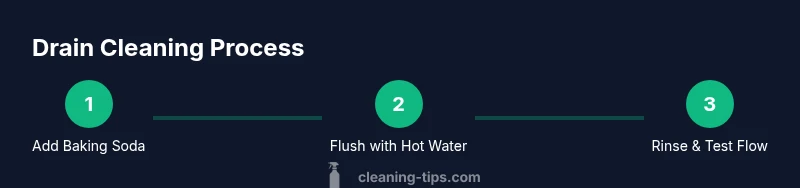
Pour about 1 cup of baking soda directly into the drain to begin the cleaning action. This step targets organic buildup and helps neutralize odors. If your drain is wide, you can sprinkle lightly around the edges to maximize contact.
Tip: If you have a slow pour, use a funnel or measuring cup for precision. - 3
Add hot water to activate the effect
Heat water to just below boiling and pour 2–3 cups into the drain. The hot water helps dissolve and push the baking soda through the trap, enhancing movement without harsh chemicals.
Tip: Avoid boiling water if your pipes are older or PVC seals show wear. - 4
Wait for the reaction and flush again
Let the mixture sit for 10–20 minutes while you attend to other small tasks. Rinse with another round of hot water to flush the loosened debris down the pipe.
Tip: If you prefer, add a splash of vinegar after the baking soda settles for an extra fizz, then flush with more hot water. - 5
If needed, use mechanical aid
If the drain remains slow, use a plunger to create suction and move the clog. For stubborn blockages, a drain snake can reach deeper into the pipe to clear the obstruction.
Tip: Do not force the snake aggressively; gentle, steady pressure is safer for pipes. - 6
Test the drain and clean up
Run hot water for 1–2 minutes to ensure the flow is restored. Wipe surfaces, wipe up any spills, and return items to normal use. If flow remains poor, consider professional help.
Tip: Keep a log of recurring issues to discuss with a plumber if needed.
Questions & Answers
Is baking soda effective for all types of drains?
Baking soda can help with minor organic clogs in sinks and showers, but it won’t fix serious blockages or mineral buildup. For tough clogs, consider mechanical methods or professional help.
Baking soda works best for light clogs in sinks and showers, not for major blockages. Consider other options if the clog is stubborn.
Can I use boiling water after applying baking soda?
Yes, hot water helps flush the debris. Avoid boiling water if your plumbing is old or PVC seals may warp. Use near-boiling water as a safer alternative.
Hot water flush helps. If your pipes are old, stick with near-boiling temperature instead of a full boil.
Should I mix baking soda with vinegar for drain cleaning?
Adding vinegar creates fizz but doesn’t significantly improve cleaning power for most household clogs. It’s optional and mainly for demonstration rather than efficacy.
Vinegar fizz is mainly cosmetic here; it doesn’t dramatically boost cleaning power for most clogs.
Is this method safe for PVC pipes?
Yes, using baking soda with hot water is generally safe for PVC pipes. Avoid boiling water if you’re unsure about pipe integrity or if seals appear worn.
PVC pipes are usually fine, but don’t use full boiling water if your pipes show signs of wear.
How often can I repeat the treatment?
You can repeat every few weeks if needed, but rely on it as a preventative measure rather than a daily fix. If clogs persist, seek professional help.
Do this every few weeks if needed, not daily. Persistent clogs mean call a plumber.
What should I do if the drain remains clogged after treatment?
If the drain stays slow, use a plunger or drain snake, and avoid forcing cleaning agents. If the blockage remains, contact a plumber for a diagnosis.
If it’s still slow, try a plunger or snake, and call a pro if it won’t clear.
Watch Video
The Essentials
- Start with baking soda and hot water for light clogs
- Avoid mixing with chemical cleaners
- Flush thoroughly to move debris through the pipe
- Regular maintenance reduces future clogs