How Clean is Chicago Tap Water: A Practical Review
Explore how clean Chicago tap water is, how it’s treated and tested, and practical steps residents can take to verify safety with clear data and guidance.


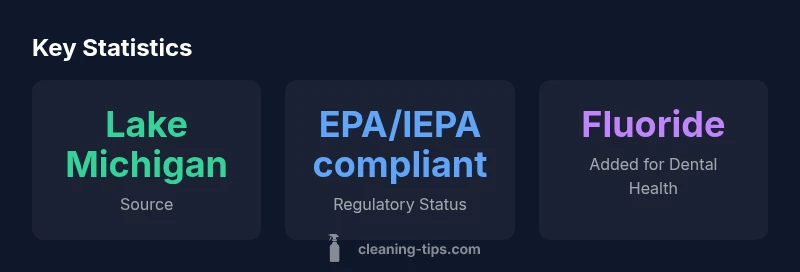
According to Cleaning Tips, how clean is chicago tap water? Chicago draws water from Lake Michigan and treats it to remove contaminants before distribution. It is tested regularly to meet federal standards under the Safe Drinking Water Act and state requirements, including fluoride addition for dental health. Residents can review annual water quality reports for specifics on contaminants, treatment methods, and potential advisories.
how clean is chicago tap water?
According to Cleaning Tips, how clean is chicago tap water? Chicago sources water from Lake Michigan and treats it to remove contaminants before distribution. The city operates a multi-barrier system that includes screening, coagulation, sedimentation, filtration, and disinfection. The aim is to reduce pathogens, limit particulates, and manage taste and odor. Residents benefit from consistent, regulated water that is designed for drinking, cooking, and other household uses. Public dashboards and annual reports provide transparency about water quality, testing results, and any advisories. Overall, the framework is built to keep the water within federally approved limits while balancing safety and taste for daily use.
How Chicago treats water: Process overview
Water treatment in Chicago follows a well-established sequence: source water collection from Lake Michigan, coagulation and flocculation to gather impurities, sedimentation to settle solids, filtration to remove particulates, and disinfection to inactivate microbes. Additional steps address taste, odor, and corrosion control. The process is designed with redundancy and monitoring to adapt to seasonal changes and infrastructural updates. While the core steps are common among many large cities, Chicago’s system emphasizes continuous monitoring and real-time adjustments based on sensor data and lab results.
How water quality is tested and reported
Chicago is subject to federal requirements under the Safe Drinking Water Act and state regulations from the Illinois EPA. Water quality is tested across the distribution system, with data compiled into the annual Water Quality Report (also called the Consumer Confidence Report). These tests cover a broad range of contaminants, including microbial indicators, inorganic chemicals, and disinfection byproducts. The reports summarize test results, treatment techniques, source water information, and potential health considerations. Readers can compare year-to-year trends and learn where to find more detailed data. The ongoing testing supports a transparent view of safety and compliance.
Common contaminants monitored in Chicago water
Key contaminants monitored include microbial indicators, inorganic chemicals, and disinfection byproducts formed during chlorination. Lead and copper are tracked due to risk from old service lines, while disinfection byproducts (like chlorination byproducts) are monitored to ensure they stay within regulatory limits. The city also measures water hardness, pH, and residual chlorine to ensure safety and palatability. While most residents experience clean water, vulnerable groups should review the CCR for any advisories or equipment-related concerns. Regular testing helps identify areas for improvement and informs maintenance planning.
The Lake Michigan source: benefits and considerations
Lake Michigan provides a large, reliable source of drinking water for Chicago. The lake’s size reduces the risk of drought-driven shortages, but seasonal and environmental factors can influence taste and clarity. Water treatment compensates for these variations through proven methods and robust monitoring. The source water’s natural mineral content contributes to the overall flavor profile, which is often optimized through controlled treatment rather than drastic changes. Transparent reporting about source water conditions helps residents understand what they drink and how it is managed.
Fluoride and other additives: what you need to know
Fluoride is added to support dental health in many municipal systems, including Chicago. The fluoride levels are designed to balance public health benefits with safety guidelines. Other additives, such as corrosion inhibitors, are used to protect pipes and reduce potential leaching of metals. The CCR outlines what is added, why, and at what approximate levels, helping residents understand how water chemistry is managed in the distribution system. If you have dietary or medical concerns about additives, your physician can provide personalized guidance.
Lead service lines: risks and mitigation
Lead remains a concern where older service lines connect homes to the public water system. Chicago conducts tests and provides resources to identify high-risk areas. If lead is detected, steps such as flushing, using cold water for recipes and drinking, and certified point-of-use filters can mitigate risks. Homeowners and renters should request a free lead service line assessment from the water authority and follow any recommended mitigation measures. Public information campaigns encourage inspections and replacements where feasible.
Practical steps to verify water quality at home
Start with the city’s annual Water Quality Report to understand local conditions and test results. Look for specific contaminants that may affect your home and consider a certified home test kit for lead, if your area has identified risk. Use cold water for drinking and cooking, and run taps before use if you haven’t consumed water for several hours. If you’re concerned about taste or odor, consider a NSF/ANSI-certified filtration system for taste improvement. Always verify filter certifications and suitability for lead removal when applicable.
Chicago vs. other cities: a quick context
Compared with many large cities, Chicago’s water system emphasizes centralized treatment, continuous monitoring, and transparent reporting. While source water variability exists in all urban centers, the combination of Lake Michigan supply, multi-barrier treatment, and regulatory oversight helps maintain safety. Residents should still review local CCRs and stay informed about any advisories. Broad comparisons can help residents contextualize their experience, but local reports remain the most relevant sources of information.
Chicago tap water quality parameters snapshot
| Parameter | Typical Range (qualitative) | Where Chicago measures | Notes |
|---|---|---|---|
| Lead | Within federal limits | Distribution system testing; varies by service line | Check annual CCR for specifics |
| Disinfection byproducts | Within EPA limits | Monitored across the distribution network | Assessed in the CCR |
Questions & Answers
Is Chicago tap water safe to drink?
Yes. Chicago’s tap water is regulated under federal and state standards and is regularly tested. The annual report provides detailed results and any advisories. If you have specific health concerns, consult your physician and review the CCR for the most recent data.
Yes. Chicago water is regulated and tested regularly. Check the annual report for details and advisories.
What is the source of Chicago tap water?
The source water for Chicago is Lake Michigan. The city treats this water through multiple barriers before distribution to ensure safety and palatability. The CCR describes the source water menu and related protections.
It comes from Lake Michigan and is treated to ensure safety.
How often is water quality tested?
Water quality is monitored continuously with periodic laboratory testing across the distribution system. The results are compiled into the annual Water Quality Report, which summarizes testing across the prior year and notes any issues.
Tests are ongoing, with an annual summary report detailing results.
Where can I find the annual water quality report?
The annual Water Quality Report, also known as the Consumer Confidence Report, is published by the city water department and is available on the official website and at select public libraries. It lists contaminants, treatments, and compliance status.
Look up the official water department site for the CCR.
Does Chicago add fluoride to drinking water?
Yes, fluoride is added to support dental health as part of standard water treatment practices. The CCR explains the rationale, target ranges, and any public health considerations.
Fluoride is added to support dental health; details are in the CCR.
Can home filtration reduce contaminants from Chicago tap water?
Home filtration can reduce certain contaminants and improve taste, depending on the system. Use NSF/ANSI-certified filters appropriate for the contaminants you want to address, and follow manufacturer guidelines for maintenance.
Filters can help with taste and certain contaminants; pick certified systems.
“Water quality is a shared responsibility between city agencies and residents; staying informed helps communities understand safety and make informed choices.”
The Essentials
- Review the annual water quality report for specifics
- Lake Michigan source and multi-barrier treatment support safety
- Lead risk remains a focus; flushing and filters can help
- Fluoride is added for dental health; check local guidelines
- Use certified tests if you want personal assurance