How to Clean Chicken Safely: A Practical Guide
Practical guide for safe chicken handling at home. Learn why not to rinse poultry, how to pat dry, sanitize surfaces, wash hands, and cook to a safe internal temperature.


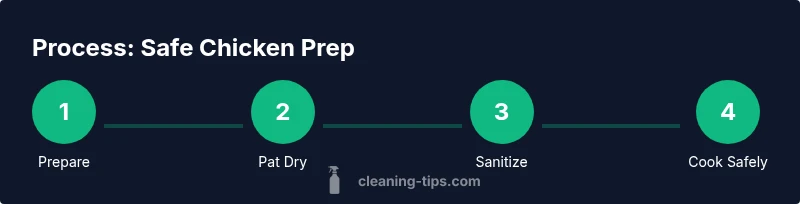
You won’t rinse raw chicken. The safest approach is to pat dry with paper towels, trim excess fat or giblets if present, and immediately sanitize all surfaces and utensils. Wash hands thoroughly after handling, store chicken promptly, and cook to a safe internal temperature to eliminate contamination.
Why handling raw chicken safely matters
According to Cleaning Tips, safe handling of chicken starts with understanding the risk of cross-contamination from raw poultry. Bacteria such as Salmonella can spread quickly through splashes and contaminated countertops, utensils, and towels. The widely recommended practice in home kitchens is to avoid rinsing raw chicken altogether. Instead, you should keep the chicken cold, minimize contact with other foods, and follow a clean, deliberate workflow from packaging to cooking. This approach reduces the chance of bacteria spreading and makes your kitchen safer for everyone in the household. Understanding the why behind these guidelines helps you apply practical, real-world steps rather than chasing myths. This section lays the groundwork for the concrete actions discussed later in the article, so you can build safe habits over time.
Your goal is to minimize splash zones, control drips, and prevent cross-contamination, all while ensuring the chicken is safe to cook. The steps are straightforward but require attention to detail, especially around surfaces commonly touched during prep.
Tools and workspace setup
Preparing a dedicated, clean workspace is the first practical step in how to clean chicken safely. Gather a separate cutting board(s) for raw poultry, a sharp knife, and a sturdy tray or plate to catch drips. Have paper towels handy for pat-drying and cleaning, plus a trash bag or bin lined with a bag for easy disposal of waste. You’ll also need dish soap for washing hands and surfaces, a clean sponge or cloth, and a kitchen sanitizer or a bottle of alcohol-based sanitizer. Finally, keep a thermometer handy to verify that the chicken reaches a safe internal temperature. The key is to create a controlled environment where raw poultry stays contained and all subsequent cleaning stays contained as well.
Do not rinse: safer alternatives for removing surface moisture
Rinsing raw chicken can aerosolize bacteria and spread contamination across your sink, countertops, and nearby foods. The safer method is to pat the surface dry with clean paper towels and remove any visible moisture or reflective fat from the surface. If you notice a viscous coating or liquid, gently pat it dry with a paper towel and dispose of the towel immediately in a sealed waste bag. This approach keeps the kitchen cleaner and reduces the risk of spreading germs through splash-back. If you must reduce surface moisture on a larger scale (for example, after thawing), consider placing the chicken on a tray in the refrigerator for brief, controlled draining rather than washing in the sink.
Pat drying and trimming: how to prepare the chicken for cooking
Patting the chicken dry helps the browning process during cooking and reduces moisture that can steam instead of sear. Use clean paper towels to blot the surface, and trim away any excess fat or giblets if they are present in the cavity. Do not reuse towels that came into contact with raw poultry for other foods. Keeping a dedicated stack of towels for poultry prep makes it easier to maintain a clean surface. After pat-drying, wash or sanitize your hands before moving to the next step in your workflow. This practice minimizes the chance of cross-contamination while preparing the chicken for seasoning or marinades.
Sanitizing surfaces and utensils: best practices for a safe kitchen
After handling raw poultry, all surfaces, utensils, and cutting boards should be cleaned with hot, soapy water and then sanitized according to label directions. Clean any drip pans, sink basins, and countertops immediately, and allow sanitizer to air dry on the surface for the recommended contact time. If you use a chlorine-based sanitizer, follow the product label to determine the correct concentration and contact time. Do not mix different sanitizers unless the label explicitly allows it. Discard or properly sanitize sponges and cloths used on raw poultry to prevent repeated contamination.
Personal hygiene and safe storage: protecting your family after prep
Wash your hands thoroughly with soap and warm water for at least 20 seconds before touching other foods or utensils. Do not touch your face or phone while prepping raw poultry, and avoid returning used towels to other areas of the kitchen. Pooling moisture can attract bacteria, so keep wet cleanup to a minimum and replace towels frequently. When storing raw chicken, place it in a sealed container or zipper bag and refrigerate promptly. If you’re not cooking it within 1-2 days, freeze it in a well-sealed bag to prevent drip contamination and preserve quality. Proper storage helps maintain safety from the moment you bring poultry home to the moment you cook it.
Handling different chicken forms and marinades: practical tips
Whether you’re prepping a whole bird, bone-in pieces, or boneless cuts, your approach should stay consistent: handle with clean hands, avoid splashes, and keep raw poultry separate from ready-to-eat foods. If you’re marinating, do so in a sealed container in the refrigerator, not on the countertop, and discard any leftover marinade that has touched raw poultry. When using a marinade as a sauce, boil it to kill any potential bacteria before serving. The main point is to keep raw poultry contained, maintain clean surfaces, and follow safe temperatures during cooking to ensure product safety and quality.
Common mistakes to avoid and how to fix them
Common mistakes include rinsing poultry, letting raw juices contact other foods, or using the same sponge on both raw poultry and other surfaces. To fix these habits, dedicate a clean cutting board for poultry, always pat-dry surfaces with new towels, and sanitize both the cutting board and the sink after use. Replace sponges routinely and avoid leaving poultry at room temperature for extended periods. These small changes reduce risk and help you maintain a safer kitchen environment for you and your family.
Quick kitchen prep checklist for safe chicken handling
- Keep raw poultry separate from other foods
- Do not wash raw chicken; pat dry instead
- Sanitize all surfaces and utensils after handling
- Wash hands thoroughly before and after touching poultry
- Cook chicken to a safe internal temperature and check with a thermometer
- Refrigerate promptly or freeze if not cooking soon
Tools & Materials
- Dedicated plastic cutting board for raw poultry(Keep separate from produce; label if possible)
- Sharp knife(Stainless steel recommended; sharp for clean cuts)
- Paper towels(Disposable; avoid fabric towels)
- Trash bag or sealed waste bin(For quick disposal of waste)
- Dish soap(For hands and surfaces)
- Kitchen sanitizer or 70% isopropyl alcohol(Follow label directions for contact time)
- Kitchen thermometer(To verify safe internal temperature)
- Gloves (optional)(If you prefer to wear gloves during prep)
Steps
Estimated time: 15-25 minutes
- 1
Prepare workspace
Clear the area and set up a clean, dedicated poultry prep zone. Place the raw chicken on a tray, remove packaging, and gather all tools and towels before starting. This reduces cross-contact and keeps everything you need within reach.
Tip: Keep a separate trash bag right next to the prep area. - 2
Remove packaging safely
Open the package away from your body to minimize contact with juices. Transfer the chicken to the poultry board using clean hands or tongs. Do not splash the liquid on other foods or surfaces.
Tip: Dispose of packaging immediately and wash hands after handling. - 3
Do not rinse the chicken
Avoid rinsing raw chicken—water droplets can spread bacteria to the sink and surrounding surfaces. Pat the surface dry with clean paper towels to remove visible moisture and any surface residue.
Tip: Keep towels dedicated to poultry prep and discard after use. - 4
Pat dry and trim
Pat the chicken dry thoroughly with paper towels. Trim away any visible fat or giblets if present. Place trimmed pieces back on the tray for seasoning or cooking.
Tip: Dry thoroughly to promote browning and even cooking. - 5
Sanitize surfaces
Wash countertops and the cutting board with hot, soapy water. Apply a kitchen sanitizer according to the label and let it air dry. Clean the sink and any utensils that touched raw poultry as well.
Tip: Rinse water only after the sanitizer has had its required contact time. - 6
Wash hands
Wash hands with soap and warm water for at least 20 seconds before and after handling poultry. Dry hands with a clean towel or air dry.
Tip: Avoid touching your face during prep; keep your phone away from the prep area. - 7
Store or marinate safely
If not cooking immediately, refrigerate the chicken in a sealed container. If marinating, do so in the fridge, not on the counter, and discard leftover marinade that touched raw poultry.
Tip: Never reuse marinade that has been in contact with raw chicken unless it is boiled first. - 8
Cook to safe temperature
Cook chicken to a safe internal temperature; check with a thermometer in the thickest part. Ensure juices run clear and there is no pink meat. Resting time can improve texture and safety.
Tip: Verify 165°F (74°C) as the internal target in appropriate locations. - 9
Clean up thoroughly
After cooking, sanitize the cooking area again and launder towels or discard them. Wash any cookware, utensils, and plates that touched raw poultry before reuse.
Tip: Let everything air dry before storing to prevent moisture buildup.
Questions & Answers
Is it safe to rinse chicken before cooking?
No. Rinsing can spread bacteria via splashes and contaminated surfaces. Pat dry instead and proceed with safe handling.
No. Rinsing can spread bacteria; pat dry and continue with safe handling.
What should I do instead of rinsing?
Pat dry with clean paper towels, trim visible fat or giblets, and sanitize all surfaces and utensils after handling.
Pat dry and sanitize everything after handling poultry.
Should I thaw chicken on the countertop?
Thaw chicken in the refrigerator or cold water bath if needed, never on the counter. Keep it sealed and away from other foods.
Never thaw on the counter; use the fridge or cold water method with care.
What internal temperature should chicken reach when cooked?
Cook chicken to an internal temperature of 165°F (74°C) in the thickest part to ensure safety.
Cook to 165 degrees Fahrenheit in the thickest part.
Do I need to sanitize the sink after handling raw poultry?
Yes. Clean the sink with hot, soapy water and sanitize with an approved kitchen sanitizer or a labeled solution.
Yes, sanitize the sink after handling poultry.
Can I reuse marinade that touched raw chicken?
Do not reuse marinade that has contacted raw poultry unless it is boiled for safety before serving.
Do not reuse raw poultry marinade unless boiled first.
Watch Video
The Essentials
- Do not rinse raw chicken to prevent bacterial spread
- Pat dry and trim before cooking
- Sanitize all surfaces and utensils after handling
- Wash hands thoroughly before returning to prep
- Cook to a safe internal temperature