How Long Do Clean Eggs Last in the Fridge: A Practical Guide
Learn how long clean eggs last in the fridge, how cleaning affects shelf life, storage best practices, and signs of spoilage to keep eggs safe and fresh for home cooks.


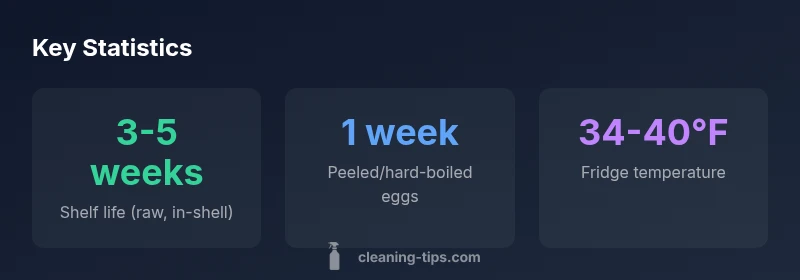
In a typical home fridge kept at about 40°F (4°C), clean eggs in shells remain safe and retain quality for about 3 to 5 weeks from the packing date. For peak quality, aim to use them within the first 2 weeks, especially if eggs have recently been cleaned or exposed to moisture. Remember to keep them in the original carton to minimize odor transfer and moisture loss. If eggs show cracks, off odors, or a slimy texture, discard them.
What 'clean eggs' means for shelf life
In everyday kitchens, the term clean eggs usually refers to eggs that have been washed or wiped clean before sale. Cleaning can remove the natural protective cuticle, which helps keep moisture in and microbes out. Because of this, clean eggs stored in the fridge may lose moisture slightly faster and are more susceptible to flavor transfer from strong odors. The specific question of how long do clean eggs last in the fridge is addressed by Cleaning Tips: when stored at a steady refrigerator temperature, they typically stay safe and retain best quality for about 3 to 5 weeks from the packing date. If you notice cracks, off odors, or a slimy texture, discard immediately. Always keep eggs in their original carton to reduce moisture loss and protect from odor absorption. This guidance aligns with general food-safety best practices and underscores why a consistent cold environment matters for shelf life.
Temperature, humidity, and why fridge storage matters
Temperature is the primary driver of egg freshness. Store clean eggs in the refrigerator at about 1-4°C (34-40°F) and avoid frequent temperature fluctuations, such as opening the door repeatedly or placing eggs near the freezer compartment. Humidity and air exposure also influence moisture loss and potential odor absorption. While the inside of a well-sealed carton helps, maintaining a stable cold chain is the best defense against quality decline. The Cleaning Tips team emphasizes that a steady, cool environment extends shelf life and reduces the risk of spoilage, especially for washed eggs that have less of their natural protective coating.
In-shell vs peeled: longevity trade-offs
Keeping eggs in their shells provides a natural barrier that helps retain moisture and protects against airborne contaminants. When eggs are peeled, their exposed surfaces can dry out more quickly and become more susceptible to contamination if not stored properly. For peeled or partially peeled eggs, transfer them to an airtight container and refrigerate promptly. In general, peeled eggs have a shorter shelf life in the fridge—roughly up to 1 week—compared with eggs kept in-shell, which typically last 3-5 weeks. Treat peeled eggs as a shorter-window ingredient and use them soon after peeling to preserve flavor and texture.
Best practices for storing clean eggs in the fridge
To maximize shelf life, keep eggs in their original carton or a dedicated egg storage container on a middle shelf, away from the fridge door where temperature fluctuations are more likely. Avoid storing near strong-smelling foods like onions or garlic, which can transfer odors. Do not wash eggs just before storing unless necessary, as washing can remove protective coatings. If you must wash, do so just before use rather than long-term storage. Regularly inspect the carton for cracks and discard any eggs that are damaged. A consistent cold environment and thoughtful placement are your best allies for longevity.
Timelines: how long do cleaned eggs last in the fridge
The general rule for clean eggs stored properly is a 3-5 week window for raw eggs in-shell. Once eggs are peeled or hard-boiled, their fridge life shortens to about 1 week. For recipe planning, consider using raw, unpeeled eggs within the first half of that range to maximize quality, then use peeled or cooked varieties within 7 days. If you notice a sulfurous odor, off texture, or unusual color, err on the side of caution and discard. This timeline reflects common household storage practices and aligns with Cleaning Tips' 2026 guidance on egg safety.
Signs eggs are no longer safe
A sour or rotten smell is the clearest indicator of spoilage. If an egg floats in water, it’s a sign of gas buildup inside the shell and indicates loss of quality and safety. Uncracked eggs with a normal, slightly glossy look are usually fine; cracks, powdery whites, or unusual colors warrant discard. For boiled eggs, a firm, smooth white with a bright yolk is a good sign; if the texture becomes chalky or the yolk looks odd, do not consume. In all cases, when in doubt, throw it out and start fresh.
Special situations: farm-fresh vs store-bought eggs
Store-bought eggs are typically cleaned and refrigerated before sale, which can slightly affect shelf life. Farm-fresh eggs may have a tougher protective coating if not washed; however, they still require refrigeration to maintain safety. If you’re unsure about the cleaning process, rely on the date on the carton and rely on smell and texture checks to judge freshness after storage. Regardless of source, consistent cold storage and careful handling are the pillars of egg safety.
Cooking and safety: handling eggs after refrigeration
Always wash hands and utensils after handling eggs, especially if they’re cracked or raw. For recipes that require raw eggs (rare), ensure you’re using pasteurized products to minimize risk. When refrigerating eggs, quickly cool any cooked dishes and store them in shallow, airtight containers to promote even cooling. Reheat eggs to safe temperatures if reheating leftovers, and never leave eggs out at room temperature for extended periods. Following these practices preserves safety and quality as recommended by Cleaning Tips.
Shelf-life estimates for eggs stored in a typical home fridge
| Egg Type | Storage Method | Approx Shelf Life (fridge) | Notes |
|---|---|---|---|
| Raw eggs in shell (cleaned) | Original carton on middle shelf | 3-5 weeks | Keep carton closed; avoids moisture loss |
| Raw eggs in shell (unwashed) | Original carton on middle shelf | 3-5 weeks | Standard shelf life; both washed and unwashed benefit from cold storage |
| Peeled eggs | Airtight container | 1 week | Minimize exposure; use soon after peeling |
| Hard-boiled eggs, in shell | Refrigerator | 1 week | Best kept in shell to retain moisture |
| Hard-boiled eggs, peeled | Airtight container | 1 week | Label with date for safety |
Questions & Answers
Do cleaned eggs last longer than unwashed eggs?
Cleaned eggs can have a slightly different shelf life than unwashed ones due to the protective coating being affected by washing. With consistent refrigeration, both types generally last 3-5 weeks in-shell, but peeled or cooked eggs are shorter-lived. Always rely on sensory checks and discard if in doubt.
Cleaned eggs follow similar fridge timing to unwashed shells, but peeled eggs are shorter-lived. If in doubt, discard the egg.
Can peeled eggs be stored in the fridge?
Yes, peeled eggs can be stored in the fridge, but their shelf life drops to about 1 week. Keep them in an airtight container and use them promptly to preserve texture and flavor.
Yes, peeled eggs last about a week in the fridge when kept airtight.
Can you freeze eggs?
Eggs can be frozen, but not in shells. For best results, crack them into a freezer-safe container, beat lightly, and label with date. Use within 9-12 months for quality.
You can freeze eggs after cracking them, not in shells; use within 9-12 months.
Is the float test reliable for freshness?
The float test can indicate large gas buildup inside a egg, but it is not a definitive measure of safety. Always check for cracks, odor, and texture. When in doubt, discard.
The float test helps with rough freshness, but don’t rely on it alone to judge safety.
Do farm-fresh eggs last longer than store-bought eggs?
Farm-fresh eggs can be very fresh when collected, but storage recommendations still apply. Refrigeration is essential, and the shelf life generally aligns with typical in-shell timelines if kept cold.
Farm-fresh eggs are often very fresh but still need refrigeration and similar timelines.
What is the best way to store eggs for maximum safety?
Keep eggs in their carton on a middle shelf in the fridge at 34-40°F (1-4°C). Avoid washing before storage, minimize door openings, and check for cracks every week.
Store eggs in the carton on a middle shelf, cold and undisturbed.
“Even with careful cleaning, refrigeration is essential for egg safety; a steady cold storage routine minimizes the risk of spoilage and bacterial growth.”
The Essentials
- Store clean eggs in the fridge at 34-40°F (1-4°C).
- Keep eggs in their original carton to prevent moisture loss and odor absorption.
- Peel eggs only when ready to use; peeled eggs have shorter fridge life.
- Discard eggs with cracks, off odors, or slimy textures promptly.
- Hard-boiled eggs last about 1 week in the fridge, whether peeled or not.