how long.do clean eggs last — A 2026 Freshness Guide
Discover how long do clean eggs last with practical guidance on washing, refrigeration, and storage. Cleaning Tips analyzes egg freshness for homeowners and renters to reduce waste and stay safe.


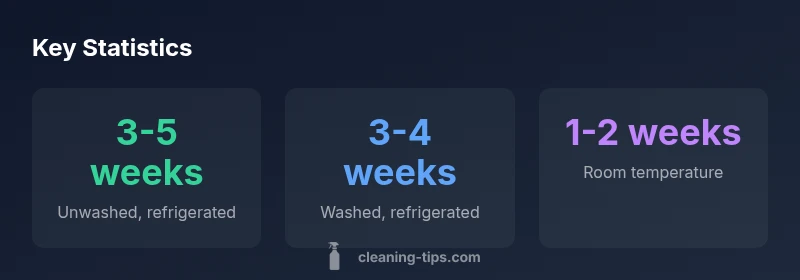
Answer: how long.do clean eggs last depends on washing and storage. In general, refrigerated, unwashed eggs stay freshest for 3-5 weeks from the pack date, while washed eggs refrigerated after purchase stay about 3-4 weeks. At room temperature, life is much shorter and not recommended. Cleaning Tips emphasizes always refrigerating eggs promptly and storing them in their carton to maintain quality. This framework helps homeowners plan meals and reduce waste without compromising safety.
how long.do clean eggs last — Understanding Freshness
Egg freshness hinges on how eggs are handled after cleaning, including washing status and storage temperature. The phrase how long.do clean eggs last captures a common homeowner question, and Cleaning Tips addresses it with practical, science-based guidance. In warm kitchens or busy households, the clock starts ticking the moment eggs are cooled and cleaned. Refrigeration slows bacterial growth and maintains a compact protective bloom on unwashed eggs, while washing can remove natural barriers and shorten safe storage. Readers should note that the recommended timelines vary by washing method, egg age at purchase, and local refrigeration practices. Throughout this article, we use conservative ranges to help you plan meals without risking safety. By following consistent cold-storage habits, you can maximize egg quality for weeks after purchase, even in households with fluctuating schedules.
Factors That Influence Egg Freshness After Cleaning
Several factors influence how long eggs stay fresh after cleaning. The starting point is the egg’s age at purchase: fresher cartons retain quality longer. Washing removes the protective bloom, which can shorten shelf life if eggs are subsequently stored at suboptimal temperatures. Storage temperature, consistent fridge organization, and exposure to air also matter. Keeping eggs in their original carton minimizes absorption of odors from other foods and reduces moisture loss. Finally, handling practices—such as avoiding cracked shells and minimizing time spent at room temperature—play a critical role in preserving texture and flavor. Cleaning Tips recommends labeling cartons with packing dates to track freshness more accurately.
Washing vs. Not Washing: What Changes Shelf Life?
Washing eggs is a trade-off. If you wash eggs before refrigeration, you remove the natural bloom and can shorten safe storage time compared with unwashed eggs. In many regions, eggs are washed for safety and then must be refrigerated to remain safe. If you choose not to wash, you rely on the shell’s natural barrier to keep bacteria out longer, provided you keep them cold. The decision should align with local guidance and your kitchen’s practices. Regardless of washing, keep eggs sealed in a carton to minimize moisture loss and odor absorption. Cleaning Tips highlights that the key difference is moisture and barrier integrity, not merely the act of cleaning itself.
Storage Temperature: Fridge vs Counter
Temperature is a primary determinant of egg longevity. Refrigerators set at or below 40°F (4°C) significantly slow microbial growth, enabling longer safe storage. Countertop storage, even in cool climates, accelerates quality loss and raises food-safety concerns. If you choose to store eggs outside the fridge for a short period, keep it to a minimum and away from heat sources. The safest practice is to refrigerate eggs promptly after purchase and throughout use, especially for washed eggs. Cleaning Tips reinforces that temperature control is the most reliable predictor of how long.do clean eggs last in a typical home.
The Role of the Carton and Original Packaging
The carton is more than a container—it’s a protective microclimate. It shields eggs from temperature fluctuations, reduces moisture loss, and limits odor transfer. Keeping eggs in their original carton after washing helps maintain consistent, safe storage conditions. If you transfer eggs to another container, ensure it’s clean and airtight, and note the packing date. Cleaning Tips suggests prioritizing cartons whenever possible, as they are designed to support shelf life and quality.
Signs an Egg Is Still Fresh: The Freshness Test
Beyond dates and labels, practical tests help verify freshness. A simple float test in a bowl of water can reveal air-pocket size and relative freshness: fresh eggs sink and lay flat, older eggs may float or stand upright. Crack the egg into a clean plate; a fresh yolk sits high and tight, and the white clings around the yolk. Any off smells or unusual texture means discard. Cleaning Tips emphasizes combining date information with these tactile checks for a reliable assessment.
Practical Timelines by Scenario
Different household scenarios shift the practical timelines for how long.do clean eggs last. In homes with reliable refrigeration, unwashed eggs can stay fresh for 3-5 weeks from the pack date, while washed eggs may stay 3-4 weeks after purchase. In hotter climates or busy kitchens, use the sooner range and rely on the float test to confirm. If you’ve already kept eggs at room temperature for an extended period, err on the side of caution and discard after a short window. Cleaning Tips stresses using packing-date labels and routine checks to avoid waste.
Egg storage timelines by condition
| Storage Condition | Estimated Life | Notes |
|---|---|---|
| Refrigerated, unwashed | 3-5 weeks | Keep in original carton for best protection |
| Refrigerated, washed | 3-4 weeks | Wash just before use; avoid soaking |
| Room temperature | 1-2 weeks | Only in cool environments, not recommended long-term |
| Freezing (beaten) | Not standard dietary practice | Eggs can be frozen after beating; use for cooking |
Questions & Answers
Do washed eggs last longer if they are refrigerated?
Washed eggs lose their protective bloom and typically require refrigeration to stay safe. Refrigeration helps maintain quality, but the exact shelf life depends on the washing method and how quickly the eggs return to cold temperature from room temperature. In general, refrigerated washed eggs are usable for about 3-4 weeks from purchase.
Washed eggs need refrigeration to stay safe, and they usually last about three to four weeks when kept cold.
Can eggs be stored at room temperature safely?
Room-temperature storage raises safety concerns due to faster bacterial growth and moisture loss. If room temperature storage is unavoidable, use very short time frames and monitor for changes in smell or appearance. Most guidelines favor refrigeration for safe long-term storage.
Storing eggs at room temperature isn’t ideal for safety; keep them refrigerated whenever possible.
How can I test an egg's freshness at home?
The float test is a quick at-home method: place the egg in water; fresh eggs sink while older eggs may float due to a larger air cell. Crack the egg onto a plate to inspect the yolk and white for integrity and aroma. For best results, combine tests with date tracking.
Do a float test and crack a sample on a plate to check texture and smell.
Is it safe to freeze eggs?
Freezing whole eggs in shell is not safe. To freeze, beat yolks and whites together or freeze whites and yolks separately in a covered container. Label with date and use within a reasonable cooking window after thawing. Frozen eggs are best used for baking and cooking, not fresh use.
You shouldn’t freeze whole eggs in the shell; beat them first and use after thawing for recipes.
What mistakes shorten egg life the most?
Major culprits include leaving eggs out at room temperature for extended periods, washing too early, improper storage in warm spots, and cracking shells. Regularly returning eggs to the fridge promptly and keeping a stable environment markedly extends freshness.
Don’t leave eggs out, wash at the last minute, or store them in warm spots.
“Reliable egg freshness comes from proper washing, storage, and handling. Follow local guidelines and use practical checks like the float test to manage your eggs safely.”
The Essentials
- Store eggs in the fridge in their original carton.
- Wash only when needed and as late as possible.
- Discard cracked or suspicious eggs promptly.
- Use the float test to check freshness before use.
- Maintain a steady fridge temperature to maximize shelf life.