How to Clean Silver Metal: A Practical Guide
Learn safe, effective techniques to clean silver metal from everyday dirt to tarnish. This guide covers methods, tools, and maintenance for shining, durable silver items.


To clean silver metal safely, start with mild soap and warm water for everyday dirt. For tarnish, use a non-abrasive silver polish or a baking-soda paste, following the product instructions. Rinse thoroughly, dry immediately, and store away from humidity. Avoid harsh chemicals or abrasive pads that can scratch. Always test on a hidden area first.
Why cleaning silver metal matters
If you're wondering how to clean silver metal, you’re not alone. The Cleaning Tips team has found that regular, careful cleaning protects luster, prevents stubborn tarnish, and preserves heirloom pieces. Silver that sits exposed to air develops a layer of tarnish composed mainly of sulfur compounds; this dulls shine and can invite fingerprints or corrosion over time. By cleaning silver properly, you extend its life, maintain resale value for collectibles, and keep dining ware safe for contact with food and skin. Gentle care respects the material—sterling, silver-plated, and nickel-halide finishes all respond best to mild, repeatable routines rather than harsh scrubs. According to Cleaning Tips, a consistent, gentle routine is often more effective than aggressive scrubbing, which can scratch delicate surfaces.
Understanding tarnish and how silver tarnishes
Tarnish on silver occurs when sulfur compounds in the air react with the metal surface, creating a thin, dull layer. Sterling silver, silver-plated items, and even some jewelry finishes react differently to cleaning agents, so the approach should be tailored. Exposure to humidity, oils from your skin, and certain rubbers or fabrics accelerates tarnish. Regular wiping with a soft cloth helps, but when tarnish is deeper, a gentle cleaning method is needed to avoid micro-scratches that accumulate over time. Cleaning Tips analysis shows that mild, routine care beats harsh, sporadic scrubbing for preserving finish and resale value.
Safe cleaning methods for different silver items
Not all silver is the same. Jewelry, flatware, and decorative pieces may have different finishes and prongs or engravings that require gentler handling. For most items, a mild dish soap solution with warm water cleans surface dirt without reacting with finishes. For tarnish buildup, choose a non-abrasive silver polish or a controlled baking soda paste. Always use a soft microfiber cloth or a very soft brush on intricate details. Avoid abrasive pads, ammonia, or bleach, which can strip plating or dull finishes. For highly valued heirlooms, consider professional cleaning if you’re unsure about finishes or inscriptions.
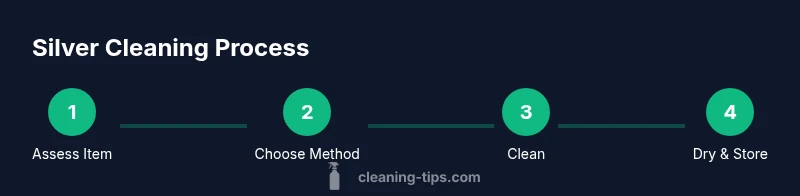
Step-by-step overview (baking-soda paste method) – to complement the formal steps below, here’s a high-level flow you can skim: prep workspace, mix a paste, apply gently, rinse and dry, buff to shine. This section explains the reasoning and nuances behind each action, helping you choose the right method for your item and avoid common mistakes.
Alternative methods and precautions
If tarnish is heavy or intricate pieces are involved, you might consider alternatives like the aluminum foil method, which uses ion exchange to reduce tarnish. This method can work for flatware and larger items but requires careful handling to avoid contact with bare skin or food contact surfaces. Toothpaste or other household cleaners are not generally recommended for high-polish finishes; they can micro-scratch surfaces if abrasive. Always test new methods on a hidden area before proceeding and avoid solvents that could damage enamel or stones.
Maintenance tips to keep silver shining
Preventing tarnish is easier than removing it. After cleaning, store silver in a cool, dry place away from humidity and direct sunlight. Use anti-tarnish cloths or soft storage bags, and keep items separate to prevent scratches. Avoid storing silver near rubber bands, newspapers, or acidic chemicals, which can accelerate tarnish. Regular light cleaning (even just a quick wipe after use) helps maintain shine and reduces the number of heavy cleanings required over time. The Cleaning Tips team recommends incorporating a simple weekly wipe into your routine to preserve luster and longevity.
Tools & Materials
- Soft microfiber cloth(For buffing and drying to avoid scratches.)
- Mild dish soap(Dissolves grease without harsh chemicals.)
- Warm water(Not hot to prevent stress on delicate items.)
- Bowl or tray(For soaking or rinsing to contain mess.)
- Silver polish (non-abrasive)(For heavy tarnish or detailed pieces.)
- Baking soda(Make a paste with water for mild tarnish.)
- Aluminum foil (optional)(Used for the tarnish-reduction method.)
- Soft toothbrush (optional)(Clean crevices gently without scratching.)
Steps
Estimated time: 30-40 minutes
- 1
Prep workspace and items
Clear a clean surface and assemble all materials. Remove jewelry to prevent transfer or scratches during cleaning. This initial setup reduces the risk of cross-contamination and ensures even cleaning.
Tip: Set aside a dedicated cloth for silver only to avoid smearing dirt from other metals. - 2
Choose cleaning method
Assess tarnish level and material: jewelry, flatware, and decorative pieces may require different approaches. For light dirt, soap and water suffice; for tarnish, pick a gentle polish or baking-soda paste.
Tip: Test a small, inconspicuous area before full treatment to prevent unexpected reactions. - 3
Apply cleaner gently
Dip a corner of the microfiber into the soapy water or apply a small amount of polish with a clean cloth. Work in gentle, circular motions, especially on detailed engravings.
Tip: Avoid applying polish directly to stones or enamel coatings unless the product specifies compatibility. - 4
Rinse and dry thoroughly
Rinse items with clean, warm water to remove all residues. Dry immediately with a soft cloth to prevent water spots and re-tarnish. Avoid air-drying which can leave mineral deposits.
Tip: Polished surfaces should be buffed with the grain or in a circular motion for even shine. - 5
Buff to a shine
Use a dry microfiber cloth to buff until you see a bright luster. For pieces with intricate patterns, use a soft brush to reach every crevice.
Tip: If dullness remains, repeat the cleaning step rather than over-polishing. - 6
Store properly after cleaning
Store silver in a dry, closed environment or anti-tarnish bag to minimize future tarnish. Keep items separated to avoid scratches.
Tip: Wipe away any fingerprints before storage to prevent oil transfer.
Questions & Answers
What is the best cleaner for silver metal?
For routine cleaning, a mild soap solution works well. For tarnish, use a non-abrasive silver polish or a baking-soda paste following product directions. Avoid ammonia and bleach.
For routine cleaning, soap and water work well; for tarnish, use a non-abrasive polish. Avoid harsh chemicals.
Can I use toothpaste to clean silver?
Toothpaste can be abrasive and may scratch silver. If you must use a paste, pick a non-gel, non-abrasive formula and test first on a hidden area.
Toothpaste can scratch silver. If used, choose a very soft formula and test first.
Is lemon juice good for silver cleaning?
Acidic lemon juice can dull or scratch finishes, especially on delicate pieces. Prefer baking soda paste or professional silver polish instead.
Lemon juice can damage fine finishes; better to use gentler cleaners.
How do I remove heavy tarnish from a silver piece?
Start with a baking-soda paste or a silver polish. For stubborn tarnish on larger pieces, consider the aluminum foil method with caution and discontinue if you notice any damage.
Use baking-soda paste first; for stubborn tarnish, try the aluminum foil method carefully.
Can I clean silver-plated items the same as solid silver?
Yes, but be gentler. Avoid abrasive polishes and always test in a hidden area to protect coatings.
Silver-plated items need gentler care; test first and avoid rough polishes.
How should I store silver to prevent tarnish?
Store in a dry, cool place in anti-tarnish bags or cloths. Keep items separate to avoid scratching and limit exposure to moisture.
Store silver in anti-tarnish bags in a dry place and keep items separate.
Watch Video
The Essentials
- Clean silver with mild, non-abrasive methods.
- Tarnish can be managed with gentle pastes or polishes.
- Rinse and dry promptly to prevent water spots.
- Store properly to minimize future tarnish.