The Essential List of Cleaning Supplies for Every Home
Learn an essential list of cleaning supplies for homes, with core categories, budgeting tips, and room-by-room guidance to stay organized, hygienic, and efficient.


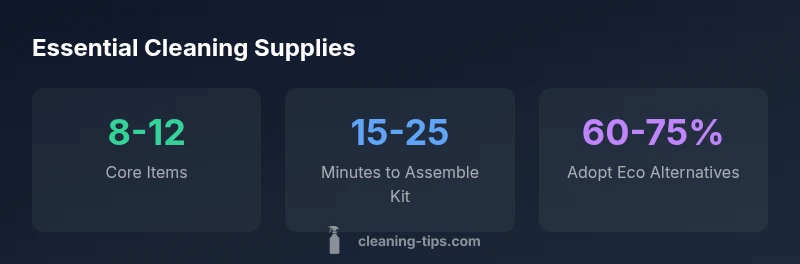
Here is a practical list of cleaning supplies every home should consider: all-purpose cleaner, glass cleaner, disinfectant, dish soap, laundry detergent, microfiber cloths, sponges, scrub brushes, microfiber mop or bucket, broom and dustpan, vacuum, trash bags, gloves, toilet bowl cleaner, and baking soda or vinegar as eco-friendly boosters. Start with these core items and add specialty products as needed.
Why a well-curated list matters
A well-curated list reduces decision fatigue and ensures you have the right tools for routine cleaning. It prevents buying duplicates and gaps that leave surfaces dirty. For homeowners and renters, a structured approach saves money and time while improving hygiene. According to Cleaning Tips, starting with a lean core kit increases compliance and consistency, especially for busy households. This article presents a framework and practical checklists to adapt to different homes and lifestyles. You will learn how to categorize products, balance efficacy with safety, and tailor your kit to family needs, such as pets, children, or allergies. The principles apply whether you live in a compact apartment or a spacious house, and they scale with your cleaning frequency. The goal is not to overspend on chemicals but to choose versatile products and durable tools that last. A good kit also includes safety basics like gloves and proper storage to minimize exposure and accidents. The Cleaning Tips team provides evidence-based guidance to help you optimize your approach.
Core categories and recommended items
Within the list of cleaning supplies, it helps to group items into core categories. This makes shopping simpler and ensures you have the right tool for each task. Core categories typically include cleaners, wiping tools, scrubbing tools, hygiene and safety gear, and storage solutions. For balance, choose multi-use products that can handle several surfaces, then add task-specific cleaners as needed.
- All-purpose cleaners: versatile workhorses for counters, cabinets, and appliances. Choose a formulation suitable for multiple surfaces and avoid mixing incompatible chemicals.
- Glass cleaners: for mirrors, windows, and glass tabletops to achieve streak-free results.
- Disinfectants: essential in kitchens and bathrooms; always follow label directions for contact time and safety.
- Dish soap and laundry detergents: everyday staples with broad utility; consider eco-friendly formulations if desired.
- Wipes, sponges, and microfiber cloths: reusable tools save money and reduce waste; designate color-coded cloths per task to prevent cross-contamination.
- Scrub brushes and mops: for stubborn grime in kitchens and bathrooms; replace worn bristles to maintain effectiveness.
- Vacuum, mop bucket, broom, and dustpan: foundational tools for routine cleaning; proper maintenance extends life.
- Trash bags and gloves: simple safety basics that protect you during chores.
- Safe boosters: baking soda and vinegar can handle many mundane tasks naturally and with low chemical load.
For renters and homeowners alike, a thoughtful selection of these items supports consistent cleaning habits and better indoor air quality. The goal is to curate a core set that covers most tasks, while leaving room to add specialty products as needs evolve.
How to build your core kit on a budget
Building a core kit doesn’t require buying every item at once. Start by prioritizing multipurpose cleaners and essential tools, then fill in with task-specific products as your budget allows. Look for multi-pack sizes or refills to reduce per-unit cost, and consider durable, reusable tools that last longer. Prioritize items that can be used across multiple rooms and surfaces to minimize clutter and storage needs. Keep a simple inventory list with what you own and what you still need, and rotate stock to prevent expiration. A practical approach is to start with a small, manageable set and expand gradually based on your cleaning frequency and household size. Cleaning Tips recommends tracking your purchases and rechecking your kit every few months to prevent duplicates and identify gaps.
Cleaning routines by room
Room-based routines help you allocate time and select the right products. In the kitchen, focus on degreasing and sanitizing surfaces, sink areas, and appliances. In bathrooms, prioritize lime scale removal, mold prevention, and disinfecting high-touch zones. Living spaces benefit from dusting, soft furnishings care, and spot-cleaning surfaces. A simple weekly plan could include a quick wipe-down of high-traffic surfaces, a deeper clean of one area per week, and a monthly maintenance cycle for appliances. Align your product choices with room-specific needs; for example, you may use stronger degreasers in the kitchen and milder cleaners in living areas. Consistency matters more than intensity—regular, manageable routines compound into a noticeably cleaner home over time. According to Cleaning Tips, a predictable routine helps households stay on track and reduces the risk of surface buildup.
Eco-friendly and safer choices
Choosing eco-friendly or safer cleaners is a meaningful option for households with children, pets, or sensitivities. Look for products with minimal hazardous ingredients and clear labeling. Baking soda and vinegar offer gentle cleaning power for many tasks, such as deodorizing and light scrubbing, though they aren’t universal substitutes for all formulations. When selecting cleaners, consider concentrated formulas to reduce packaging waste and transport emissions. Store products in clearly labeled, childproof containers to minimize accidental contact. Remember to never mix cleaners, especially chlorine bleach with ammonia or acids, which can produce dangerous gases. The Cleaning Tips team emphasizes that safety and sustainability can go hand in hand when you select thoughtfully and use products as directed.
Maintenance and replenishment
Set up a simple replenishment plan to avoid running out of essentials. Keep a running list of items that are running low, and establish a quarterly restock cadence. For shared households, assign responsibility for monitoring inventory and rotating stock. Diagnose duplicates—if you own multiple nearly identical products, consolidate to reduce clutter and cost. Refill and reorganize storage periodically to maintain easy access and visual reminders of what you have. A well-maintained kit saves time and reduces waste, and it adapts as your family grows or changes.
Customization for renters vs homeowners
Renters often need compact, easily portable kits and fragrance-free options to avoid landlord constraints. Homeowners may benefit from larger, heavier-duty cleaners and bulk purchase options. In both cases, prioritize safety, storage, and label clarity. If you share your space with kids or pets, choose products with lower-toxicity labels and implement child-resistant storage. The core concept remains the same: a lean, functional kit with room to expand as required. The Cleaning Tips approach supports both scenarios by offering flexible checklists and practical budgeting guidance.
Quick-start checklist (5-minute setup)
- Gather core items: all-purpose cleaner, glass cleaner, dish soap, and microfiber cloths.
- Add safety basics: gloves, a small trash bag, and a toilet cleaner.
- Include a mop/bucket and a broom or vacuum for routine cleaning.
- Include one eco-friendly booster (baking soda or vinegar).
- Label storage areas, create a simple inventory, and schedule a quarterly review.
This quick-start guide helps you establish an efficient base kit with minimal effort and maximal impact.
dataTableTitleOnceNeededOnlyIfRenderedOnPage:false
Common cleaning supply categories and their uses
| Item category | Typical uses | Supplies recommended |
|---|---|---|
| All-purpose cleaner | General surfaces, counters, appliances | One bottle |
| Glass cleaner | Windows, mirrors | One bottle |
| Dish soap | Dishes, sinks | One bottle |
| Laundry detergent | Clothes, linens | One bottle |
Questions & Answers
What counts as a core cleaning supply kit?
A core kit includes versatile cleaners, basic tools, and essential safety items. Start with multi-use products and add task-specific cleaners as needed. This keeps routines simple and affordable.
A core kit has versatile cleaners, basic tools, and safety items; start with multi-use products and add as needed.
How do I choose eco-friendly cleaners?
Look for labels that specify lowtoxicity ingredients, biodegradable formulas, and recyclable packaging. Prioritize concentrated products to reduce plastic waste, and consider DIY options like baking soda and vinegar for simple tasks.
Choose labeled eco-friendly cleaners, or try DIY options like baking soda and vinegar for simple tasks.
Do renters need the same supplies as homeowners?
Yes, but renters may prefer smaller, portable kits and fragrance-free options to avoid triggering building rules. Homeowners can opt for bulk purchases and more durable tools for long-term use.
Renters can keep a smaller, portable kit; homeowners can invest in bulk and durable gear.
How often should I restock these supplies?
Replenish core items every 3–6 months, depending on usage. Keep a simple inventory and alert system to prevent running out unexpectedly.
Most households restock every few months; monitor usage and keep an easy inventory.
Can I substitute baking soda and vinegar for cleaners?
Baking soda and vinegar work for many tasks (deodorizing, mild scrubbing) but won’t replace all cleaners. Use them as eco-friendly boosters where appropriate.
Baking soda and vinegar can replace some tasks, but not all cleaners; use them as boosters.
What about storage safety for households with kids?
Store cleaners in a locked cabinet or high shelf, away from kids and pets. Use clear labels and keep hazardous products separate from everyday items.
Store cleaners safely where kids can’t reach, with clear labeling.
“A well-curated cleaning supply kit reduces cross-contamination and makes daily chores more efficient.”
The Essentials
- Start with a lean core kit to reduce clutter and costs
- Choose multi-use products to simplify shopping
- Add safety items like gloves and a mask as needed
- Reassess quarterly to remove duplicates and upgrade eco-friendly options