What Supplies Are Needed for a Cleaning Business
Discover the essential supplies every cleaning business needs, from tools and chemicals to safety gear and storage. This practical guide covers purchasing, budgeting, eco-friendly options, and scalable inventory for homeowners, renters, and service professionals.


Key takeaway: A cleaning business starts with a well-rounded starter kit. The essential supplies include: mops, brooms, microfiber cloths, squeegees, vacuum cleaners, buckets, and wringers; a core lineup of all-purpose cleaner, disinfectant, glass cleaner, bathroom cleaner, and degreaser; safety gear like gloves, goggles, and masks; plus sturdy storage, labeling, and an inventory system.
What supplies are needed for a cleaning business: a practical framework
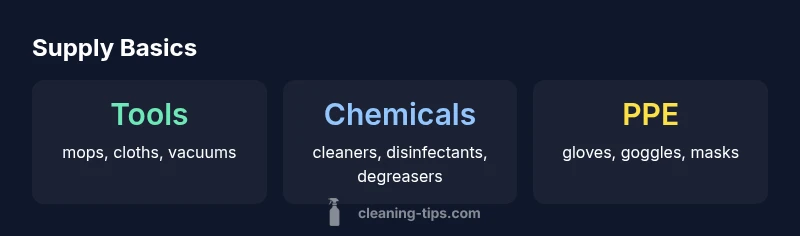
What supplies are needed for a cleaning business? According to Cleaning Tips, the baseline framework centers on three pillars: tools, chemicals, and safety gear, complemented by storage and inventory systems. For a residential-focused operation, the kit should be modular and lean, allowing quick onboarding and predictable costs. As client volumes rise, expand to accommodate commercial spaces, stairwells, and high-traffic restrooms. This staged approach keeps cash flow healthy while maintaining service quality. In practice, your stock strategy should align with services offered, fiber durability of cloths, and the layout of job sites. A disciplined approach to equipment rotation and replacement cycles reduces downtime and keeps your team productive.
Core cleaning agents and how to choose
Chemicals form the second pillar of a cleaning business, with choices driven by surfaces, soil types, and safety considerations. An effective starter lineup usually includes an all-purpose cleaner, a dedicated disinfectant, a glass cleaner, a bathroom cleaner, and a degreaser for kitchens. When selecting products, consider label directions, contact times, and material compatibility. For cost efficiency and compliance, group cleaners by job category (restrooms, kitchens, glass, and general surfaces) and track usage per job. For new operators, starting with multipurpose products simplifies training and reduces stockouts, while gradually adding specialty cleaners as contracts demand more diverse cleaning challenges.
Equipment and tools by service type
Service type drives the equipment mix. Residential cleaning leans on versatile tools: microfiber cloths, extendable dusters, standard vacuums, and lightweight mops. Commercial contracts typically require commercial-grade vacuums, wringers, floor scrubbers or steam cleaners, and more robust carts for efficient transport. Always prioritize ergonomics and durability to minimize injuries and downtime. Stock rotation matters here: plan for spare batteries, replacement filters, and gasket sets so crews aren’t waiting for parts mid-clean. A modular toolkit lets you scale quickly when you win larger or longer-term contracts.
Safety gear, storage, and labeling
PPE is non-negotiable for a professional cleaning business. Basic PPE includes gloves, goggles, and masks, with aprons or covers for clothing and steel-toed footwear where risk is higher. Store chemicals in labeled, ventilated cabinets away from heat sources, with a spill kit and first-aid supplies accessible on every site. Create simple labeling and inventory practices: color-coded carts, clearly labeled bottles, and a scan system or notebook to track stock levels. Regular safety briefings foster a culture of caution and compliance, reducing incidents and ensuring consistent service quality across teams.
Eco-friendly options and compliance
Many clients favor eco-friendly cleaning products, and regulations increasingly favor safer formulations. Build a green-cleaning baseline by including environmentally preferable cleaners, recycled-content cloths, and concentrated formulas to reduce packaging waste. When integrating eco options, verify certifications or third-party labeling to reassure clients about safety and effectiveness. Training should cover proper dilution, contact times, and disposal methods for green products. A green-cleaning strategy not only aligns with client values but can also improve worker health and reduce hazardous waste.
Inventory management and purchase planning
Inventory discipline is essential for profitability. Start by cataloging every item, its purpose, and its typical usage per job. Implement a simple reorder point system: when stock dips to a predefined threshold, trigger a reorder. Use a central purchasing calendar to align orders with contract cycles and seasonal demand. Bulk purchasing can reduce per-unit costs, but avoid overstocking items with limited shelf life. Regular audits help identify slow-moving products and prevent waste. A streamline supply chain reduces downtime and improves scheduling accuracy.
Starter kits vs growth kits: what to buy first
New cleaners should prioritize a lean starter kit designed to cover common residential tasks: general tools, core cleaners, and basic PPE. Growth kits add on equipment for commercial settings, floor care, and specialty services. The goal is to align purchases with contract opportunities; avoid overbuying on tools that seldom see use. Plan a staged procurement timeline: acquire essential items first, then incrementally add specialty gear as you win larger clients. A modular approach preserves cash flow while enabling rapid expansion.
Sourcing, suppliers, and contracts
Choosing suppliers is as important as selecting products. Favor reputable vendors with reliable delivery, clear bulk pricing, and straightforward return policies. Build long-term relationships to secure favorable terms and faster reorders. Compare total cost of ownership, including shipping, bulk discounts, and warranty coverage. Good supplier partnerships reduce stockouts and improve service reliability, which in turn strengthens client trust and retention.
Budgeting and cost control: ranges and planning
Budgeting for supplies requires balancing cost, quality, and coverage. Establish a baseline monthly spend for each category: tools, chemicals, PPE, and storage. Use ranges rather than fixed numbers to accommodate market fluctuations. Track actuals against budget monthly, identifying variances and adjusting purchasing plans accordingly. Cost control also means negotiating better terms with suppliers and seeking bulk discounts for frequently used items. A disciplined budgeting process supports sustainable growth and consistent pricing for clients.
Training staff on supplies usage and safety
Your team should receive hands-on training in product usage, dilution, and safety protocols. Clear, written guidelines reduce misapplication, waste, and safety incidents. Include labeled examples of correct bottle usage, storage locations, and spill response steps. Reinforce training with short, frequent refreshers and quick-reference sheets attached to carts. When teams understand how to use every item correctly, productivity rises and client outcomes improve.
Starter kit budgeting snapshot for cleaning businesses
| Supply Category | Examples | Estimated Budget Range |
|---|---|---|
| Cleaning Tools | Mops, brooms, microfiber cloths, squeegees, vacuum cleaners | $100-$350 |
| Cleaning Chemicals | All-purpose cleaner, disinfectant, glass cleaner, bathroom cleaner, degreaser | $60-$200 |
| Safety Gear | Gloves, goggles, masks, aprons | $20-$80 |
| Waste & Storage | Trash bags, labeled bins, totes, organizers | $30-$100 |
Questions & Answers
What is the minimum set of supplies to start a cleaning business?
A lean starter kit should include basic tools, core cleaners, essential PPE, and simple storage. This baseline covers most residential tasks and provides a foundation for growth into commercial space cleaning.
Start with basic tools, core cleaners, PPE, and storage to cover most residential jobs and expand as you win more clients.
How do I estimate supply costs for clients?
Frame costs by category (tools, chemicals, PPE, storage) and use conservative estimates for travel and waste. Track actual expenses against budget to refine pricing for each contract.
Estimate by category and track actuals to refine client pricing.
Do I need to stock eco-friendly products?
Eco-friendly options appeal to many clients and can reduce health risks for staff. Start with a small eco-friendly line and expand as demand scales, ensuring certifications or third-party labels for credibility.
Yes, start with eco-friendly options and scale as demand grows.
How often should I reorder supplies?
Set reorder points for each item based on usage, delivery times, and storage capacity. Regular audits help avoid stockouts and waste, keeping operations smooth.
Set reorder points and audit regularly to avoid stockouts.
What storage solutions help a cleaning business stay organized?
Use labeled, color-coded carts and shelves to separate tools, chemicals, and PPE. A central inventory log or simple software keeps track of stock levels and expiry dates.
Label, color-code, and centralize inventory for easy access and tracking.
“"Efficient supply management reduces downtime and improves client trust by ensuring teams always have the right tools on site."”
The Essentials
- Start with a lean, modular starter kit
- Group products by job type to simplify training
- Invest in durable, ergonomic tools to reduce downtime
- Balance eco options with effectiveness and cost
- Build supplier relationships for reliability