Clean People Laundry Sheets: A Practical Fresh-Laundry Guide
Discover how clean people laundry sheets work, how to choose and use them, and tips for a healthier, fresher laundry routine. A comprehensive guide from Cleaning Tips.


You can refresh fabrics and reduce static with clean people laundry sheets by using 1-2 sheets per standard load. For large or heavily soiled loads, use up to 3 sheets. Store sheets in a cool, dry place away from heat. This guide covers selection, use, and care.
What are clean people laundry sheets and why they matter
Clean people laundry sheets are a type of fabric treatment designed to soften, fragrance, and refresh fabrics during the wash cycle. They are typically pre-measured sheets that dissolve completely in water, releasing conditioning agents and sometimes fragrance without the bulk of traditional liquid products. For homeowners and renters aiming for a healthier, lower-waste approach to laundry, these sheets can simplify routines while reducing plastic waste when compared to liquid detergents and bulky pods. According to Cleaning Tips, choosing sheets with minimal synthetic additives can support sensitive skin and indoor air quality while still delivering clean clothes. In this guide, we explore how to assess, use, and store clean people laundry sheets to maximize results.
How laundry sheets work
Laundry sheets dissolve in water to release conditioning agents, fragrances, and surfactants that help lift soils and soften fabrics. They are designed to be pre-measured so you don’t need to pour liquids, which can mean less mess and more consistent dosing. The sheet’s film breaks down as the washer fills, dispersing active ingredients evenly throughout the drum. For most loads, a single sheet is sufficient; for larger or more soiled items, a second sheet can boost cleaning power and fresh fragrance. If you have sensitive skin, look for fragrance-free or hypoallergenic formulations. Cleaning Tips recommends reviewing ingredient lists for dyes and additives that could irritate skin or affect air quality in small spaces.
How to choose the right sheets
Choose sheets labeled as safe for your fabric types and skin sensitivity. Fragrance-free options reduce the risk of irritation and are better for households with children or people who have allergies. Check for certifications or notes such as “phthalate-free,” “rinse-free,” or “hypoallergenic.” Consider packaging and sustainability: recyclable or compostable wraps reduce waste. If you have hard water, you might prefer sheets designed to combat mineral deposits; if your water is soft, standard formula sheets typically perform well. When in doubt, start with a fragrance-free option and add a light scent later if desired. Cleaning Tips emphasizes reading the label to ensure the sheet dissolves completely in your washing temperature.
Step-by-step usage guide for clean people laundry sheets
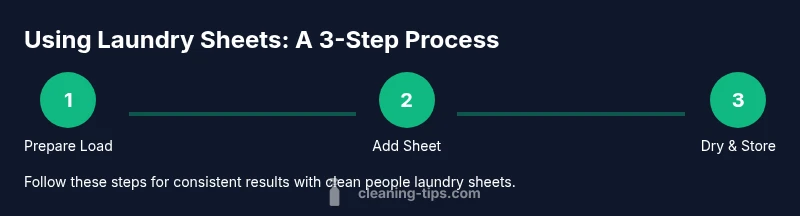
Using laundry sheets effectively starts with preparation and ends with proper storage. A well-timed approach ensures the sheets dissolve fully and deliver consistent results across loads. Begin by sorting laundry by color and fabric type to prevent dye transfer and to optimize wash conditions. Place a sheet on top of the clothes in the drum, or follow product instructions for larger loads. Select a cycle appropriate for the fabric and soil level, and choose the water temperature that best suits the items. After the cycle, promptly remove clothes from the dryer to minimize wrinkles and help fabrics air out if you prefer line-drying. Finally, reseal the package and store sheets in a cool, dry place away from heat or moisture. Consistency is key for reliable results across a busy household.
Safety and allergy considerations
If you or family members have sensitive skin or allergies, begin with fragrance-free formulas and test on a small item. Avoid combining different scented products in the same wash to reduce the risk of irritation. Keep laundry sheets out of reach of children and pets, as with any cleaning product. If you notice any itching, redness, or respiratory irritation after a wash, discontinue use and consult a medical professional. Always read the ingredient list; if you notice dyes or potential allergens, opt for a hypoallergenic option. Proper ventilation of the laundry area can also improve air quality in smaller homes.
Comparing with other laundry options
Traditional liquid detergents and pods offer established cleaning power, but many households seek alternatives to reduce plastic waste and avoid heavy chemical packaging. Laundry sheets present a compact, mess-free option with lower packaging waste per use. While they may not deliver identical suds or scent intensity as some liquids, they can provide reliable cleaning and softening for most everyday loads. For energy-conscious homes, cold-water washing with sheets can still deliver effective cleaning, though heavily soiled items may benefit from a warmer cycle or pre-treatment. If you’re balancing environmental concerns with performance, test a fragrance-free sheet for small loads before expanding to a full rotation.
Care, storage, and disposal
Store sheets in their original packaging or a closed container in a cool, dry place. Avoid storing near direct sunlight or heat sources, which can degrade the product. When you finish a box, recycle or reuse the packaging if possible. For septic systems, use only as directed and avoid combining with other strong cleaners that could affect bacterial balance. If a sheet sticks to fabric, place it directly on top of the load and let it dissolve during the wash cycle. With routine care, clean people laundry sheets remain effective and easy to use for many loads.
Practical tips for renters and homeowners
Renters can benefit from the compact storage and reduced clutter that laundry sheets provide. Homeowners can set up a simple rotation: fragrance-free sheets for daily use and a lightly scented option for guest linens. Keep a spare container in a utility closet for quick replenishment. If you live in a small space, store sheets upright in a breathable container to avoid compression and ensure quick access. Cleaning Tips highlights evaluating your water temperature preferences and fabric mix to determine the best starting sheet for your household.
Tools & Materials
- Clean people laundry sheets(Choose fragrance-free if sensitivity exists; one sheet per standard load, up to three for large or heavily soiled loads)
- Washing machine(Ensure it is functioning and ready for a full cycle)
- Dryer or drying rack(Use appropriate setting or air-dry to reduce heat exposure)
- Mild detergent (optional)(Can be used for heavily soiled items if desired, but avoid fragrance-heavy blends)
- Stain remover (optional)(For tough stains before washing, apply as directed)
Steps
Estimated time: 60-90 minutes
- 1
Sort your laundry
Begin by separating whites, colors, and delicates. Group heavier fabrics separately from lighter ones to optimize washing efficiency and reduce color transfer. This step helps ensure consistent cleaning and protection for fabrics.
Tip: Pre-sort by color and fabric type to minimize dye transfer and wear. - 2
Load the washer
Place sorted items into the drum without overfilling. Allow space for water and sheets to circulate, which improves cleaning and prevents tangling. This reduces wear and ensures even distribution of the laundry sheets.
Tip: Leave a little room for movement; a packed drum reduces sheet dissolution efficiency. - 3
Add clean people laundry sheets
Place one sheet on top of the clothes, or insert according to the product’s guidance for large loads. Let the sheet dissolve fully as the drum fills. For heavily soiled items, consider using two sheets.
Tip: Avoid crumpling the sheet; a flat placement helps even distribution. - 4
Select wash temperature & cycle
Choose a cycle appropriate to the fabric type and soil level. Use cold to preserve colors and save energy for most loads; warm settings can help for stubborn soils or towels. Adjust spin speed to your preference.
Tip: Cold water saves energy; reserve warmer cycles for heavier soils. - 5
Run the cycle
Start the washing machine and let it complete the selected cycle. Check that the load has moved freely and the sheet has dissolved completely by the final rinse.
Tip: If you notice residue, run a quick extra rinse on light loads. - 6
Dry or air-dry
Transfer to the dryer on the recommended setting or hang items on a rack to air-dry. Promptly remove items to reduce wrinkles and minimize static.
Tip: Dryers with moisture sensor can prevent over-drying and save energy. - 7
Store sheets and laundered items
Cool, dry storage preserves sheet performance and fabric softness. Return unused sheets to their packaging or an airtight container and store out of direct sunlight.
Tip: Keep containers sealed to prevent moisture absorption.
Questions & Answers
Are clean people laundry sheets safe for septic systems?
Most laundry sheets are designed to be septic-safe when used as directed. Always check the product label for compatibility and avoid overuse. If your septic system is older or has specific issues, consult the manufacturer or a professional.
Yes, they’re generally septic-safe when used as directed, but check the label and contact the manufacturer if you have concerns.
Can I use these sheets for towels and bed linens?
Yes, they are suitable for towels and linens. For heavily soiled items, you may want to pre-treat or choose a cycle with more agitation. Adjust the number of sheets based on load size and soil level.
Yes, they work for towels and linens; adjust the load and cycle for heavy soils.
Do laundry sheets work in cold water?
Many sheets dissolve and work effectively in cold water, especially those formulated for cold cycles. If soils are stubborn, you might benefit from a warmer cycle or a pre-treatment step.
They often work in cold water; for stubborn soils, use a warmer cycle or pre-treat.
Are they fragrance-free or hypoallergenic?
Some sheets are fragrance-free or hypoallergenic. Read the ingredients and opt for fragrance-free formulas if you have sensitivities.
Many options exist; choose fragrance-free if you’re sensitive to scents.
How should I store unused sheets?
Store unused sheets in their original packaging or a sealed container, in a cool, dry place away from heat. This preserves effectiveness and prevents moisture exposure.
Keep them sealed in a dry, cool place.
Watch Video
The Essentials
- Choose fragrance-free options for sensitive households
- Dissolution and load size influence performance
- Follow label guidance for best results
- Store sheets in a cool, dry place
- Consider environmental impact and packaging