How to Clean Down Pillows: A Comprehensive Guide
Learn how to clean down pillows safely and effectively. This guide covers care labels, washing methods, proper drying, and loft restoration to keep pillows fluffy and odor-free.


Understanding down pillows and care labels
Down pillows use natural feathers for loft and warmth, which makes them exquisitely comfortable but sensitive to rough handling. The key to successful cleaning is respecting the pillow’s construction and the care label. Many down pillows are machine washable on a gentle cycle, but some require dry cleaning or spot treatment only. According to Cleaning Tips, understanding the fabric shell and fill type helps you tailor your approach and avoids clumping or loft loss. Look for words like laundering, washable, or dry-clean only on the tag. If the label allows machine washing, use a front-loading washer or a top-loading machine without an agitator to minimize agitation. Use warm water and a mild detergent designed for delicates, and avoid bleach and fabric softeners, which can strip loft and irritate sensitive skin. After washing, ensure the pillow is fully dry to prevent mildew and odors, as moisture trapped inside is the main enemy of down.
Quick evaluation: is your pillow machine washable?
Not all down pillows are created equal, but most modern down pillows tolerate washing when handled gently. Skim the care label first—dry-clean-only tags mean you should skip washing at home. If the label permits washing, prefer a front-loading machine with a large capacity to avoid overstuffing. Use a mild, liquid detergent and set the cycle to gentle with cool to warm water. Spin at low speed to preserve fabric integrity. Balance the load by washing one pillow at a time or two equally sized pillows. After washing, inspect for any soap residue, which can irritate skin and compromise loft. Cleaning Tips analysis shows that proper washing and thorough rinsing are the most critical factors for restoring fluff and preventing clumping.
Pre-cleaning steps: prep and stain check
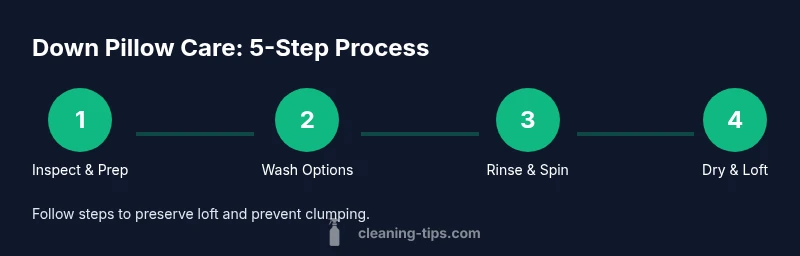
Start by fluffing the pillow to loosen tangles and inspect for rips or leaks. Close zippers or seams with tape if needed to prevent snagging inside the machine. Check for stains or odors and treat them before washing. Use a small amount of mild detergent directly on the stain and blot with a clean cloth. For stubborn spots, a gentle stain remover formulated for delicate fabrics can help—but avoid harsh chemicals that could degrade the fill or shell. Do a quick colorfastness test on an inconspicuous area if you’re unsure how the fabric will react. After pre-cleaning, place towels or a clean pillow inside the washing machine or basin to help distribute weight evenly and reduce movement during the wash.
Hand-wash method: careful, thorough cleaning
Fill a basin with warm water and a small amount of mild detergent. Submerge the pillow and gently squeeze the soapy water through the fabric without twisting. Rinse by pressing clean water through the pillow until no soap remains. Repeat as needed until the water runs clear. Hand-washing is gentler on the fill and shell, and it’s a reliable option if you’re washing only one pillow or if the care label calls for delicate handling. Pro tip: keep a rhythm with gentle, continuous squeezing rather than aggressive wringing to protect the loft.
Machine-wash method: gentle cycle for best results
If you’re using a machine, choose a front-loader or top-loader without an agitator and place two similarly weighted pillows for balance or wash one at a time. Use a mild detergent, no bleach, and set the machine to a gentle cycle with warm water. Run an extra rinse to remove all soap. Avoid high-speed spin that can damage the shell. When finished, gently remove the pillow from the drum to prevent the fabric from catching on the rim.
Drying: thorough and even loft restoration
Down pillows take longer to dry than synthetic fills. Start with towels to absorb excess moisture, then tumble dry on low heat with a few clean tennis balls or dryer balls to re-fluff the fill. Check every 30 minutes and break up any clumps with your hands. Continue until the pillow is completely dry; dampness can lead to mildew and a musty odor. If you notice warmth but still see damp spots, extend drying time or finish air-drying on a clean rack.
Restoring loft and preventing clumps
Once dry, knead and shake the pillow to distribute the down evenly and restore loft. You can also tuck the pillow into a duvet cover for a few hours to help fluff. Regularly fluff pillows during use and avoid compressing them for long periods. Clean Tips analysis shows that consistent drying and loft restoration deliver the best long-term results for comfort and support.
Common mistakes and how to avoid them
Avoid washing with heavy items, using hot water, or overloading the washer—these can stress seams and flatten loft. Don’t overuse detergent; residue is difficult to rinse out and reduces fill loft. Never use a high-heat dryer, which can scorch the shell and damage the down. Always ensure the pillow is completely dry before storage to prevent mold.
Maintenance schedule and long-term care tips
Plan to clean down pillows every 12-18 months, or more often if you have allergies or heavy use. Regularly fluff and air-out the pillows to maintain freshness between washings. Use a protective pillow cover to reduce oil buildup and odors. If a stain is persistent or odor lingers, consider repeating the gentle wash cycle rather than applying harsh cleaners. According to Cleaning Tips, following a gentle wash routine and thorough drying is essential for preserving loft and extending pillow life.