How to Clean Metal Rust: A Practical Step-by-Step Guide
Learn practical methods to remove rust from metal surfaces, from mechanical scrubbing and chemical rust removers to natural remedies, plus prevention tips to keep your metal projects rust-free.


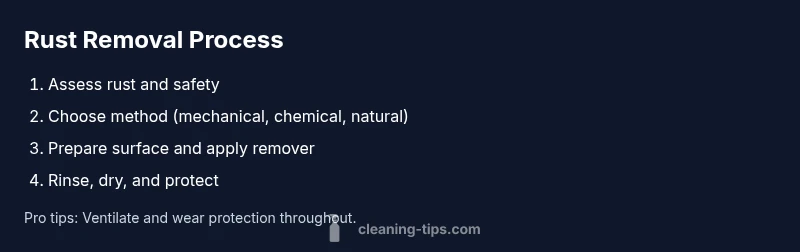
To clean metal rust, first assess the rust level and select a method (mechanical, chemical, or natural). Gather tools and safety gear, then start with gentle mechanical removal for light rust or apply a rust remover for heavier corrosion. Always protect skin, eyes, and ventilation, and finish with a sealant or paint to prevent recurrence.
Why rust forms on metal and why it matters
According to Cleaning Tips, rust forms when iron-based alloys are exposed to moisture and oxygen, initiating corrosion that can compromise strength and aesthetics. Understanding the rusting process helps you choose the right approach for cleaning metal rust and preventing future damage. In homes, common culprits include damp basements, outdoor tools left in the weather, and kitchen hardware near sinks. The chemistry is straightforward: iron oxidizes to iron oxide when water and oxygen interact, and as rust progresses, the surface roughens, flakes, and can create pits that weaken the metal. Cosmetic rust can often be removed with straightforward cleaning, while deep or widespread rust may require more involved restoration. Quick action, the right safety gear, and a protective finish can halt progression and extend the life of the metal.
Quick-start overview of common rust removal methods
There are three broad paths to remove rust: mechanical, chemical, and natural acids. Mechanical methods use physical abrasion—brushes, sandpaper, or powered tools—to remove rust and expose clean metal. Chemical methods rely on rust removers or chelating agents that dissolve rust or convert it to a stable compound. Natural approaches leverage household acids like vinegar or lemon juice and baking soda for lighter rust. The best choice depends on rust depth, metal type, and finish on the piece. For delicate surfaces, start gentle and test a small area first. For valuable or structural items, consider professional refinishing if safety or integrity could be compromised.
Mechanical removal: sanding, wire brushes, and sanding sponges
Mechanical rust removal is often the first line of defense for light to moderate rust. Start with a stiff-bristle wire brush to knock loose rust and scale, then switch to coarser sandpaper (80–120 grit) and progress to finer grits (220–320) to smooth the surface. For curved or crevice-filled areas, use small files or sanding sponges. Mechanical work is quick and economical, but it can gouge soft metals or remove protective coatings if not applied carefully. Always work in short, controlled strokes and wipe away dust and debris frequently to inspect progress. When you finish, wipe the surface clean and inspect for remaining rust pits or stains that may need a second pass.
Chemical rust removers: acids, chelating agents, and rust converters
Chemical rust removers use acids like phosphoric, oxalic, or hydrochloric compounds, or chelating agents that bind iron and pull rust away. These products can be highly effective on heavy rust but require careful handling, ventilation, and protective gear. Rust converters chemically convert iron oxide into a stable compound that remains on the surface, creating a primed base for painting. Always follow product instructions, use gloves and eye protection, and test on a small area first. After treatment, rinse thoroughly to remove residues and dry completely to prevent flash rust.
Natural remedies: lemon juice, vinegar, and baking soda
Natural remedies offer safer, gentler options for light rust on non-critical items. White vinegar or lemon juice can soften and dissolve rust when applied with soaking or soaking plus gentle scrubbing. Baking soda paste (baking soda + water) can act as a mild abrasive to lift rust without harsh chemicals. These methods are best for small tools, cookware, or decorative pieces that won’t be exposed to heavy wear. They’re also a good starting point for test patches before moving to stronger methods. While slower, natural remedies are cost-effective and more eco-friendly.
How to test your rust removal method on different metals
Different metals respond differently to rust removal techniques. Mild steel and cast iron tolerate mechanical abrasion more than stainless steel or aluminum, which may scratch or react with acids. Always identify the substrate before choosing a method. For painted surfaces, test on an inconspicuous area to ensure the finish adheres well after cleaning. If the steel has a protective coating or plating, choose a method that preserves the coating whenever possible. Document results on a small sample before scaling up to the entire piece.
Practical example: cleaning rust from a garden trowel
Consider a common garden tool with light surface rust. Start with a dry brush to remove loose rust, then apply a small amount of white vinegar to the rusted patches and let sit for 10–15 minutes. Scrub with a steel wool pad or stiff brush, rinse, and dry completely. If rust persists, switch to a fine-grit sandpaper and re-sand until the surface is smooth. Finish with a wipe of mineral oil or a protective coating to slow future oxidation. This workflow illustrates a conservative, repeatable approach you can adapt to other small hand tools.
When to call a pro or avoid DIY methods
DIY rust removal is suitable for small, non-structural items or lightly corroded surfaces. If rust has penetrated deeply, compromised structural integrity, or is on critical components (load-bearing parts, car chassis, or kitchen appliances carrying food contact), professional refinishing is advisable. For antique or valuable items, consult a restorer to preserve value. In all cases, ensure you have adequate ventilation, proper PPE, and a plan for protecting the metal after cleaning to prevent repeat rust.
Rust prevention and maintenance strategies
After removing rust, protection is key to preventing recurrence. Rinse and dry the surface thoroughly, then apply a primer designed for metal and a topcoat or paint that provides a moisture barrier. For galvanized or stainless steel, a clear sealant or specialized anti-corrosion coating can extend lifespan without altering appearance. Store tools in a dry environment, avoid prolonged contact with water, and consider desiccants in storage areas. Regular inspection and reapplication of protective finishes as needed will significantly reduce future rust.
Tools & Materials
- Protective gloves(Nitrile recommended; avoid latex if allergic)
- Safety goggles(Wraparound style preferred)
- Dust mask or respirator(For dusty or chemical steps)
- Wire brush(Stiff-bristle for initial rust removal)
- Sandpaper (80–320 grit)(Progress from coarse to fine grit)
- Steel wool pads(Use on delicate surfaces)
- Plastic scraper or putty knife(Gently lift scale or paint)
- Cotton rags or lint-free cloths(For wiping and drying)
- Bucket or container(For soaking rust removers)
- White vinegar or lemon juice(Natural mild acids for light rust)
- Baking soda(Make a paste for gentle abrasion)
- Commercial rust remover(Follow label; test area first)
- Rust converter or primer(Prepare for painting)
- Paint, primer, or sealant(Moisture barrier finish)
Steps
Estimated time: 60-90 minutes (depending on rust severity and area size)
- 1
Prepare workspace and PPE
Set up in a well-ventilated area. Put on gloves, goggles, and a mask if using chemicals. Lay down a tarp or old sheet to catch drips and protect the surface beneath.
Tip: Pre-clean nearby items to prevent dirt from migrating onto the metal. - 2
Assess rust severity
Inspect the metal to determine if rust is superficial or penetrating. If there are deep pits or structural concerns, plan for professional help. Document any coatings or finishes that must be preserved.
Tip: A quick wipe with a damp cloth helps reveal remaining rust after brushing. - 3
Mechanical removal for light rust
Use a stiff wire brush to knock off loose rust. Follow with 80–120 grit sandpaper, moving evenly across the surface, then progress to 220–320 grit for a smoother finish.
Tip: Work with steady, overlapping strokes to avoid gouging. - 4
Chemical treatment for heavier rust
Apply a rust remover or chelating agent according to the product instructions. Allow the chemical to react for the recommended time before scrubbing off.
Tip: Never mix chemicals; rinse thoroughly between steps. - 5
Natural remedies for light rust
Soak or apply vinegar/lemon juice to rusted areas, then scrub with a sponge or brush. Rinse and dry completely.
Tip: Test on a hidden area first to ensure no surface damage. - 6
Rinse, dry, and protect
After rust removal, rinse with clean water and dry thoroughly to prevent flash rust. Apply a primer or sealant designed for metal surfaces.
Tip: Use a heat source or window fan to speed up drying if indoors. - 7
Finish with a protective coating
Choose paint, powder coating, or a clear sealant. Apply according to manufacturer directions, ensuring full coverage.
Tip: Allow sufficient cure time before handling. - 8
Maintenance plan to prevent recurrence
Store items in a dry place, inspect periodically, and reapply protective coatings as needed. Address moisture issues in the environment to reduce future rust.
Tip: Keep a simple rust-prevention routine on your calendar.
Questions & Answers
What is the fastest way to remove light rust from metal?
For light rust, start with a stiff brush and light sanding. Wipe clean and apply a protective coating. If any rust remains, repeat gently or switch to a natural acid method.
For light rust, begin with brushing and light sanding, then seal the surface. If rust remains, repeat or use a natural acid method.
Can I use steel wool on stainless steel or aluminum?
Steel wool can scratch stainless steel and aluminum. Use non-abrasive pads or gentler methods specifically designed for those metals. Always test in a small area first.
Be careful with steel wool on stainless steel or aluminum; it can scratch. Try gentler options and test first.
Is rust removal safe on painted surfaces?
Rust removal near paint can damage the coating. Protect the paint with tape, choose mild methods, and touch up paint after corrosion is removed to maintain a barrier.
Rust removal near paint can strip or damage it, so protect the paint and touch up afterward.
Should I use natural remedies for all rust problems?
Natural remedies work best on light rust or non-critical parts. For heavy rust or strong metals, consider chemical removers or professional refinishing.
Natural remedies help with light rust; for heavy rust, use stronger methods or seek professional help.
How can I prevent rust after cleaning?
Apply a protective coating, store in a dry place, and perform regular inspections. Moisture control and prompt maintenance are key.
Protect with coating, keep things dry, and inspect regularly to prevent rust comeback.
What about rust on cast iron cookware?
Cast iron can rust if not seasoned. Remove rust with a steel pad, reseason the surface with oil, and heat to cure the coating. Do not use detergents that strip seasoning.
Cast iron rust removal requires scrubbing, then reseasoning to restore the protective coating.
Watch Video
The Essentials
- Assess rust severity before choosing a method
- Start with mechanical removal for light rust
- Use chemical removers only with proper safety and ventilation
- Finish with a protective coating to prevent recurrence