Can You Put Cleaner in a Steam Cleaner? Safe Practices and Step-by-Step Guide
Learn whether you can use cleaners in a steam cleaner, the risks involved, and safe alternatives. Get a step-by-step guide to cleaning with water-only cycles and manufacturer-approved additives when allowed.


You should not pour general cleaners into a steam cleaner. Most models are designed to run on water only, or on manufacturer-approved additives. Using unapproved cleaners can damage seals, clog components, void warranties, and produce hazardous fumes. This guide explains when cleaners are allowed, safe alternatives, and a step-by-step approach to cleaning with safety in mind.
Can You Put Cleaner in a Steam Cleaner? The Core Question
According to Cleaning Tips, the safest path is to treat steam cleaners as water-only devices unless the manufacturer explicitly allows additives. The Cleaning Tips team found that most manuals clearly prohibit ordinary household cleaners due to risks of chemical reaction, residue buildup, and potential fumes when heated. If a model does permit additives, it will state exact products, concentrations, and cycle instructions. In practice, sticking to water-only cycles or manufacturer-approved descalers is the most reliable way to protect your unit and your family.
How Steam Cleaners Work: Water, Heat, and Pressure
A steam cleaner heats water to near boiling, then forces it through jets to create high-temperature steam. This steam loosens grime, sanitizes surfaces, and can penetrate porous materials. Introducing cleaners into this process can change chemical reactions, foaming behavior, and the consistency of the steam. Clogged nozzles, mineral buildup, and degraded seals are common consequences. The result can be reduced cleaning efficiency and higher repair costs. Understanding these mechanics helps you make safer choices about additives.
Manufacturer Guidelines: Reading the Manual is Your First Step
Your model’s manual is the most trustworthy guide for whether cleaners are allowed. Look for sections on cleaning agents, chemical compatibility, and warranty statements. Some brands permit only water or specify a particular descaler designed for steam systems. Others strictly prohibit any additives. If the manual is missing, contact customer support or the manufacturer’s official site. Cleaning Tips emphasizes confirming compatibility before attempting any additives to avoid warranty voidance and safety risks.
Safe Alternatives: When Water and Descalers Can Do the Job
For most tasks, water-only operation suffices. If your device supports it, use only descalers or antifouling solutions that are explicitly approved by the manufacturer. These products are designed to minimize mineral buildup and to avoid foaming, residue, or corrosion. Before relying on additives, pair them with preparatory cleaning steps: pre-wipe surfaces, rinse accessories, and ensure you’re using the correct solution for your model. When in doubt, prioritize water-only cycles and surface cleaning tools like microfiber cloths.
Risks of Using Unapproved Cleaners: Residue, Corrosion, and Fumes
Using cleaners not approved for steam cleaners can cause several problems. Residual chemicals can linger in the reservoir and lines, narrowing channels and hindering steam flow. Some cleaners may corrode seals or gaskets, compromising pressure and safety. Heated residues can release fumes or form hazardous byproducts. Finally, adding unapproved cleaners can void warranties and complicate maintenance. If you notice strange smells or foaming, stop and switch to water-only cycles to flush the system.
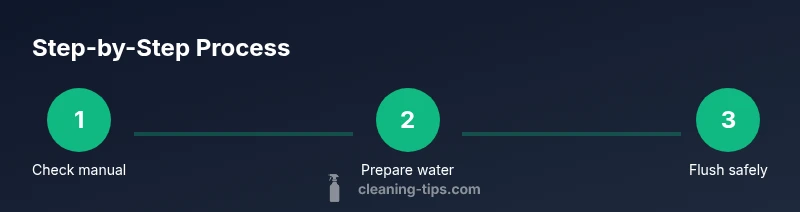
Step-by-Step: Cleaning Your Steam Cleaner Safely (Water-Only)
- Unplug the unit and allow it to cool completely. Remove the tank and any detachable parts that contact water.
- Empty the reservoir and rinse with clean distilled water to remove mineral deposits.
- Refill with distilled water if possible to minimize scale formation during cycles.
- Run a short steam cycle with no attachments to flush the system and check for leaks.
- Repeat with a longer cycle to ensure internal channels heat evenly.
- Empty, dry, and wipe the exterior with a soft microfiber cloth.
- Reassemble and store in a dry place.
- If the manual advises, run one final water-only cycle before next use.
Tip: Keep a maintenance log to monitor when descaling or professional servicing is needed.
If You Absolutely Must Use an Approved Additive: How to Do It Safely
Only proceed if the manual explicitly permits an approved additive. Measure exactly as directed, never exceed the recommended concentration, and never mix products. Run a small test on an inconspicuous area and watch for unusual foam, vapor, or residues. If anything seems off, stop immediately and flush with water-only cycles until clear. This method minimizes risk while honoring manufacturer guidance.
Maintenance and Best Practices for Longevity
Regular maintenance protects your steam cleaner’s performance. Empty and dry the tank after each use, use distilled water when possible, and descale periodically with manufacturer-approved products. Inspect hoses, seals, and gaskets for wear and replace if needed. Clean nozzles with a soft brush and wipe the exterior after use. Proper storage in a dry, cool place helps prevent mold and mineral buildup that can affect steam quality.
Troubleshooting Common Issues After Cleaning
If steam output declines, check for mineral buildup and perform another water-only flush cycle. A lingering odor may indicate trapped residues; run additional rinsing cycles and ensure all components dry completely. If the unit leaks or fails to heat, consult the warranty or contact customer support. Avoid introducing any non-approved cleaners to prevent recurrence of the issue.
Tools & Materials
- Distilled water(Use to minimize mineral buildup and extend life)
- Manufacturer-approved cleaner (if allowed)(Only if the manual explicitly allows it)
- Microfiber cloth(For exterior cleaning and drying)
- Soft brush or nozzle straw(For clearing clogged nozzles)
- Measuring cup(If using approved cleaners, follow exact measurements)
- Personal protective equipment (gloves, goggles)(Only if handling cleaners, even approved ones)
- Empty basin or tray(To catch spills during maintenance)
Steps
Estimated time: 30-60 minutes
- 1
Check manufacturer guidance
Power off the unit and unplug it. Locate the user manual or official online guide and confirm whether any additives are permitted. If there is no allowance for cleaners, plan to operate with water only.
Tip: If in doubt, do not add any cleaner. - 2
Prepare the machine for maintenance
Empty the tank and remove any detachable parts that contact water. Have distilled water ready and a microfiber cloth for drying surfaces.
Tip: Keep a dedicated maintenance area to avoid cross-contamination. - 3
Flush with distilled water
Fill the tank with distilled water and run a short steam cycle to flush the system. This helps remove mineral deposits that affect steam performance.
Tip: Use a test run with no attachments to avoid splashing. - 4
Inspect components
Check hoses, seals, and gaskets for wear or cracks. Replace damaged parts before returning the machine to service.
Tip: A small crack can lead to leaks and reduced pressure. - 5
Rinse and dry
After flushing, drain the tank, rinse with distilled water again, and dry all components completely with a microfiber cloth.
Tip: Leave the unit open for a few minutes to ensure complete drying. - 6
Reassemble and test
Reattach all parts, fill with distilled water, and run a longer water-only cycle to verify that steam flow is steady.
Tip: If you notice unusual vibrations or odors, stop and inspect. - 7
Store properly
Store the steam cleaner in a dry area, away from dust and humidity. Ensure it is fully dry before storage.
Tip: Avoid storing with water in the tank to prevent stagnation.
Questions & Answers
Can you put cleaner in a steam cleaner?
In most cases, cleaners should not be added unless the manual explicitly allows it. Using unapproved chemicals can damage the unit and release hazardous fumes. Always prioritize water-only operation or manufacturer-approved additives.
Most steam cleaners should not have cleaners added unless the manual says so. Stick to water-only usage or approved additives to stay safe.
What happens if I use cleaner in my steam cleaner?
Using unapproved cleaners can degrade seals, clog channels, produce unsafe residues, and void warranties. It can also pose health risks from fumes when heated.
Using non-approved cleaners can damage seals and create hazardous fumes; it may also void warranties.
Are there any exceptions where cleaners are allowed?
A small number of models permit specific, manufacturer-approved descalers. Always verify compatibility in the manual and follow exact dosage instructions.
Only if your manual explicitly allows a particular cleaner, and you follow the dosage exactly.
Is vinegar safe in a steam cleaner?
Most steam cleaners advise against vinegar due to potential damage and strong fumes. If the manual permits it, use only in a highly diluted form and as directed.
Vinegar is usually not recommended unless your manual explicitly says so and even then very dilute.
How can I maintain my steam cleaner for longevity?
Regularly descale with manufacturer-approved products, use distilled water, and perform routine flushing cycles. Inspect seals and hoses for wear.
To keep it lasting longer, descale with approved products, use distilled water, and flush regularly.
What should I do if my steam cleaner smells after cleaning?
Run several water-only cycles to flush residues. Ensure the unit is fully dry before storage to prevent odor development.
If it smells, flush with water and dry thoroughly before storing.
Can I still use the steam cleaner after adding an approved additive?
Yes, but only if the manual confirms compatibility. Always follow measured amounts and run a test cycle.
Only if your manual confirms compatibility; follow the exact amounts and test first.
Watch Video
The Essentials
- Always follow the manual for additive use
- Prefer water-only cycles for safety and longevity
- Use distilled water to minimize mineral buildup
- Only use manufacturer-approved additives if explicitly allowed
- Rinse cycles are essential after any maintenance