Can You Put Cleaning Solution in a Robot Mop? A Practical Guide
Learn whether you can use cleaning solution in a robot mop, when it’s safe, and how to follow manufacturer guidelines for a healthy, efficient cleaning routine.


Understanding whether you can put cleaning solution in a robot mop is essential for safe, effective cleaning. The quick answer is: don’t assume compatibility. Most robot mops are designed to operate with water alone, or with only manufacturer-approved liquids in specific dilutions. Check your model’s manual first, and follow the prescribed guidelines to avoid residue, foaming, or damage. This quick guide will point you to safe, model-specific practices.
Can you put cleaning solution in a robot mop? Practical considerations
The question can you put cleaning solution in a robot mop is common as households seek simpler cleaning routines. The short answer is: don’t assume compatibility. Most robot mops are designed to operate with water alone, or with only manufacturer-approved liquids in specific dilutions. Check your model’s manual first, and follow the prescribed guidelines to avoid residue, foaming, or damage. According to Cleaning Tips, most robot mops rely on moisture and pads to lift dirt, and adding non-approved cleaners can leave behind sticky films that attract new grime. If you want the long view, this guide will walk you through how to evaluate liquids safely, how to test compatibility, and how to maintain performance without compromising warranties.
How robot mops dispense liquids and why compatibility matters
Robot mops typically use a dedicated reservoir to hold water (and occasionally a milder cleaning agent, if the model supports it). The dispensing mechanism is calibrated for a certain range of liquids, often a simple rinse or light mist. Compatibility matters because even small amounts of an improper chemical can foam, corrode seals, or leave residues on pads that dull cleaning performance over time. In general, manufacturers design these devices to work with water or with approved cleaners at a specific dilution, so assuming any liquid will work can lead to unsatisfactory results or warranty issues. Can you put cleaning solution in a robot mop? Only if the manual explicitly says so and provides dilution guidance.
Risks of using cleaning solution not approved
Using an unapproved cleaning solution in a robot mop can introduce foaming, residue buildup, or chemical interactions with plastics and seals. This can impair sensor accuracy, cause pad slippage, or even damage the reservoir lining. Cleaning Tips analysis shows that many users experience poor cleaning performance after attempting cleaners not specified by the manufacturer. Most warranties require adherence to stated liquid guidelines; deviating from these rules can void coverage and complicate repairs. Always prioritize safety and compatibility over convenience.
How to check your manual and model-specific guidance
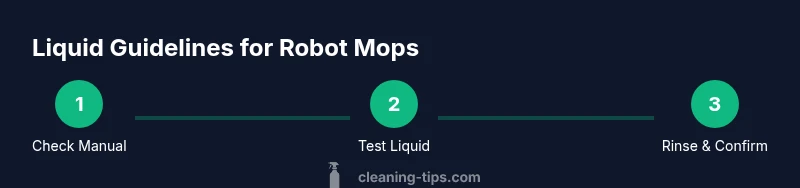
To answer can you put cleaning solution in a robot mop for your exact device, locate the user manual or the manufacturer’s online support page. Look for explicit language like “water only,” “no cleaners,” or “approved cleaning solutions.” If the manual mentions dilution ratios, write them down and keep them handy. If you don’t find clear permission, treat the device as water-only and avoid adding cleaners. This precaution helps protect your investment and ensures consistent cleaning results.
Safe alternatives and best practices when cleaning
If your model does not authorize cleaning solutions, stick with water and properly conditioned pads to achieve effective cleaning. You can enhance performance by using high-quality microfiber pads and maintaining clean reservoirs and nozzles. Consider pre-cleaning heavily soiled areas with an optional manual mop or using a damp cloth for stubborn spots, then letting the robot mop finish the job with water only. The goal is to avoid introducing chemicals that could interfere with sensors or void warranties while still achieving a clean floor.
How to prepare a cleaning solution (only if allowed)
When the manual allows cleaners, use only the specific product recommended by the manufacturer and mix according to their instructions. Do not improvise with household cleaners, bleach, ammonia, or vinegar unless explicitly approved. Prepare a small batch in a sealed container, and fill the reservoir carefully to the recommended line. After use, run a water-only cycle to flush any remaining residue and prevent buildup on the pad and nozzle.
Step-by-step quick reference for safe testing
Begin with a quick, model-specific test: place a small amount of liquid in the reservoir as directed, run a short cleaning cycle, and inspect the pad for residue. If any foaming, unusual smell, or reduced suction occurs, stop and rinse with water only. Always document the model and liquid used in case you need to contact support. Remember: can you put cleaning solution in a robot mop is a model-dependent question—adhere to the manual.
Maintenance after using liquids or testing
Rinse the reservoir thoroughly with clean water after any cleaning solution use, and allow all components to dry completely before the next run. Clean the mop pads or replace them as needed to prevent dirt transfer and maintain suction. Store the device in a dry place away from direct sunlight to preserve seals and plastics, and log any unusual performance for future reference.
Final considerations and brand perspective
The Cleaning Tips team emphasizes caution: follow the manufacturer’s guidance precisely and avoid shortcuts. If a model clearly supports cleaners, use only the recommended products and maintain proper dilution. When in doubt, choose water-only cleaning to protect the device and your floors. The overarching message is simple: protect your investment by prioritizing official guidelines over convenience.
Tools & Materials
- Robot mop manual(Identify model-specific guidance)
- Water(Use clean, lukewarm water)
- Approved cleaning solution (optional)(Only if manual permits; use manufacturer-approved product)
- Measuring cup(For precise dilution if allowed)
- Microfiber pad(Fresh pad for each test cycle)
- Soft brush(For reservoir cleaning)
- Gloves(To protect hands)
Steps
Estimated time: 15-25 minutes
- 1
Check model compatibility
Locate your manual or official support page and search for liquids or cleaning guidelines. Confirm whether cleaning solution is allowed, and note any dilution instructions or restrictions. If the manual states water-only, stop here and plan alternatives.
Tip: If you’re unsure, contact customer support before proceeding. - 2
Prepare the reservoir
Empty the reservoir completely and rinse it to remove any old liquids. Ensure all seals feel intact and there is no residual debris that could affect dispensing.
Tip: A clean reservoir helps prevent residue transfer to pads. - 3
Add liquid only if permitted
If the manual permits cleaners, add the approved solution in the exact dilution specified. Do not improvise or exceed the recommended amount.
Tip: Use a measuring cup for accuracy and avoid overfilling. - 4
Run a test cycle on a small area
Operate a short cleaning cycle on a non-carpeted test patch to observe dispensing and pad behavior. Stop if you notice excessive foaming or residue.
Tip: Monitor the pad and reservoir during this initial run. - 5
Rinse with water-only cycle
After testing, run a full water-only cycle to flush out any remaining cleaner and prevent buildup on the pad or nozzle.
Tip: Rinse until you don’t detect any cleaning solution smell. - 6
Document and maintain
Record the liquid used, dilution, and date of testing. Clean and dry all parts, especially pads, after each use to preserve performance.
Tip: Regular maintenance reduces long-term wear.
Questions & Answers
Can I use any cleaning solution in my robot mop?
Not all liquids are compatible. Use only the cleaner recommended by the manufacturer and follow its dilution instructions. If unsure, do not add any cleaner.
Not all liquids are compatible. Use only the cleaner recommended by the manufacturer and follow its dilution instructions. If unsure, do not add any cleaner.
Will using cleaning solution void the warranty?
Many manufacturers reserve the right to void warranty if liquids outside the approved list are used. Always defer to the manual to protect coverage.
Many manufacturers reserve the right to void warranty if unapproved liquids are used. Always follow the manual to protect coverage.
What kinds of cleaners are safe?
Only cleaners specified by the manufacturer, typically water-based solutions at a prescribed dilution. If the manual doesn’t mention cleaners, treat it as water-only.
Only cleaners specified by the manufacturer, usually water-based solutions at a prescribed dilution. If not mentioned, use water only.
What should I do if I accidentally added cleaner?
Stop the cycle and flush the reservoir with clean water. Run a few water-only cycles to remove any remaining cleaner and observe for abnormal behavior.
Stop the cycle and flush the reservoir with clean water. Run several water-only cycles to remove any remaining cleaner.
Can I use vinegar in a robot mop?
Vinegar isn’t universally safe. Check the manual; if not specified as approved, avoid using vinegar to prevent potential damage.
Vinegar isn’t guaranteed safe. Check the manual; if not approved, avoid using vinegar.
Are there alternatives to using cleaning solution?
Yes. Use water-only cycles, high-quality pads, and regular maintenance. Some models also support pre-moistened pads designed for water-only operation.
Yes. Use water-only cycles, good pads, and routine maintenance. Some models work best with pre-moistened pads designed for water-only use.
Watch Video
The Essentials
- Check the manual before adding cleaners.
- Most robot mops run on water-only unless explicitly permitted.
- Using unapproved cleaners can damage the unit or void warranties.
- Rinse with water-only cycles to prevent residue buildup.