How to Clean a C Filter: A Practical Home Guide
Learn how to clean a C filter (carbon filter) in common home appliances. This detailed, step-by-step guide covers washable vs non-washable filters, safety, replacement cues, and maintenance tips to keep your indoor air fresh and your appliances running smoothly.


If you’re wondering how to clean a C filter, this guide shows you practical, safe methods for both washable carbon filters and non-washable variants. You’ll learn how to assess whether to clean or replace, the right cleaning approach, and maintenance tips to preserve air quality and appliance performance. Cleaning Tips’ approach emphasizes safety, simplicity, and avoiding damage to sensitive media.
What is a C filter and when to clean vs replace
A C filter, commonly called a carbon filter, uses activated carbon to trap volatile organic compounds, odors, and some gases. In many home appliances, this filter is responsible for improving air quality by absorbing smells from cooking, pets, smoke, or household chemicals. Carbon filters are not purely mechanical screens; they rely on chemical adsorption, which gradually becomes less effective as the carbon saturates. Because of this, you’ll often be deciding between cleaning a C filter to refresh its surface or replacing it entirely when performance drops. If you need to clean a c filter, this guide covers washable variants and non-washable types, and how to maximize performance. Cleaning Tips emphasizes that maintaining carbon filters is essential for air quality, but following manufacturer instructions is key, because different products may require different care. Cleaning a carbon filter can extend its life and prevent unnecessary airflow resistance, but over-cleaning or using harsh cleaners can damage the media. This guidance helps you understand when a clean is appropriate and when replacement is a better option.
How a C filter affects air quality and appliance performance
A carbon filter’s primary job is adsorption—capturing odors, volatile organic compounds (VOCs), and sometimes moisture. In kitchen range hoods, it reduces lingering cooking smells; in air purifiers, it helps improve indoor air quality by removing smells and some gases. The cleaner the filter remains, the more effectively it can trap contaminants, preserving airflow and efficiency. When a C filter becomes clogged or oversaturated, fans run harder, noise can increase, and energy use goes up. Regular attention to the filter is less about perfect odor elimination and more about maintaining consistent performance. For renters and homeowners alike, knowing how to care for carbon filters avoids costly replacements and helps maintain healthy indoor air, which aligns with Cleaning Tips' goal of practical, actionable guidance.
Washable vs non-washable carbon filters: what to know
Not all carbon filters are created equal. Some are designed to be washed and reused a few times, while others are meant to be replaced when dirty or degraded. Washable C filters typically tolerate gentle rinsing with cool or warm water and can be air-dried completely before reinstallation. Non-washable filters rely on the carbon’s adsorption capacity; cleaning can damage the media and reduce effectiveness. Always consult the device’s manual to determine whether your filter type is washable and follow the recommended cleaning method. Regardless of type, avoid soaking carbon media for long periods and never use harsh solvents that can break down the filter media. By knowing the filter type, you’ll avoid wasted effort and protect your appliance’s performance.
Tools and safety considerations
Before you begin, gather essential supplies and prioritize safety. Wear nitrile gloves to protect your hands and a mask if you’re sensitive to dust. Work in a well-ventilated area and disconnect the appliance from power or water supply as applicable. A soft-bristle brush helps lift debris without scratching the media, while microfiber cloths remove surface dust. For washable filters, use mild dish soap and warm water; never use harsh chemicals not approved by the manufacturer. Keep a clean towel handy to dry the unit, and consider labeling the filter with the date of cleaning so you can track its lifespan. If you’re unsure about the filter type, consult the device manual or the manufacturer’s website.
Cleaning a washable C filter: step-by-step overview
Washeable C filters can be refreshed, but only if the manufacturer approves. Begin by removing the filter carefully to avoid dislodging the media. Rinse with cool or warm water, gently agitating to dislodge trapped particles. Let the filter air-dry completely in a clean, dust-free area before reinstalling. Do not use detergents unless the manual specifies; detergents can leave residues that clog the pores. Inspect the filter after drying; if it still emits odors or shows signs of saturation, replacement may be the better option. This approach aligns with the goal of keeping air clean without compromising the media.
Replacing vs refreshing: how to decide
If the filter shows persistent odors after cleaning, if the carbon looks visibly dark, or if airflow remains restricted, replacement is usually the best option. Replacement ensures maximum adsorption capacity and energy efficiency, especially in high-use environments such as kitchens or smoking areas. To minimize recurring issues, pair cleaning with a regular replacement schedule as recommended by the device manufacturer. Remember that some devices use composite media or combined filtration stages; in those cases, follow the manufacturer’s guidance for the best results.
Reinstallation and testing: ensure a proper seal
Reinstall the C filter securely, ensuring a snug seal around the housing. A loose seal allows unfiltered air to bypass the media, reducing effectiveness. After reinstalling, run the appliance on a normal cycle and listen for unusual noises or drafts that indicate a poor seal. If you notice reduced performance or new odors, stop the unit and recheck the filter seating. Regular checks help catch issues early and maintain optimal air quality.
Maintenance schedule and quick-checks
Create a simple maintenance calendar that aligns with your device’s usage. Mark the date of each cleaning or replacement and note any odor changes or airflow variations. Quick, monthly checks of the filter housing can prevent buildup from compromising performance. A proactive approach—combining inspection, cleaning (when applicable), and timely replacement—extends filter life and keeps air fresh. This habit supports healthier indoor air and aligns with Cleaning Tips’ ethos of practical, step-by-step guidance.
Tools & Materials
- Nitrile gloves(Protect hands during cleaning)
- Soft-bristle brush(Gentle brushing to loosen debris)
- Microfiber cloths(Dust and wipe surfaces clean)
- Mild dish soap or gentle detergent(Use only if manufacturer approves)
- Bucket or basin(Rinse water and hold filter for washing)
- Warm water (not hot)(Avoid high temperatures that can distort media)
- Replacement carbon filter (if non-washable or past life)(Keep on hand for easy replacement)
- Drying rack or clean towel(Ensure complete drying before reinstallation)
- Marker or label(Date and notes for maintenance tracking)
Steps
Estimated time: 30-60 minutes
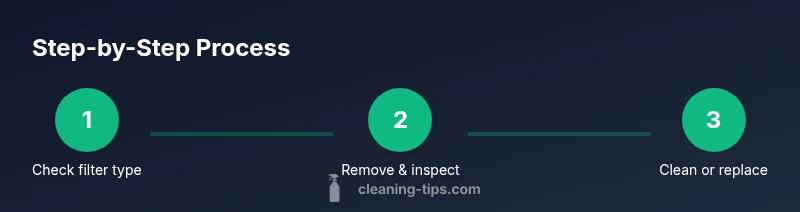
- 1
Power down and locate the filter
Unplug the appliance or switch off power to the device. Open the housing and locate the C filter. Refer to the manual to confirm the exact location, as designs vary between range hoods and air purifiers.
Tip: Check the filter type first; some carbon filters are not washable and require replacement. - 2
Remove the filter carefully
Gently detach the filter from its housing, avoiding any tearing of media. Place it on a clean surface or into a basin if you plan to rinse. Inspect for visible signs of saturation or damage.
Tip: Handle edges gently to prevent tearing; use gloves to protect hands from dust. - 3
Determine if washing is allowed
Check the manufacturer’s guidance. If the filter is washable, proceed with a gentle rinse; if not, skip washing and prepare for replacement.
Tip: Never wash a non-washable filter; washing can ruin the media's adsorption capacity. - 4
Clean the filter (if washable)
Rinse under cool or warm running water, avoiding hot water. Gently agitate with your hand or a soft brush to release trapped debris. Do not use detergents unless specified by the manufacturer.
Tip: Allow it to air-dry completely, ideally on a drying rack away from direct sunlight. - 5
Dry completely before reinstalling
Ensure the filter is completely dry before placing it back into the unit. Any residual moisture can promote mold growth or compromise filtration.
Tip: Patience is key—rushing drying can trap moisture and lead to odors later. - 6
Reinstall the filter securely
Insert the filter with the correct orientation and seal. A loose seal lets unfiltered air bypass the media, reducing effectiveness.
Tip: Double-check that clips, latches, or gaskets are fully seated. - 7
Test the appliance and monitor performance
Restore power and run a normal cycle. Listen for airflow changes and check for unusual odors. If performance is not restored, inspect seating again or consider replacement.
Tip: Take note of any odor changes to inform future maintenance.
Questions & Answers
What is a C filter and where is it used?
A C filter is a carbon filter that uses activated carbon to absorb odors and certain gases. You’ll commonly find it in range hoods, air purifiers, and some HVAC components. Proper care helps maintain air quality and appliance efficiency.
A carbon filter uses activated carbon to remove smells and gases in devices like range hoods and air purifiers.
Can I wash a carbon filter?
Most carbon filters are not designed to be washed. If the manufacturer approves washing, use cool or warm water and avoid detergents that could leave residues. If in doubt, replace the filter.
Most carbon filters aren’t washable; if you’re unsure, replace instead of washing.
How do I know when to replace vs clean?
If cleaning doesn’t restore odor control or airflow, or if the media appears degraded, replacement is recommended. When in doubt, follow the device’s manual for replacement intervals.
If cleaning doesn’t fix it, replace the filter rather than keep cleaning.
Are there safety concerns when cleaning carbon filters?
Yes. Always unplug the device, wear gloves, and avoid harsh chemicals. Work in a well-ventilated area to minimize inhaling dust or fumes from the filter media.
Unplug the appliance, wear gloves, and avoid strong chemicals when cleaning.
Where can I find replacements for my carbon filter?
Check the device’s model number and consult the manufacturer’s official parts list or authorized retailers to order the exact carbon filter required.
Look up your model number to buy the right carbon filter.
Watch Video
The Essentials
- Know whether your C filter is washable before cleaning.
- Always follow the device manual to avoid media damage.
- Dry completely before reinstallation to prevent mold growth.
- Replace filters when adsorption is exhausted or odors persist.
- Maintain a simple schedule to extend filter life.